
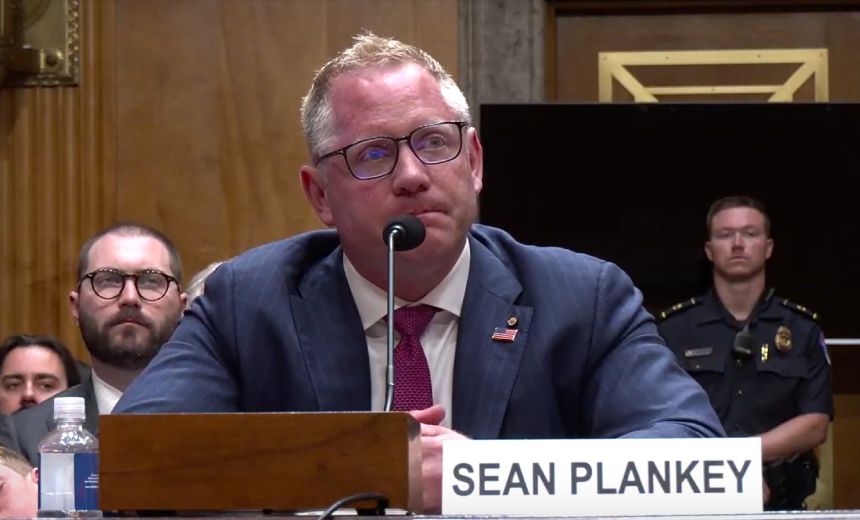


Leadership Crisis Deepens as Sean Plankey Withdraws from CISA Nomination
The U.S. Cybersecurity and Infrastructure Security Agency (CISA) faces a significant leadership crisis following the withdrawal of Sean Plankey from consideration as its permanent head. His decision marks a troubling chapter for an agency that has been seeking effective leadership amid ongoing political turbulence and procedural delays. Plankey’s withdrawal follows a year marked by unrelenting stagnation in the Senate, serving as a stark reminder of CISA’s precarious position in the U.S. government.
Plankey, who served in cybersecurity roles within both the Department of Energy and the National Security Council, communicated his decision in a letter addressed to the White House. In the correspondence, he expressed his growing concerns and frustrations with the prolonged nomination process, which lasted an agonizing 13 months. Despite initial support and early committee approval, his nomination became ensnared in a maze of bipartisan disagreements and procedural hurdles. These delays not only hampered his confirmation but also highlighted a significant leadership vacuum that has plagued CISA since the beginning of 2025.
Currently, CISA has been without a Senate-confirmed leader since President Donald Trump took office. The organization is now operating under its third acting director, Nick Andersen. Underlining the issues surrounding CISA’s leadership, Andersen stepped in after Madhu Gottumukkala departed under controversial circumstances. Gottumukkala’s tenure was marred by incidents, including failing a polygraph test and attempting to dismiss the civil servants involved in the process. Furthermore, he faced scrutiny for uploading sensitive contracting documents into a publicly accessible version of ChatGPT, illustrating the chaotic governance standards affecting the agency.
The fallout from Plankey’s withdrawal raises alarms about long-term stability at CISA, which is grappling not only with leadership issues but also with workforce reductions, budget constraints, and an increasingly narrowed mission scope. The agency plays a crucial role in safeguarding national cybersecurity infrastructure, and its ability to fulfill this mandate hinges on effective leadership.
Plankey had garnered support from sectors of the cybersecurity community; however, his nomination was subsequently caught in the crossfire of broader political disputes. Key senators, such as Ron Wyden (D-Ore.) and Rick Scott (R-Fla.), placed holds on the nomination for various reasons. Wyden aimed to compel the agency’s release of a long-overdue report pertaining to vulnerabilities within the U.S. telecommunications sector, while Scott invoked unrelated issues concerning Coast Guard contracting as a basis for his hold.
Despite having his nomination advanced by the Senate Homeland Security and Governmental Affairs Committee in mid-2025, the process ultimately stalled at the confirmation stage. Even after he was re-nominated at the beginning of 2026, the same political obstacles persisted, preventing any headway toward a vote.
With the leadership gap only widening, the agency now confronts formidable challenges, including impending budget cuts proposed by the White House for the upcoming fiscal year. These proposed cuts threaten to dismantle key divisions within the agency, affecting vital areas such as election security and stakeholder engagement. In light of these mounting pressures, the ongoing debates surrounding CISA’s future appear even more critical, highlighting the urgent need for stable and effective leadership.
As the Trump administration searches for a new nominee, the stakes could not be higher. CISA’s role has never been more essential, particularly amidst rising cyber threats and the complex intersection of national security and infrastructure resilience. The absence of consistent leadership could further endanger the agency’s mission, complicating efforts to navigate the intricate terrain of cybersecurity in an increasingly digital world.
In summary, Sean Plankey’s withdrawal not only underscores the challenges facing CISA but also serves as a clarion call for the urgent need for decisive, stable, and effective governance within the agency. As the political landscape continues to shift, the search for a qualified leader who can unify the agency and address pressing cybersecurity issues becomes ever more critical.