


Artificial Intelligence & Machine Learning,
Government,
Industry Specific
Agencies Urged to Track and Disrupt Coordinated AI Extraction Campaigns
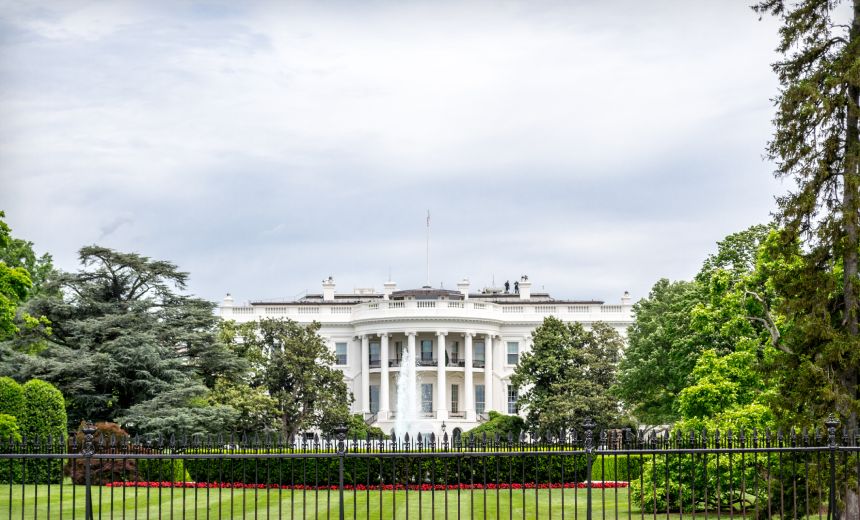
The White House is intensifying efforts to collaborate with U.S. artificial intelligence companies to combat systematic foreign extraction campaigns targeting sensitive capabilities within American AI systems. This initiative is a response to growing concerns about foreign adversaries conducting coordinated operations aimed at distilling advanced U.S. AI models.
The Office of Science and Technology Policy, under the direction of Michael Kratsios, recently released a memorandum outlining the government’s findings. The memo asserts that there is credible evidence indicating that international actors are employing tactics to extract proprietary information via proxy accounts and jailbreaking methods. These technologies allow attackers to bypass security measures, making unauthorized data extraction significantly easier.
According to the memorandum, these adversarial campaigns utilize “tens of thousands” of distributed accounts, designed to evade detection and limit access restrictions. This coordinated approach includes advanced prompt engineering techniques aimed at uncovering a model’s behavior and internal logic. In light of these findings, the administration has mandated that federal agencies partner with the private sector to create best practices aimed at identifying, mitigating, and addressing such “industrial-scale distillation activities.” The White House is also considering implementing a range of measures designed to hold foreign entities accountable for these actions.
Officials highlight that it is not necessary for adversaries to completely replicate advanced AI models to be effective. Instead, they can approximate performance metrics on specific tasks or benchmarks, which enables them to commercialize products derived from U.S. technologies without incurring the extensive costs and time typically associated with the original developmental processes.
While the memorandum does not specify particular penalties for unauthorized model extraction, it implies that such actions will begin to be treated as forms of intellectual property exploitation with significant national security ramifications. This shift in perspective represents a notable change in governmental policy, emphasizing the serious nature of the threat posed by unauthorized extraction of AI technologies.
The administration’s initiatives to safeguard U.S. AI systems against theft and exploitation are likely to focus on enhancing telemetry and logging capabilities related to model interactions. This entails tightening identity verification and access controls for high-risk users, as well as designing real-time detection systems capable of identifying distributed probing efforts. The memorandum also emphasizes the dangers posed by jailbreaking techniques, which can expose sensitive model outputs. Consequently, there are calls for the implementation of new safeguards designed to withstand adversarial prompts while keeping sensitive capabilities and internal alignment signals secure.
Experts offer warnings regarding the potential downstream risks related to distilled systems that may not incorporate the same safety protocols found in U.S. models. Controls aimed at enforcing neutrality and reliability, as well as those ensuring safe utilization, could be compromised in these derivative systems.
In a statement, Kratsios emphasized the essential role that legitimate AI distillation plays in the ecosystem by allowing the creation of smaller, more efficient models from advanced systems. However, he firmly condemned “industrial distillation activities” that systematically seek to undermine American research and development while accessing proprietary information. This differentiation underscores the balancing act between innovation and security, highlighting the vital need for robust defenses against exploitation in an era where AI technologies are increasingly central to national interests.