
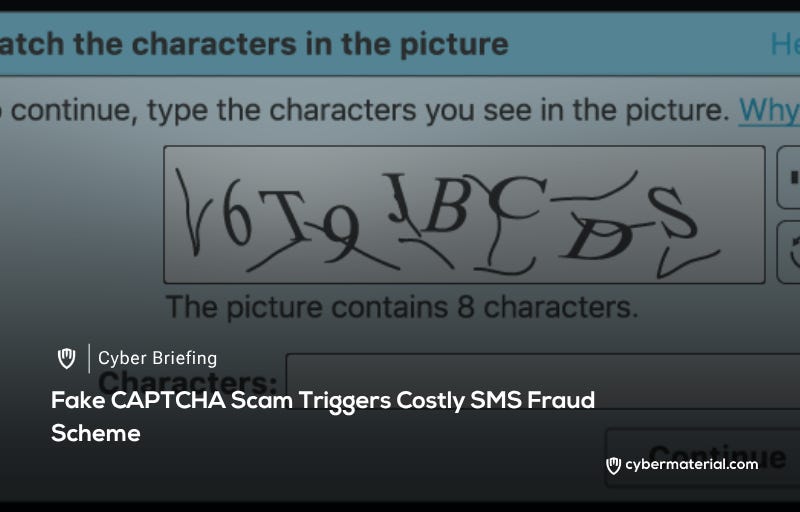


Emerging Threat: Cybercriminals Exploit Fake CAPTCHA Pages for SMS Fraud
In a concerning development in the world of cybercrime, attackers have found a novel way to manipulate the ubiquitous CAPTCHA security feature, using it as a front for international SMS fraud. This approach cleverly disguises illicit activities behind the guise of routine online verification processes, allowing these criminals to carry out scams that lead to hidden charges on victim’s phone bills.
The Mechanics of the Scam
At the heart of this fraudulent operation are fake CAPTCHA pages designed to appear as legitimate security checks. Cybercriminals create lookalike domains that mirror those of well-known websites, cleverly orchestrating a traffic distribution system (TDS). By funneling users through these seemingly benign sites, the attackers lead their targets into unknowingly engaging with fraudulent CAPTCHA pages. The seamless integration of these pages into the user’s online experience plays a pivotal role in the effectiveness of the scam, as most individuals are hardly suspicious of commonplace CAPTCHA requests.
What fundamentally occurs during this process is a trick into participating in international revenue share fraud—an elaborate scheme where attackers profit from exorbitant phone usage charges. Individuals interacting with these fake CAPTCHA pages unwittingly become part of a web of deception, making it increasingly difficult for them to recognize fraudulent activity until they begin to notice unexpected fees on their phone bills.
Technical Redirection and Deceptive Practices
The inner workings of this scam illustrate a sophisticated level of technical implementation. Users are redirected through a labyrinth of web pages that culminate at the fake CAPTCHA interface. The TDS plays an integral role in this network by connecting compromised sites, thus effectively expanding the reach of the scammers. As the attackers enhance their strategies to mimic the aesthetics and functionalities of genuine CAPTCHA interfaces, the chances of their victims falling prey to this con job grow substantially.
The alarming part of this scheme is not just the potential financial loss inflicted upon individual users, but the broader implications it has for telecommunications companies and service providers as well. As cases of inflated charges emerge, these organizations face the dual threat of increased customer complaints and the risk of financial repercussions stemming from the fraudulent activity.
A Call for Vigilance
As the scam continues to evolve, it is essential for users to exercise heightened caution when interacting with CAPTCHA requests, particularly on sites they are not familiar with. An important first step in protecting oneself is to verify the authenticity of a website before submitting any personal or payment information. It is equally advisable for individuals to routinely check their phone bills for any unusual charges or suspicious activity.
Furthermore, awareness is crucial; educating oneself about the signs of such scams can significantly reduce the chances of becoming a victim. Users are urged to take immediate action by reporting any irregularities they find to their telecommunications provider. Such measures not only help in potentially resolving individual cases but also contribute to the broader fight against these emergent cyber threats.
Conclusion
Overall, the rise of international revenue share fraud perpetrated through fake CAPTCHA pages is a stark reminder of the constantly evolving nature of cyber threats. Cybercriminals are continuously finding innovative ways to exploit common internet practices, thus underscoring the need for ongoing vigilance among internet users. Armed with knowledge and proactive measures, individuals can better safeguard themselves against such sophisticated scams.
The ripple effects of these deceptions underline the importance of collaboration among users, service providers, and cybersecurity experts in combatting this menace. The more awareness spreads about the tactics employed by perpetrators, the better equipped society will be to stand against the scourge of cyber fraudster activities.
For more details on this alarming issue, the original source can be found at Infoblox.