
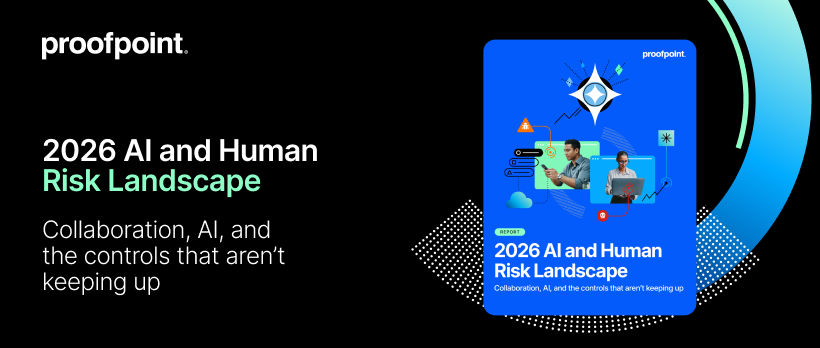


Global Study Reveals AI Security Concerns Amid Rapid Adoption
Sunnyvale, Calif. – April 28, 2026 – A recent report from Proofpoint, Inc., a leading cybersecurity and compliance company, highlights a growing concern regarding the security of artificial intelligence (AI) within organizations. The inaugural 2026 AI and Human Risk Landscape report asserts that more than half of organizations lack full confidence in their AI security controls, particularly in their ability to detect compromised AI systems.
According to the study, a significant 87% of organizations have progressed beyond pilot projects to fully deploy AI assistants within various functions such as customer support, internal messaging, email workflows, and collaboration with third-party entities. Alarmingly, 52% of surveyed professionals expressed uncertainty about whether their existing security measures can effectively identify unauthorized access or manipulation of AI systems. Additionally, nearly half of those who have implemented these controls reported experiencing confirmed or suspected incidents related to AI breaches.
The global study involved a survey of over 1,400 security professionals across 12 countries, revealing a stark contrast between rapid AI adoption and the preparedness of organizations to manage the associated risks. The findings paint a troubling picture: despite the increasing utilization of AI tools, many organizations are struggling to ensure a robust security posture to protect against the vulnerabilities introduced by AI.
Ryan Kalember, Chief Strategy Officer at Proofpoint, commented on these concerning findings, noting, “The results of this year’s report point to a widening gap between the swift integration of AI technologies into core organizational processes and the associated security enhancements that are necessary to protect against emerging threats.” Kalember emphasized the urgent need for security leaders to reevaluate their frameworks to safeguard trusted interactions across both human and AI contexts as AI becomes increasingly entrenched in workplace operations.
The report provides several key insights into the current landscape of AI deployment and security:
-
AI Deployment Lags in Security Readiness: While 87% of organizations have shifted AI assistants into full operation, over half of those surveyed described their security measures as reactive, indicating that governance frameworks have not matured at the same pace as AI adoption. This discrepancy is concerning, especially since 42% of respondents reported having encountered suspicious or confirmed AI-related incidents during live operations.
-
Collaboration Channels as Major Attack Vectors: The report underscores that AI has expanded the threat landscape, which now includes a range of channels including email, cloud applications, social platforms, and AI systems themselves. Email persists as the primary attack vector, accounting for 63% of incidents, while attacks across third-party applications and collaboration platforms have not seen significant decreases, further exacerbating risks for organizations.
-
Confidence vs. Effectiveness of Controls: A sizable overlap exists between the presence of security measures and the assurance that those measures are functioning adequately. Even though 63% of organizations claim to have implemented AI-specific security controls, a striking 52% of them lack confidence in their ability to detect compromised AI systems effectively. Furthermore, many organizations have faced incidents despite having these controls in place, highlighting insufficient training, limited visibility into AI activities, and inconsistent governance.
-
Investigation Preparedness Is Inadequate: As AI-related incidents occur, organizations struggle to investigate them thoroughly. Merely a third of respondents felt fully equipped to handle such incidents, while 41% indicated difficulties in correlating threats across various channels. This situation poses a significant challenge, as effective investigation depends on comprehensive visibility across interconnected environments, which many organizations currently lack.
-
Tool Complexity and Integration Challenges: The report outlines that managing multiple security tools complicates operational efficiency. A staggering 94% of organizations categorized the integration of various security solutions as at least moderately challenging. The complexities manifest in operational cost pressures, integration hurdles, and the challenge of correlating threats across systems, which, if unresolved, can slow organizational responses to security threats.
- Prioritizing Security Architecture in AI Expansion: Amid these challenges, more than half of surveyed organizations are actively pursuing consolidation of their security vendor and tools. A majority believe that unified platforms could offer better security than disparate solutions. In the coming year, 61% plan to enhance AI protections, 56% aim to broaden coverage of collaboration channels, and 53% are looking to adopt a unified platform approach as a strategic initiative to navigate the expanding AI landscape safely.
Kalember further stated, “While AI has introduced new risks, it has also amplified existing vulnerabilities such as mishandling sensitive data and running untrusted code. The speed and scale at which AI operates necessitate rigorous control mechanisms to govern its use effectively." He underscored the importance of treating AI not as a standalone threat but as a component that requires robust security measures integrated across every function it touches.
For those interested in accessing the full 2026 AI and Human Risk Landscape report, it can be downloaded from Proofpoint’s website. The study includes a thorough examination of how organizations can navigate the challenges of AI deployment while managing associated security risks.
About Proofpoint, Inc.: Proofpoint, Inc. is a globally recognized leader in cybersecurity tailored for human and agent-centric environments. The company’s efforts focus on securing interactions across email, cloud services, and collaborative platforms. Trusted by over 80 Fortune 100 companies and thousands of enterprises, Proofpoint is committed to helping organizations protect against threats, prevent data loss, and foster resilience in AI-enhanced workflows. For more information, visit Proofpoint’s website.