
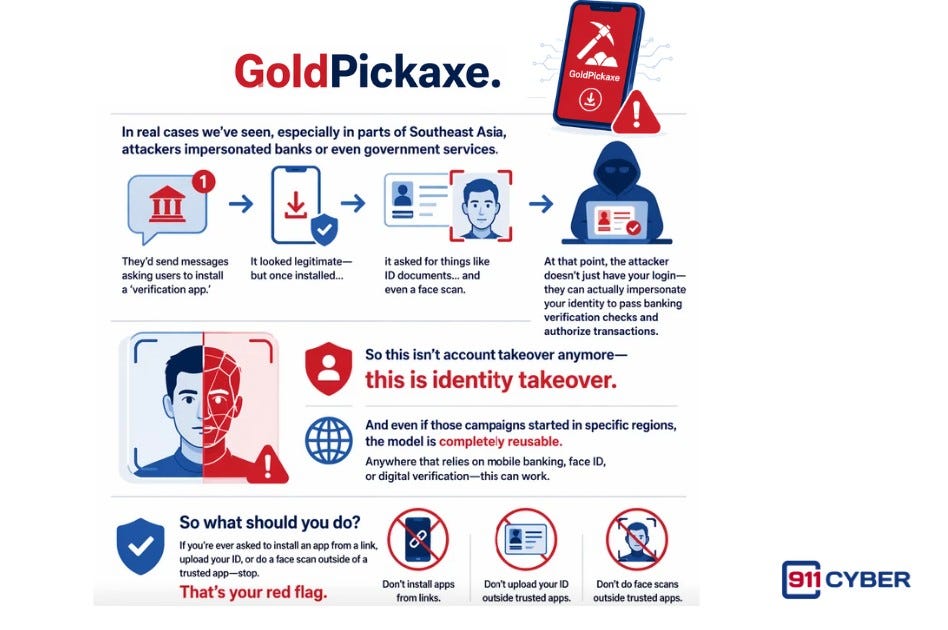


Emerging Threat: GoldPickaxe Mobile Malware Targets Identity
In a digital landscape where cybersecurity concerns predominantly revolve around the theft of passwords, banking logins, or credit card information, a new threat has surfaced, raising alarming questions about identity security. This threat is manifested in a sophisticated mobile malware campaign known as GoldPickaxe, which markedly shifts the paradigm of risks associated with mobile devices. Unlike traditional malware that operates on the premise of accessing accounts for financial gain, GoldPickaxe focuses on a far more insidious objective: the extraction of personal identity.
Experts in cybersecurity have flagged GoldPickaxe as one of the most dangerous malware campaigns to emerge in recent years. What sets this malware apart from its predecessors is its ambitious strategy of directly targeting the identity of users, which opens the door to a host of new and severe security concerns. Identity theft has always been a pressing issue in the digital world, but GoldPickaxe escalates this threat by taking aim at the very foundation of personal security—one’s identity itself.
The implications of such an approach are profound. With GoldPickaxe, attackers can harness individuals’ identities for a variety of nefarious purposes. The software is engineered to infiltrate mobile devices stealthily, gathering extensive data that can include social security numbers, personal identification numbers, and even details about family and friends. Once in possession of such sensitive information, cybercriminals can engage in identity manipulation, opening new lines of attack that extend beyond simple financial theft to social engineering, phishing scams, and even impersonation.
The technical workings of GoldPickaxe are equally concerning. The malware employs advanced techniques to evade detection, making it difficult for standard security measures to identify and neutralize it. This raises significant concerns for users who might feel secure under the assumption that their devices are protected. With the traditional methodologies of malware detection becoming less effective, there is an urgent need for revised strategies that can keep pace with these evolving threats.
In its operations, GoldPickaxe demonstrates a sophisticated understanding of human behavior and technological vulnerabilities. By exploiting weaknesses in common mobile applications and services, it can infiltrate devices with little to no user awareness. In many cases, individuals may unknowingly grant permissions to applications that then allow GoldPickaxe to access an array of personal data. Consequently, users might find themselves victims of identity theft before they even realize that their devices have been compromised.
Given these developments, cybersecurity experts underscore the importance of proactive measures for mobile device users. With GoldPickaxe highlighting how identity itself can become a target, individuals are urged to remain vigilant. Regular updates to software and apps, utilization of two-factor authentication, and constant scrutiny of app permissions are crucial steps that can mitigate risks. Additionally, educating oneself about the nature of mobile malware and how to identify potential threats is equally important in empowering users to protect their identities.
Despite the challenges posed by GoldPickaxe, the situation is not entirely bleak. The cybersecurity community is increasingly aware and vigilant regarding these emerging threats. As researchers continue to analyze the behaviors and strategies of such malware campaigns, new defensive technologies and techniques are arising to combat these sophisticated threats.
To conclude, GoldPickaxe signifies a worrying evolution in mobile malware, shifting the focus from financial gain to a broader assault on personal identity. As the digital landscape becomes ever more complex, individuals, businesses, and cybersecurity professionals must collectively adapt their strategies to anticipate and counteract these advanced threats. Keeping ahead of this evolving threat landscape will require a concerted effort and a focus on not just protecting accounts but guarding the very essence of personal identity itself.