


Cybersecurity Threats: The Rise of ClickFix Malware Campaigns
Recent investigations by cybersecurity researchers have unveiled a series of alarming ClickFix campaigns that are distributing multiple malware loaders, namely BabaDeda Loader, Lorem Ipsum Loader, and Potemkin. These findings, reported by various security firms including Morphisec, BlueVoyant, and Huntress, highlight a sophisticated escalation in cyber threat tactics.
The BabaDeda Loader, in particular, has been actively targeting educational and financial institutions since April 2026. Morphisec researcher Shmuel Uzan noted that early activities associated with BabaDeda were notorious for packaging malicious payloads within seemingly legitimate installer packages. However, a new framework has emerged that retains the original stealth and evasion tactics while enhancing its capabilities. This advanced loader is adept at concealing itself and is engineered for flexibility in delivering various malicious payloads.
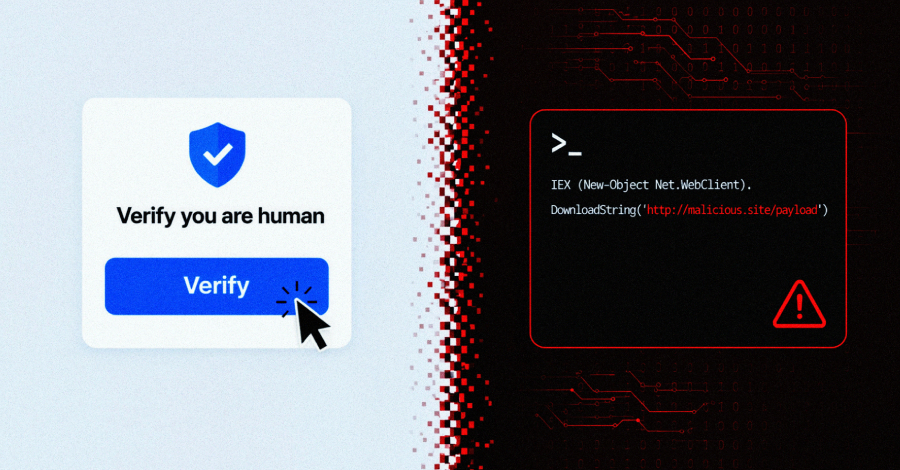
The process begins with a ClickFix social engineering scheme, which manipulates users into executing PowerShell commands supplied by the attackers. This action triggers the loader, which subsequently introduces information stealers and Remote Access Trojans (RATs) into the victim’s system. Notably, the attack uses a combination of traditional techniques such as hidden PowerShell execution, in-memory shellcode, Dynamic Link Library (DLL) side-loading, and external payload storage, which collectively fortify its stealth.
The activities have been linked to BabaDeda, a service first documented by Morphisec back in November 2021, which previously targeted sectors such as cryptocurrency and Web3 to disseminate information stealers and ransomware like LockBit. The loader now features enhanced profiling capabilities to identify and avoid devices operating from Russia or Belarus. Additionally, it conducts thorough checks for security products prior to retrieving and integrating the main payload into trusted Windows processes like "svchost.exe."
One of the notable malware families disseminated via BabaDeda Loader is a .NET backdoor. This insidious information stealer can capture sensitive data and establish encrypted connections to a command-and-control (C2) server, facilitating a multitude of sinister operations, such as:
- Collecting intricate system details
- Uncovering installed browser profiles
- Extracting web browser artifacts, including cookies, browsing histories, saved credentials, and local encryption keys
- Traversing directories for configurable files
- Capturing screenshots and executing shell commands
- Sending harvested data back to the C2 server
Parallel to the BabaDeda attacks, BlueVoyant has reported on the emergence of the Lorem Ipsum Loader, which also exploits ClickFix techniques. This campaign leverages five compromised WordPress sites spanning industries such as architecture and legal services, marking a significant shift in tactics as prior campaigns primarily utilized trojanized Microsoft Teams installers.
BlueVoyant researchers Thomas Elkins and Joshua Green highlighted that by transitioning to ClickFix lures hosted on compromised WordPress sites, the attackers have drastically widened their potential victim pool. This change in delivery method coincided with recent disruptions to the operations of another threat actor known as Fox Tempest, who previously exploited malware-signing services to deliver malicious software under the guise of credible applications.
The loss of trusted certificate signing has compelled cybercriminals to adapt their strategies. The transition to ClickFix mechanisms signifies a decline in reliance on code signing and illustrates the attackers’ resilience in adjusting to new circumstances.
Meanwhile, the Lorem Ipsum ecosystem has been associated with Vanilla Tempest, a financially motivated actor known for deploying various ransomware families. Attack sequences that employ the Lorem Ipsum Loader utilize security update lures to initiate malicious commands, leading to the download of ZIP files and outdated versions of Node.js. Crucially, these JavaScript payloads serve as droppers for additional malware components, including batch scripts that precede the execution of malicious DLL files.
In addition to BabaDeda and Lorem Ipsum, the Potemkin loader has emerged as an advanced threat in a separate ClickFix campaign. This operations chain installs an MSI package, eventually leading to an undisclosed loader that acts as a conduit for EtherRAT and RMMProject, sophisticated tools designed to facilitate remote control and credential theft.
Huntress researchers, who monitored this activity, characterized the Potemkin loader as a custom x64 loader utilizing a domain generation algorithm to identify its C2 servers. This capability allows it to load subsequent modules and engage in extensive data exfiltration and control.
As ClickFix remains a favored method of cyberattack, its continued effectiveness can be attributed to the exploitation of human psychology. Cybersecurity experts note that instructions that appear authoritative can easily manipulate individuals into executing harmful commands, making this technique particularly potent. Increasing awareness around the risks associated with pasting commands from dubious sources has prompted reactions from tech giants like Apple, which has introduced warnings in macOS to alert users against entering harmful commands into their Terminal applications.
In summary, as the landscape of cybersecurity threats evolves, the ClickFix technique exemplifies the versatility and tenacity of malicious actors. The persistent adaptation to new strategies, such as shifting delivery mechanisms, underscores the challenges faced by cybersecurity professionals as they strive to protect organizations from increasingly sophisticated attacks.