
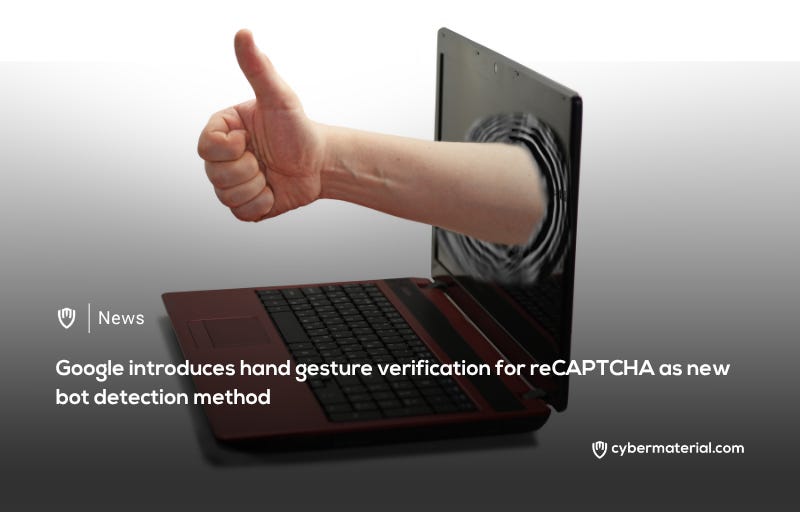


Google Introduces Hand Gesture Authentication to Enhance reCAPTCHA System
Google has made a significant advancement in its reCAPTCHA verification process by introducing a new hand gesture authentication method. This innovative approach offers an alternative to the conventional image-based challenges, such as identifying traffic lights or crosswalks, that internet users have long been accustomed to encountering. The hand gesture feature is integrated within Google Cloud Fraud Defense, a platform that aims to combat bot activity, account fraud, and transaction abuse.
For many years, reCAPTCHA has been a crucial line of defense against malicious automated attacks. It operates by requiring users to complete various challenges that differentiate humans from bots. The service employs an amalgamation of risk analysis and challenge-based verification to discern patterns of suspicious behavior. Organizations widely deploy reCAPTCHA at high-risk entry points, including login pages, registration forms, password reset interfaces, and e-commerce checkout systems. These measures help ensure that only legitimate users can access sensitive parts of their platforms.
The introduction of the hand gesture verification method is particularly noteworthy as it provides another tool for distinguishing genuine users from automated scripts and bot networks. Although Google has not disclosed the specific technical workings of the gesture system, it signifies a departure from traditional visual or text-based challenges, addressing long-standing accessibility concerns. This innovative method reduces the friction for users who may struggle with conventional CAPTCHA formats, making it a potentially user-friendly alternative.
This development occurs against a backdrop of increasingly sophisticated tactics employed by bot operators, who are constantly finding new ways to circumvent security measures. Many are now leveraging machine learning techniques to solve image-based CAPTCHA challenges, thereby reducing the effectiveness of traditional methods. By broadening its verification landscape, Google seeks to stay one step ahead of these automated attack tools while striving for a balance between stringent security protocols and user convenience.
Organizations utilizing reCAPTCHA for fraud prevention will be able to integrate this new verification method into their existing implementations. The introduction of the hand gesture functionality allows enterprises to explore different verification techniques while evaluating their efficacy in real-world scenarios. This flexibility is crucial for businesses that must adapt to evolving threats in the digital landscape.
However, experts assert that security teams using reCAPTCHA should carefully consider whether hand gesture verification aligns with their specific threat models and the demographics of their user base. This feature can work in conjunction with existing challenge types, offering organizations the opportunity to test its effectiveness in a controlled environment before deciding to make it a primary verification method.
Monitoring is a critical component of optimizing this new feature. For security teams, keeping track of false positive rates and user completion metrics will be essential for balancing the dual imperatives of security and usability. If the hand gesture verification system leads to a significantly higher false positive rate, it may inadvertently frustrate users, undermining the user experience that organizations strive to enhance.
In summary, Google’s introduction of hand gesture authentication to its reCAPTCHA system represents a pivotal shift in how online security protocols approach user verification. By diversifying methods of ensuring that users are indeed human, Google aims not only to fortify security frameworks but also to uplift user experiences by providing more accessible and less cumbersome verification options. As cyber threats evolve, so too must the methods we use to combat them, making developments like these crucial in the ongoing battle against cybercrime.
As the digital landscape continues to evolve, Google’s innovative steps highlight the need for advanced security measures that adapt to changing user behaviors and the sophistication of attacks. With organizations increasingly reliant on digital platforms, the necessity for robust, user-friendly security solutions has never been more apparent.