


Cyberwarfare / Nation-State Attacks,
Fraud Management & Cybercrime,
Government
DHS Secretary Says Agency Has Funding But Lacks Skilled Cybersecurity Personnel
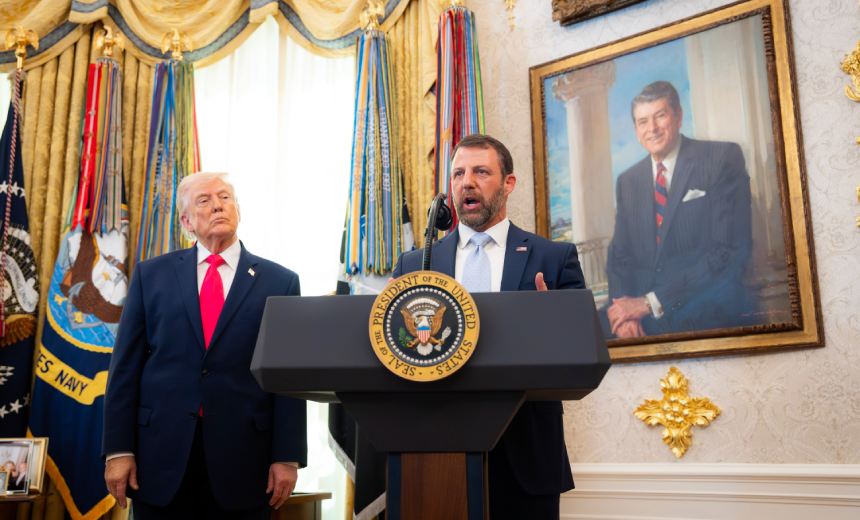
In a recent statement before Congress, the Secretary of the Department of Homeland Security (DHS), Markwayne Mullin, addressed a pressing challenge facing the Cybersecurity and Infrastructure Security Agency (CISA). Despite having adequate funding, Mullin revealed that the agency is grappling with a significant shortage of skilled cybersecurity personnel. In light of this, he emphasized the need to hire not just any staff but specifically 600 talented individuals who possess the expertise necessary to bolster the agency’s capabilities.
Mullin, who has served as DHS Secretary since March 24, reaffirmed that funding should not be a concern. He stated, “We have the resources we need. We need the people, and we need the expertise.” This stark declaration highlights the critical need for human capital within CISA, which is operating at approximately half its staffing capacity. The shortage has adversely impacted the agency’s reputation as a leading source for cybersecurity solutions.
During his congressional testimony, Secretary Mullin detailed the agency’s current leadership status, noting that the soon-to-be-appointed director will be pivotal in revamping CISA. The process of hiring new talent is expected to take about a year, during which the agency aims to restore its former stature in the cybersecurity landscape. Mullin clarified, “Do we need to hire everybody back? No. Do we need to hire about 600 people back? Yes… I want to put the talented individuals that know what they’re doing and have partnerships with our state and local officials.” This approach indicates a strategic focus on quality over quantity.
The issue of leadership within CISA has seen its share of turbulence. The agency’s former acting director, Madhu Gottumukkala, concluded his brief nine-month tenure in February, later transitioning to a strategic implementation role within DHS. Following his departure, Nick Andersen was elevated to acting director. Although a potential candidate, former DHS senior advisor Sean Plankey had to withdraw his nomination for the permanent director position, citing a lack of Senate support, and subsequently transitioned to become CEO of a defense technology firm.
Moreover, CISA has faced considerable challenges during Trump’s second term, with approximately one-third of its workforce—around 1,000 employees—departing the agency. This exodus followed the controversial dismantling of CISA’s election security program shortly after Trump’s term commenced. The cancellation or suspension of initiatives designed to safeguard U.S. election infrastructure against cyber threats has heightened concerns regarding the agency’s operational efficacy.
The leadership turnover, paired with workforce reductions, has severely hampered CISA’s capacity to share threat intelligence, thereby impeding crucial public-private partnerships necessary for an effective cyber defense strategy. Mullin underscored this predicament, stating, “We know China is working every single day, and they’re even working harder to try getting into our systems.” He highlighted the urgency for collaboration between public entities and private enterprises, remarking that corporations like Meta and Google cannot confront these threats alone.
Mullin’s comments resonate amid rising concerns regarding threats from foreign entities, particularly cybersecurity attacks orchestrated by China, North Korea, and Iran. The Secretary’s call for an “all-out frontal approach” signals a proactive stance in combating these threats. “We can’t be reactive in this,” he declared, emphasizing the critical need for immediate action in addressing cybersecurity challenges as the agency seeks to restore its once-coveted position as a trusted authority in the realm of cyber defense.