


Cybersecurity Briefing: Key Vulnerabilities and Corporate Responses
In the rapidly evolving landscape of cybersecurity, recent activities have underscored the pressing need for corporate vigilance in the face of significant threats. Current advisories highlight alarming vulnerabilities in corporate infrastructure and the shifting tactics employed by cybercriminals, marking a pivotal moment for organizations across the globe.
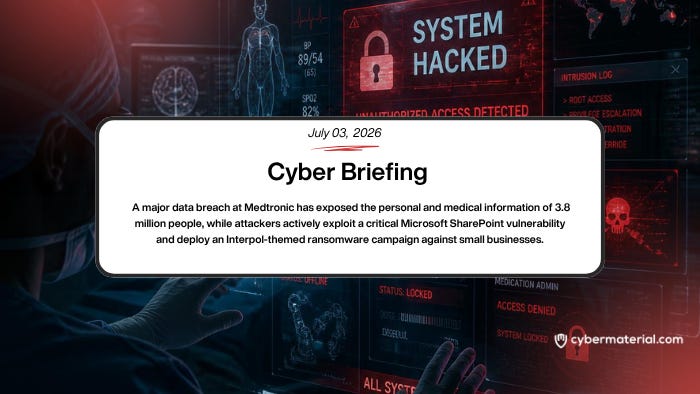
A pressing issue has arisen regarding Microsoft SharePoint, where users are under immediate threat from a high-severity remote code execution vulnerability, known as CVE-2024-38094. The Cybersecurity and Infrastructure Security Agency (CISA) has confirmed active exploitation of this flaw, which allows attackers to execute arbitrary code on vulnerable SharePoint servers. The urgency of the situation is amplified by the directive that federal agencies must patch impacted systems by January 22, 2025. As a precaution, all organizations utilizing SharePoint are advised to apply Microsoft’s security updates from May 2024 without delay.
Simultaneously, a sophisticated ransomware campaign masquerading as Interpol has surfaced, specifically targeting small and medium-sized businesses globally. This campaign utilizes deceptive phishing emails designed to lure recipients into downloading malware disguised as video files. Interestingly, researchers have identified a significant weakness within this ransomware: the decryption key is hardcoded within the malware itself, enabling victims to recover their files without paying a ransom. Companies are urged to take proactive measures by disconnecting affected devices, performing comprehensive security scans, and reporting incidents to their internal IT teams and relevant cybersecurity authorities.
In another notable incident, Medtronic, a key player in the medical technology sector, experienced a substantial data breach affecting approximately 3.8 million individuals. The notorious ShinyHunters extortion group gained access to the company’s corporate IT systems in April 2026. Compromised data included sensitive personal and medical information; however, it is crucial to note that Medtronic’s core manufacturing operations and medical products remained unaffected. Individuals whose information was compromised are being notified and advised to monitor for any suspicious activity while considering the use of credit monitoring services.
Further research indicates a paradigm shift in attack strategies. A study involving eleven SSH honeypots deployed on cloud infrastructure has revealed that the majority of successful SSH attacks are largely automated and non-interactive. This finding challenges the prevailing assumption that attackers manually navigate through compromised systems using shell commands. The study noted a consistent flow of automated login attempts originating from various global IP addresses. Consequently, organizations are encouraged to implement automated monitoring focusing on detecting non-interactive post-login behavior patterns instead of solely relying on traditional methods that overlook this emerging trend.
The UK’s National Cyber Security Centre (NCSC) has recognized the necessity for structural, automated defenses over manual monitoring in a bid to enhance cybersecurity resilience. They suggest that organizations focus on adopting secure-by-design development practices, implementing strict network segmentation—especially between IT and operational technology systems—and deploying phishing-resistant multi-factor authentication for privileged users. These strategies serve not only to deter penetration testers but also to thwart real-world attackers.
However, a notable challenge has emerged concerning the prioritization of cyber risks. A recent report from Filigran highlights that 93% of organizations struggle to maintain a unified view of their cyber risk exposure, despite the increasing volume of security data collected. The fragmentation of data across various security tools, such as vulnerability scanners and threat intelligence feeds, has complicated efforts to prioritize risks effectively across diverse environments, including cloud infrastructure and third-party services.
The cybersecurity landscape continues to demand rigorous attention as companies navigate these persistent challenges. To mitigate risks effectively, organizations must not only implement robust security measures but also foster a culture of continuous vigilance among their teams. This involves regular training, awareness campaigns, and a commitment to evolving strategies in response to the dynamic nature of cybersecurity threats. By prioritizing these efforts, businesses can enhance their resilience and safeguard against potential breaches, ensuring the protection of both corporate data and customer information in an increasingly digital world.