
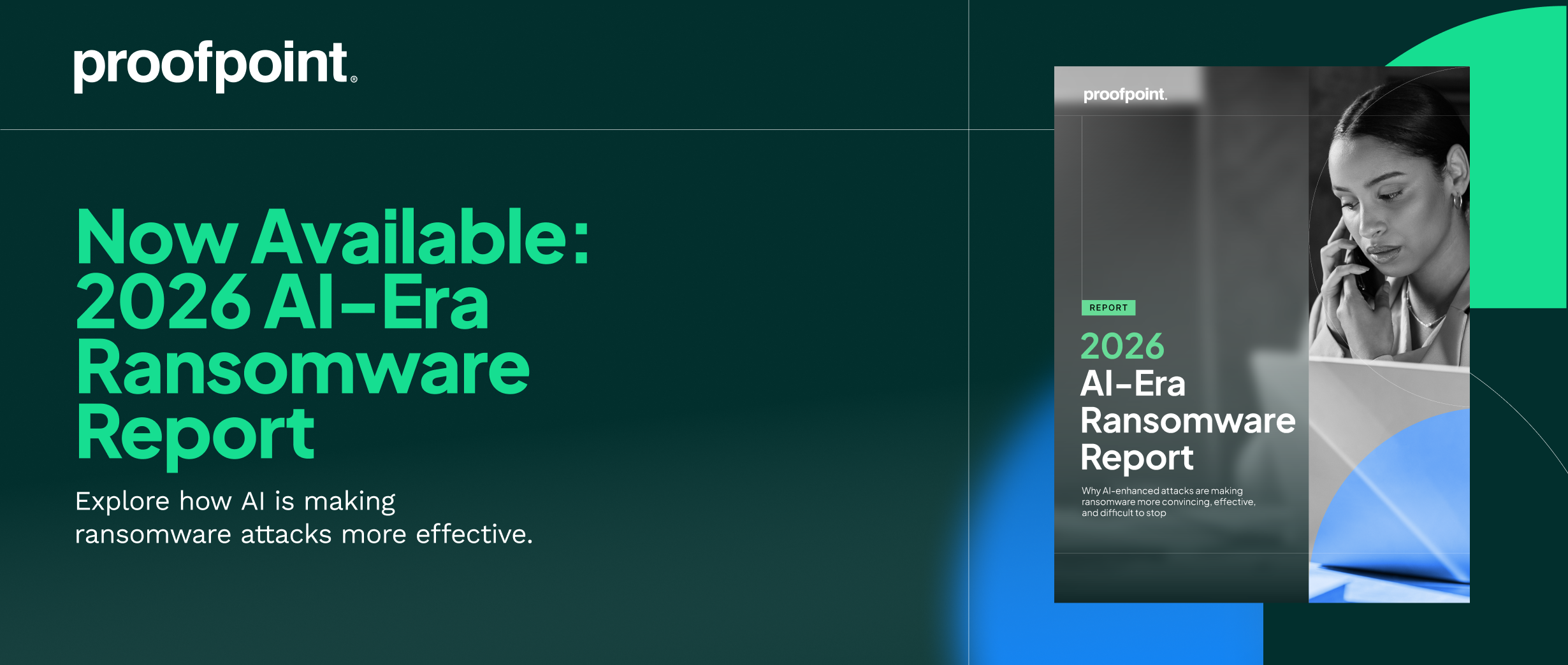


Global Study Reveals AI’s Role in Amplifying Phishing, Impersonation, and Credential Theft, Transforming Ransomware into a Human-Centric Extortion Threat
SUNNYVALE, Calif., July 22, 2026 – Proofpoint, Inc., a leader in human- and agent-centric security solutions, has recently published its 2026 AI-Era Ransomware Report. This report underscores a significant evolution in the landscape of cyber threats, particularly ransomware. It reveals that artificial intelligence (AI) has intensified the success rates of ransomware attacks by enabling cybercriminals to develop more persuasive phishing schemes, impersonation tactics, and methods of credential theft.
The study surveyed 953 cybersecurity professionals from 12 different countries, highlighting a crucial finding: almost two-thirds (65%) of organizations affected by ransomware attributed the increased effectiveness of these attacks to the application of AI. This revelation points to a concerning trend where ransomware is no longer merely about data encryption; rather, it has morphed into a systematic extortion strategy tailored to exploit human vulnerabilities, identities, and trusted communication channels.
As Ryan Kalember, Chief Strategy Officer at Proofpoint, explains, AI isn’t reinventing the notion of ransomware; rather, it enhances the methods employed to initiate these malicious attacks. Attackers are leveraging AI to craft increasingly believable phishing emails and developing malware components, including scripts that manipulate human trust on a larger scale. Organizations that continue to view ransomware strictly as a technical issue—focusing solely on endpoints or recovery—are overlooking the fundamental aspect of these attacks: they start with exploiting individuals, identities, and trusted communications.
Key Findings from Proofpoint’s 2026 AI-Era Ransomware Report
-
Human Vulnerabilities as the Primary Target:
The research indicates that AI has made the attack surface riskier, as attackers can now create phishing lures that are more convincing and personalized. Among organizations that faced ransomware attacks, 28% noted that AI substantially increased the attack’s effectiveness, while 37% believed that it had somewhat improved effectiveness. Altogether, this indicates a significant impact, with only 9% of respondents reporting no evidence of AI-driven strategies. -
Entry Points Relying on Human Interaction:
Data from the study reveals that the predominant methods of entry for ransomware incidents were all significantly tied to human actions. For instance, phishing and email-based social engineering attacks served as the initial entry vector for 34% of incidents. This was complemented by findings that malicious links (47%) and malicious attachments (46%) played crucial roles in the infiltration process—emphasizing the relational and communicative dimensions that ransomware exploits. -
Payment Doesn’t Equal Resolution:
Despite strong recommendations from security agencies and law enforcement advising against paying ransoms, over half (54%) of the affected organizations still chose to comply with attackers’ demands. Alarmingly, 37% of those who paid subsequently confronted a second extortion demand. This illustrates a notable shift: ransomware is evolving into an ongoing negotiation rather than a one-off payment, characterized by multiple forms of leverage employed by cybercriminals, including the continuous encryption of data and threats of public disclosure. -
Focus on Data Theft over Encryption:
The report found that approximately two-thirds of organizations confirmed data theft during ransomware incidents. Current ransomware operations are now more concerned with acquiring sensitive data, identities, and persistent access rather than just locking systems. This data can be used for repeated extortion, sold on illicit platforms, or act as gateways for subsequent attacks. -
Success of Attacks Predicated on Manipulation:
When asked why their defenses were unsuccessful against ransomware attacks, 40% of organizations cited that employees didn’t suspect anything amiss because the attack appeared authentic. Additionally, 38% attributed the breaches to users engaging with malicious content. This situation accentuates how AI is making social engineering techniques increasingly sophisticated, effectively blurring the lines between legitimate communication and malicious intent. - Varied Impact by Region:
Organizations in the United States reported the highest levels of AI-enhanced attack effectiveness (81%), ransom payments (93%), and confirmed data theft (60%). This suggests a concerning uptick in complex impersonation tactics targeting U.S. entities. Conversely, user interaction played a larger role in breaches in Japan, India, and Singapore, where the predominant failure mode involved users inadvertently interacting with harmful content rather than being directly deceived.
Collectively, these findings strongly indicate that organizations must rethink their approach to cybersecurity and ransomware. The age of AI-enhanced phishing and impersonation signifies that preventing ransomware incidents is less about purely safeguarding systems and more about protecting individuals, identities, and trusted communications before adversaries can strike.
Proofpoint’s comprehensive 2026 AI-Era Ransomware Report is accessible for further insights and details at their official website.
Methodology
This report is based on insights gathered between March and April 2026, involving 953 fully employed security professionals across diverse organizational structures and sectors. Participants represented a wide array of industries and geographic regions, including the U.S., the U.K., France, Germany, and others.
About Proofpoint, Inc.
Proofpoint, Inc. stands as a pioneering force in human- and agent-centric cybersecurity, safeguarding the connections among people, data, and AI agents across email, cloud, and collaboration tools. Trusted by over 80 of the Fortune 100, the company’s platform consolidates efforts to prevent data loss and build resilience while leveraging the advantages of AI in a secure manner. More information is available at www.proofpoint.com.
With a growing landscape of cyber threats, organizations must stay vigilant, adapting their strategies to effectively mitigate risks associated with evolving ransomware tactics fueled by artificial intelligence.