
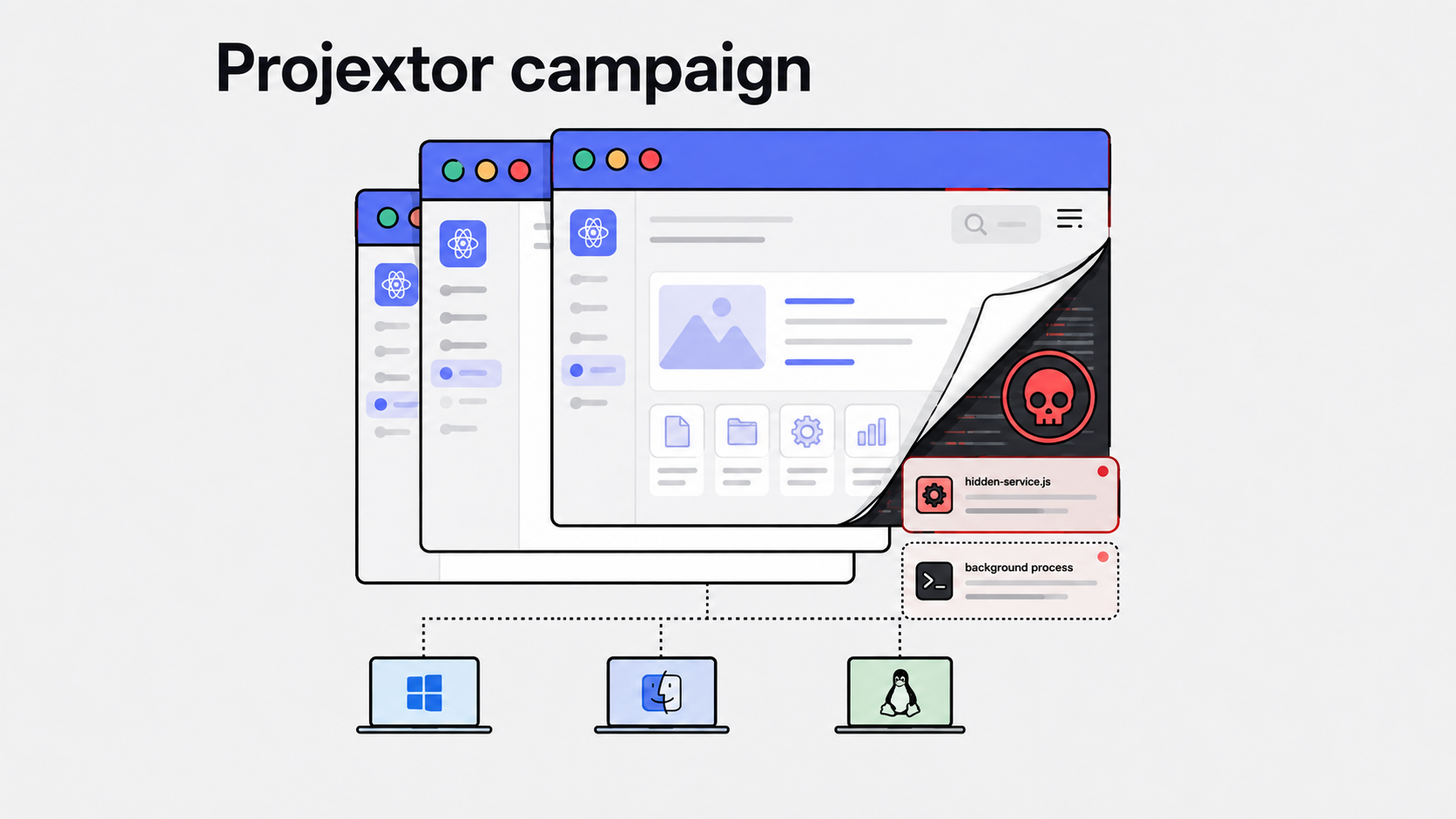


Projextor Campaign: Abusing Electron Applications to Conceal Malware
In a recent cybersecurity investigation, it has come to light that threat actors behind the Projextor campaign are using Electron-based productivity applications as a guise to implement malware functionalities. By utilizing seemingly benign tools like document converters, meal planners, and recipe utilities, these malicious actors are able to exploit unsuspecting users.
The applications, posing as legitimate software, effectively deliver their advertised features. However, due to their shared codebase, they enable runtime JavaScript execution and possess access to desktop-capture functionalities. This dual capability poses a significant threat, as users inadvertently expose their systems to serious surveillance risks post-compromise.
In the landscape of cyber threats, the utilization of search-optimized websites along with convincing download pages serves to enhance the legitimacy of these unwanted applications. When users search for common utilities like PDF converters or document editing solutions, they may unknowingly download applications that contain malicious elements. The Projextor campaign has utilized these strategies effectively, making it particularly challenging for victims to discern genuine software from harmful impostors.
Similar tactics were previously documented in the TamperedChef campaign. In that instance, malicious PDF editor software was promoted through fraudulent websites, serving as a backdoor beneath a decoy interface. This disturbing trend reflects a growing pattern where attackers exploit the trust that users place in free productivity software.
Researchers investigating the Projextor campaign identified a cluster of related Electron applications, including Kitchen Canvas, Food or Meal Formula, and DocConvertWizard, among others. Although these applications boast different names and claimed purposes, they share strikingly similar Electron framework components, specifically main.js and preload.js. This suggests a common development framework or campaign infrastructure, hinting at a coordinated effort by the attackers.
Distribution channels for Projextor are primarily websites that advertise document conversion and recipe management tools. One domain, for instance, doceditorinc[.]com, has been noted for its attempt to impersonate the genuine online document-processing service, doceditor[.]in. Such lookalike infrastructure becomes particularly effective when combined with search engine optimization, making it easier for victims to fall into the trap after searching for routine software utilities.
The method of infection employed by Projextor is quite sophisticated. The first-stage installers come in various formats, packaged using popular installers like NSIS, Squirrel Installer, and Inno Setup. Regardless of how they are packaged, each installer serves as a downloader for a secondary Electron application, embedding deeper into the user’s system.
Once the Electron package is downloaded, it contains essential components such as main.js and preload.js. These files facilitate the application’s privileged behavior, allowing for extensive functionalities that extend beyond the original purposes advertised. Electron itself, a framework combining Chromium and Node.js, permits applications built using HTML, CSS, and JavaScript to access native desktop resources, significantly amplifying the risk profile when employed maliciously.
G Data Researchers noted that the Projextor campaign highlights an alarming trend in which attackers are increasingly harnessing user trust in free productivity software. The preload-script mechanism embedded within these applications is designed to bridge browser-rendered content with privileged Node.js functionality, but in the case of Projextor, critical security measures are deliberately bypassed.
For example, unlike standard best practices that recommend isolating this bridge to prevent unwanted access, Projextor explicitly disables context isolation—a major red flag. Context isolation has been a default setting since Electron 12; disabling it creates avenues for renderer-side content to interact with the exposed APIs, thereby amplifying the potential for misuse.
Moreover, Projextor suppresses important legacy-build warnings, effectively preventing users from being alerted to outdated and potentially insecure Electron versions. This makes it easier for malicious operators to introduce new functionalities even after the initial installation without alerting users. The application includes a custom screen-share picker, which enumerates available desktops and application windows, granting attackers the capability to capture sensitive content displayed on a victim’s screen, from documents to financial records.
As these Electron-based applications continue to evolve, organizations are advised to take pro-active measures against potential threats. This includes blocking the identified infrastructure, monitoring for suspicious hashes, and reviewing any Electron applications that disable critical security measures. Vigilance is essential, especially regarding applications that load remote or injected JavaScript or expose desktop-capture functionalities without a clear business justification.
In summary, the Projextor campaign illustrates a pressing need for increased cybersecurity awareness and proactive measures among users and organizations alike. With threat actors continually developing more sophisticated means to exploit trusted software, navigating the digital landscape will require greater scrutiny and an adherence to best security practices.