
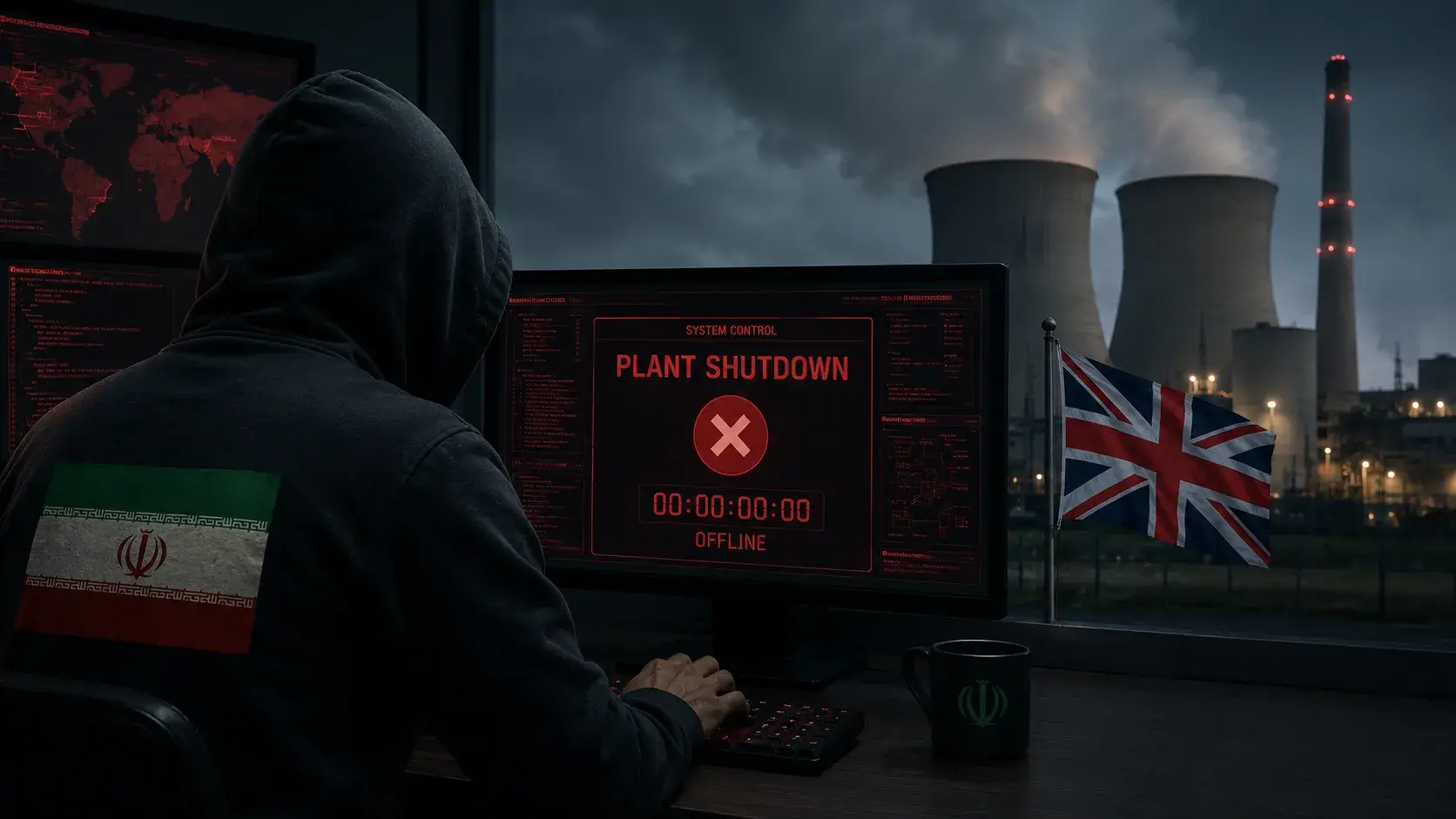


A recent cyberattack linked to Iranian threat actors has caused significant disruption in the UK energy sector, forcing a small-scale power plant offline for four consecutive days in July. This incident is notable as it represents the first successful cyberattack that has completely shut down a UK energy generation facility, emphasizing the vulnerabilities present even within smaller entities in critical infrastructures.
According to reports from The Telegraph, the affected facility was not a major power station but rather a smaller electricity generator. However, the UK government has reassured citizens that this incident did not endanger the national grid or disrupt wider electricity supplies. A spokesperson for the Department for Energy Security and Net Zero (DESNZ) emphasized that the event’s impact was limited, given that the generator accounted for only a small fraction of the total national energy production capacity and fell below the threshold for significant regulated operators.
Despite the restricted immediate implications, the event has sparked widespread concern throughout the UK energy sector. Security analysts interpret this disruption as a substantial proof-of-concept operation carried out by groups affiliated with Iran’s Islamic Revolutionary Guard Corps (IRGC). They suggest that the attackers’ objective may not have been to cause widespread chaos but rather to strategically signal their capabilities. By successfully shutting down a power generator, the attackers demonstrated their ability to infiltrate operational technology environments and potentially influence industrial processes within the critical infrastructure of the UK.
This cyberattack unfolded against a backdrop of increasing geopolitical tensions between London, Washington, and Tehran. It coincided with warnings from U.S. agencies, including the FBI and the Cybersecurity and Infrastructure Security Agency (CISA), regarding the likelihood of Iran-aligned actors targeting water-sector organizations in the U.S. Such circumstances have intensified fears that Iranian-linked groups are pursuing a broader campaign against critical infrastructure in the West—often exploiting vulnerabilities in remote-access services, internet-facing industrial systems, poorly segmented information technology (IT) and operational technology (OT) networks, and third-party suppliers.
The National Cyber Security Center (NCSC), part of the UK’s Government Communications Headquarters (GCHQ), has yet to publicly disclose specific technical details regarding the attack on the power plant or identify the affected organization. However, as the incident did not result in any reported outages from major regulated power station operators, this aligns with the government’s assessment that the overall electricity system remained functional and unaffected.
In response to the breach, DESNZ has briefed chief executives within the energy sector and disseminated written cybersecurity guidance to operators. The government is reportedly in the process of updating cybersecurity regulations that govern the sector to better safeguard against future incidents.
This occurrence underscores the increasing threat posed by state-aligned actors that may be targeting industrial control systems despite the scale of the facilities involved. Even an attack on a smaller generator can serve as a litmus test for defensive response processes, revealing weaknesses in OT network segmentation and providing attackers with valuable intelligence that could be leveraged in future targeting of higher-value infrastructures.
NCSC chief executive Richard Horne has highlighted the urgency of the situation by revealing that the agency handles at least four nationally significant cyberattacks each week. As geopolitical tensions continue to escalate, the likelihood of similar threats appears to be on the rise.
In light of these developments, the UK energy sector is being urged to take proactive measures to bolster its cybersecurity resilience. This recent incident serves as a stark reminder of the vulnerabilities present in today’s interconnected digital landscape, where even smaller entities can find themselves under siege from state-sponsored adversaries. The implications of such attacks extend beyond immediate disruptions, posing long-term risks that could affect the stability of entire regions if left unaddressed. The need for robust threat intelligence solutions and improved defensive protocols has never been more crucial as the landscape of cyber threats evolves.