
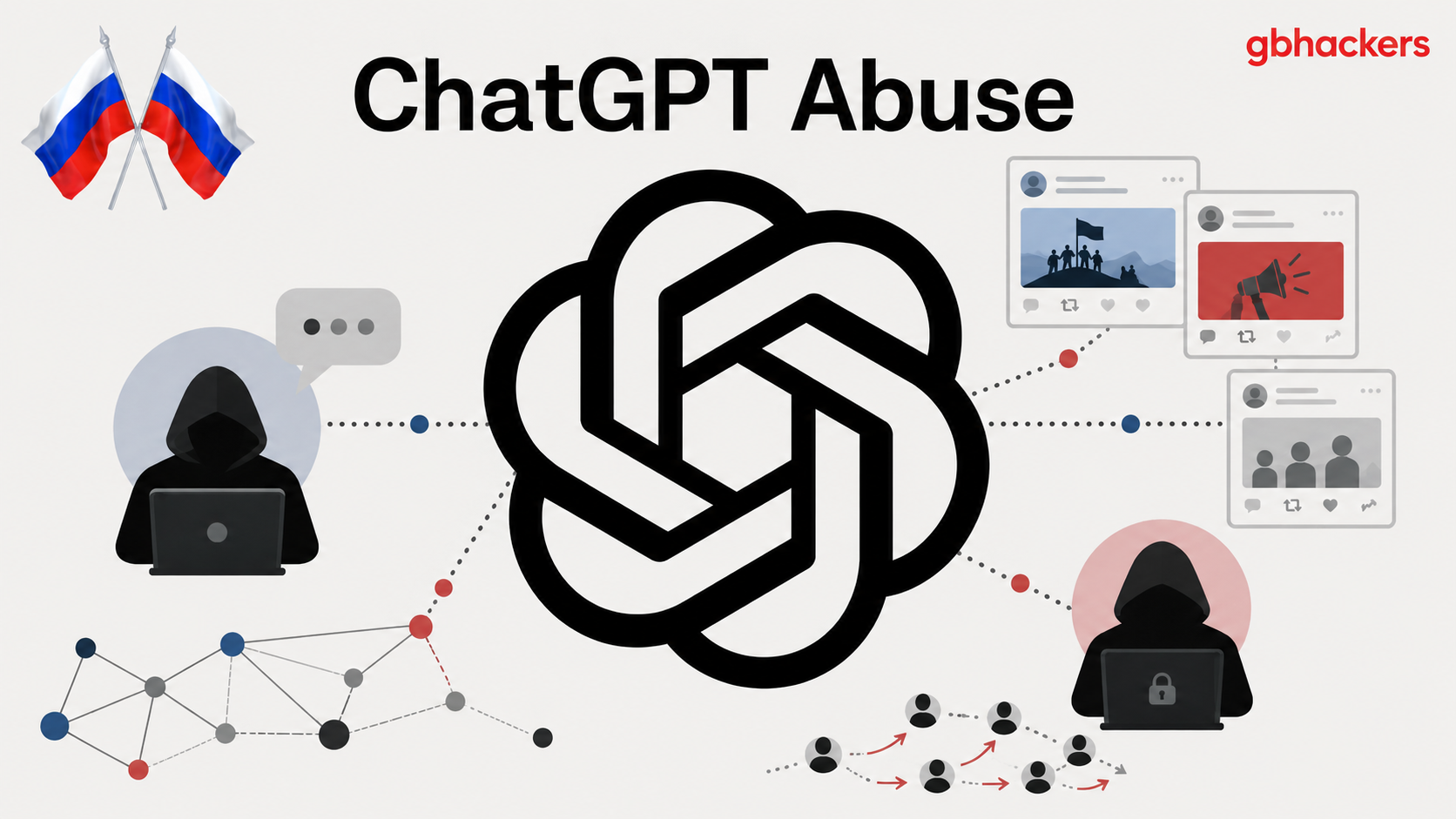


OpenAI has made headlines with its recent discovery of a covert influence operation that manipulated its generative AI tool, ChatGPT, to disseminate disinformation. This operation purportedly sought to promote a fictional Israeli think tank while simultaneously spreading narratives favorable to Russia, and creating a façade of academic legitimacy across several major social media platforms.
After conducting a thorough investigation, the company banned a significant number of accounts it determined were likely affiliated with Russian operatives. This move followed OpenAI’s findings, which traced AI-generated posts to an extensive network centered around the so-called International Burke Institute (IBI). This group was depicted as an “expert community” claiming to base its operations in Israel, yet it exhibited numerous troubling signs of being a fabricated entity.
The investigation revealed that ChatGPT was primarily utilized to draft and refine social media content, which was then disseminated through various channels, including X (formerly Twitter), Facebook, LinkedIn, Telegram, and Substack. OpenAI noted that the content generated in this clandestine campaign was predominantly in English, despite the operators submitting their prompts in Russian. The deliberate concealment of linguistic markers that could indicate Russian authorship is a tactic commonly employed in influence operations to create an appearance of authenticity to the target audiences.
In an interesting technical hurdle, the operators were forced to bypass OpenAI’s restrictions on accessing its model from within Russia. Reports indicate that they employed VPN services to mask their true locations and gain access to the technology.
At the heart of this disinformation effort was IBI, which intended to position itself as a credible policy and research institution. While its website portrayed high-profile academic voices and published insightful country reports, a deeper examination by OpenAI unveiled a disturbing reliance on plagiarized material. A staggering majority—34 out of 36 expert-linked articles reviewed—were found to have been copied from other credible online sources, affixed with fraudulent attributions to unrelated academics.
For instance, one notable article about the China-Pakistan Economic Corridor was originally sourced from a publication by Cambridge University Press but was falsely attributed to a professor at the University of Nottingham. In another case, a piece discussing migration governance appropriated content from the Migration Policy Institute yet had its authorship misattributed to an Australian professor with expertise in food chemistry.
Such tactics are particularly worrisome as they leverage genuine research to fabricate credibility for the disinformation campaign. By altering authorship and embedding legitimate analyses into their content, the operators attempted to create an information ecosystem that repurposed authentic scholarship to buttress a deceptive institutional identity. This manipulation was especially evident in IBI’s so-called “sovereignty index,” a key narrative vehicle that framed Russia positively while depicting the United States, the European Union, and other global powers as weakened or dependent.
OpenAI characterized this index as the operation’s most significant feature, indicative of a new era of influence networks that construct elaborate pseudo-think-tank structures. Notably, the campaign also employed ChatGPT to generate replies directed at actual users on Substack, often promoting their channels. Parallel efforts included the establishment of a German-language Telegram channel titled “Lahme Ente” (or “Lame Duck”), which positioned itself as a critic of Ukraine and the EU while advocating stronger ties to Russia.
Despite these elaborate efforts, OpenAI judged the immediate impact of the operation to be limited. Many posts garnered minimal engagement, and the official IBI accounts attracted few followers. However, related Telegram channels boasted follower counts between 10,000 to 20,000, indicating a modicum of reach.
Utilizing the Brookings Breakout Scale, OpenAI categorized this operation towards the lower end of Category Three, where activities span multiple platforms and show some signs of interaction with authentic audiences. Nonetheless, the methods employed illustrate a notable shift in operational tactics; the integration of AI into influence operations allows actors to create localized messaging, develop platform-specific engagement strategies, and maintain diverse multilingual personas—all at a reduced cost.
The true threat lies not solely in the generation of synthetic texts but in the intricate framework that supports this disinformation. As AI tools become more sophisticated, they enable the creation of fake authority and the propagation of narratives aligned with specific state interests, posing a substantial risk in the landscape of information dissemination.