
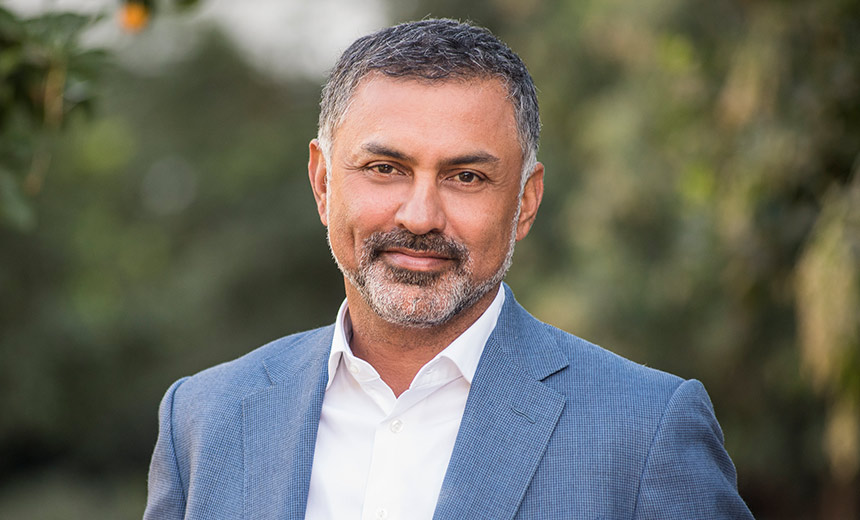


CEO Nikesh Arora Warns of Potential Breaches Due to Cybersecurity Debt
In a recent address to investors, Nikesh Arora, the CEO of Palo Alto Networks, highlighted the pressing issue of a staggering $1 trillion in global cybersecurity debt. He cautioned that this growing vulnerability could become the weak link in the fight against artificial intelligence (AI)-enabled threats, potentially facilitating major breaches in the near future.
Arora emphasized that the solution to emerging security challenges lies in the modernization of network infrastructure and the enhancement of security operations. He articulated that for organizations to effectively combat threats that bypass conventional perimeter defenses, a proactive and agentic approach is imperative. “The only way to solve this problem in the long term is if something escapes past your perimeter; you must find it quickly and shut it down,” he remarked. This reality necessitates significant upgrades in existing cyber infrastructures and a shift toward AI-driven Security Operations Centers (SOCs).
A unified, real-time defense framework is essential, Arora stated. He recommended integrating software and hardware firewalls with Secure Access Service Edge (SASE) and Software-Defined Wide Area Networks (SD-WAN). He noted a trajectory in the market where advancements are surpassing a few flagship models, moving toward a diversified ecosystem of open-weight and open-source architectures. This transformation has seen a remarkable increase in agentic traffic on Palo Alto’s SASE platform, with figures soaring ninefold over the past nine months.
This evolution grants organizations enhanced control over their proprietary data, as companies leverage internal telemetry to refine models for tailored applications. However, Arora pointed out that this "rapid fragmentation and proliferation" of specialized models can simultaneously widen the attack surface, posing additional risks. “Each new deployment adds more infrastructure to fortify and more sensitive data to protect. The surface area requiring platformized protection is expanding dramatically,” he noted.
The capabilities of open-source models are quickly catching up to more established systems like Anthropic’s Mythos, according to Arora, who predicts this trend will only continue to improve. He warned that if the acceptance of these capabilities becomes widespread, the cybersecurity industry faces an urgent deadline to clear accumulated technical debt from years of deferred investments. This accumulation, he stated, could precipitate significant breaches as organizations struggle to keep pace with the rapid development of AI technologies.
Arora elaborated that true modernization does not occur overnight. Organizations often juggle various business priorities and may delay upgrading existing systems until contracts expire or products reach their end of life. As he explained, this slower modernization process contrasts sharply with the rapid advancements in AI technology, which are redefining operational capabilities across industries.
“Customers are always faced with numerous priorities,” Arora mentioned. He noted the burgeoning interest in AI-driven transformations within sectors such as customer support and software development. Organizations must manage these AI-related initiatives alongside their cybersecurity modernization efforts, further complicating the landscape.
Eventually, this journey toward modernization is expected to culminate in what Arora describes as agentic cybersecurity. The aim is to develop new products that learn from the vast data Palo Alto has already collected, minimizing the need for customers to undergo intricate configuration processes during integration. He highlighted the company’s Cortex XDR software, which captures 19 terabytes of data daily from various sources, including endpoints, networks, cloud environments, and identity and access management systems. Consequently, the amount of data available for training enterprise products is only set to increase.
As Arora projected, the future might hold immense advantages for organizations leveraging AI-driven cybersecurity solutions. He envisioned a scenario five years ahead where the company could seamlessly offer solutions capable of understanding diverse deployment environments. This would allow for a rapid product replacement process, requiring significantly fewer personnel to manage configurations while simultaneously validating their operations autonomously.
In financial news, Palo Alto Networks posted impressive earnings, with total revenue reaching $3.41 billion for the quarter ending July 31, surpassing estimates. Despite beating financial expectations, the company’s stock experienced a decline in after-hours trading, falling by 1.9% to $362.09 per share. Looking forward, the expectation for the quarter ending October 31 ranges from $0.96 to $0.98 per diluted non-GAAP net income per share amidst anticipated revenues between $3.3 billion and $3.31 billion.
As organizations navigate the evolving landscape of cybersecurity and AI threats, Arora’s insights serve as a reminder of the dual necessity of modernization and proactive defense strategies to mitigate the risks associated with outdated infrastructures.