
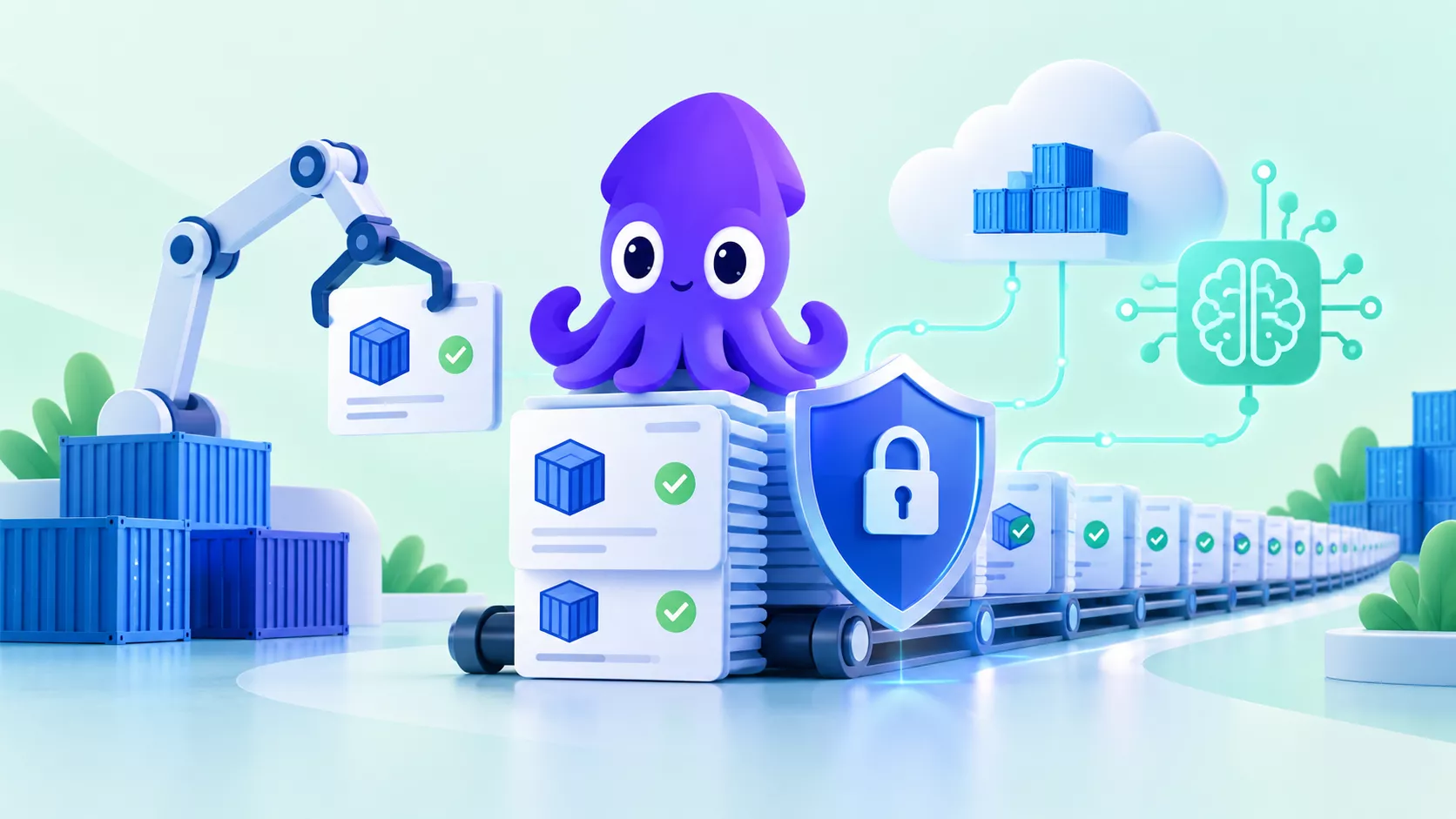


Chainguard has recently announced a groundbreaking achievement: it has surpassed 1 billion container build manifests, marking a remarkable doubling of production from the 500 million it reached merely six months prior. This milestone is a significant indicator of the company’s rapid expansion in the domain of AI-assisted software supply-chain security solutions.
Currently, Chainguard oversees more than 3,000 unique container images along with 675,000 distinct image versions. This impressive build volume encapsulates more than mere numbers; it signals a growing emphasis on security, performance, and the continuous enhancement of digital assets.
Every build manifest produced by Chainguard reflects a newly generated, verifiable container artifact. These artifacts encompass a variety of components, including fresh application images, reconstructed packages following a libc patch, architecture-specific variants, or refreshed software bills of materials (SBOMs) after a dependency update. The diversity in these builds enhances the adaptability of Chainguard’s platform, catering to varying customer needs while ensuring that all artifacts are secure and up-to-date.
Projects that support multiple versions and architectures, such as programming languages like Python or Go, can see the number of required rebuilds multiply swiftly. Each upstream release, dependency fix, security advisory, or hardening improvement necessitates new builds, making it imperative for Chainguard to have an efficient and effective system for managing these changes.
Chainguard Hits 1 Billion Build Manifests
To ensure that the container images remain secure even after they have been initially pulled by customers, Chainguard employs a rigorous approach. Central to this is Chainguard OS, a Linux distribution specifically designed for cloud-native workloads and continuous delivery. This innovative operating system forsakes the conventional long-lived distribution releases in favor of a rolling-release model, allowing for the continuous deployment of updated artifacts throughout the day.

Chainguard Factory is responsible for building the company’s container artifacts from the source, integrating essential security metadata, including SLSA Level 3 provenance, Sigstore signatures, and comprehensive SBOMs. This factory is engineered to produce reproducible builds, significantly lowering the risk of configuration drift or inconsistencies between the intended artifact and the final image delivered to users.
However, mere reproducibility cannot support the vast scale of rebuilding required at this billion-manifest level. The company recognized the need for a system capable of autonomously identifying when thousands of dependent components required updates and initiating builds without necessitating manual intervention. To tackle this immense challenge, Chainguard introduced Factory 2.0, augmented by its open-source DriftlessAF framework.
This system marks a departure from a primarily event-driven model to a self-correcting reconciliation process. The previous framework often generated cascading work items that could lead to duplicate build failures, brittle queues, and significant operational burdens for site reliability engineers. In cases of partial failures, delays in addressing Common Vulnerabilities and Exposures (CVEs) and other package changes were common. Factory 2.0 continuously compares the intended software state with the actual state in the catalog and promptly addresses discrepancies, restoring the desired conditions efficiently.

The framework employs a shared work queue and redundant tasks, allowing failed jobs to be retried or discarded without disrupting the platform’s progress toward achieving its security objectives. AI technology plays a pivotal role in tasks traditionally challenging for deterministic automation to manage, such as evaluating newly introduced components, assessing package modifications, and backporting vulnerability fixes to legacy software versions.
Chainguard emphasizes that its AI agents operate within structured and verifiable tooling systems, mitigating the risks associated with unsafe AI-generated alterations. The company posits that the rapid pace of rebuilds is now a critical component of effective supply-chain defense. As attackers increasingly leverage AI to construct dependency graphs, pinpoint vulnerabilities, and expedite exploit development, it becomes necessary for defenders to minimize the window between an upstream security update and the roll-out of a newly rebuilt, signed, and verified container image.
By enhancing the DriftlessAF framework and migrating more components of its catalog into self-healing reconciliation loops, Chainguard is striving to automate security maintenance to a scale that exceeds the capabilities of conventional event-driven build systems. This proactive approach positions Chainguard at the forefront of supply-chain security, enabling them to meet the growing complexities and challenges of contemporary software development ecosystems.
As the landscape continues to evolve, it is evident that companies like Chainguard are paving the way for a more secure and resilient software supply chain.