
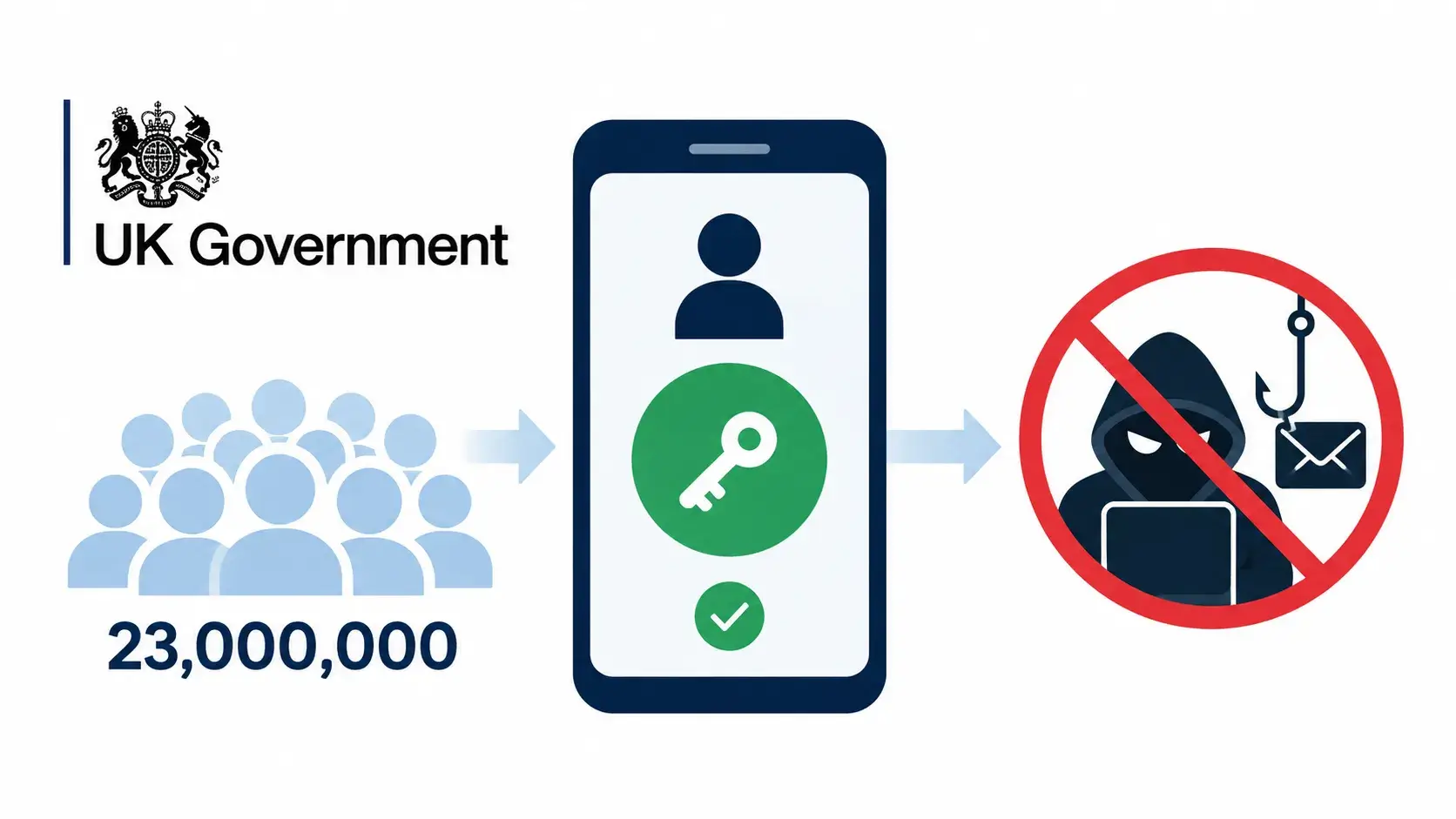


The UK government has embarked on a transformative initiative by implementing passkey authentication for GOV.UK One Login, catering to over 23 million users who will now enjoy a more efficient and secure method of accessing public services. This significant upgrade to digital identity verification is designed to enhance user experience while bolstering security measures.
The core objective of this initiative is to diminish the reliance on conventional passwords and SMS-based verification codes. These traditional methods have increasingly become major targets for fraud and credential theft, making users vulnerable to various cyber threats. By introducing passkeys, the government aims to address these security challenges head-on, providing users with a modern solution that not only increases safety but also speeds up access to essential services.
A Streamlined Login Experience
GOV.UK One Login serves as a single sign-in solution for an array of government services, ranging from childcare support to tax management, State Pension checks, and driving license renewals. Individuals opting into this new system may authenticate access using a device-bound passkey. This passkey can be unlocked through pre-existing local security measures, including biometrics such as fingerprints or facial recognition, or a device PIN.
In contrast to traditional password-based sign-in processes, the introduction of passkeys removes the need for users to remember, type, reuse, or reset passwords. As reported, passkey authentication can be up to eight times faster than logging in using a username, password, and two-step verification code. This increase in speed not only enhances user experience but also reduces operational costs associated with sending SMS-based one-time passcodes, resulting in significant savings for taxpayers.
The early trial period demonstrated considerable interest, with over 300,000 users adopting passkeys as part of their login experience. The government has noted that nearly one in ten daily sign-ins now utilizes passkeys, resulting in an estimated savings of nearly £600 per day in SMS costs alone.
Robust Security Features
Passkeys are fundamentally designed to offer enhanced security through their cryptographic, device-bound architecture. Each passkey is uniquely associated with a specific website or application and cannot be copied, guessed, or reused across different platforms. This feature is particularly advantageous during the authentication process, where the user’s device verifies that it is communicating with the legitimate service before approving the login.
This strategic design effectively combats common phishing attacks, wherein victims are often tricked into entering their passwords on counterfeit login pages. Since passkeys do not expose reusable passwords to websites, they significantly undermine the potential for attackers to exploit cloned login portals or fraudulent phishing emails.
Additionally, the biometric data necessary for unlocking a passkey remains securely stored on the user’s device, without being transmitted to or stored on GOV.UK One Login’s systems. This approach ensures that users’ fingerprints or facial-recognition data are safeguarded within their individual devices, further enhancing privacy and security measures.
Government and Cybersecurity Endorsements
Digital Government Minister Stephanie Peacock has voiced strong support for the rollout, highlighting its role in simplifying access to essential government services while simultaneously fortifying defenses against password-related fraudulent activities. She pointed out that users can utilize the same fingerprint or facial scan for logging into government services as they do for unlocking their devices, providing both user comfort and familiarity.
The National Cyber Security Center (NCSC) has also endorsed this transition, emphasizing that passkeys are a more secure alternative to traditional passwords. NCSC officials have noted that passkeys cannot be intercepted, stolen, or reused, thereby offering a significant advantage in securing sensitive online transactions.
Jonathon Ellison, director for national resilience at the NCSC, commented that this deployment equips the public with a faster, more secure way to access government services, aiming to reduce the issues associated with traditional password management.
Future Prospects
For security professionals, this initiative exemplifies a growing trend toward phishing-resistant authentication that leverages FIDO-style public-key cryptography. Such advancements could significantly reduce organizational vulnerabilities to credential theft, password spraying, and phishing attacks.
While passkeys are currently optional for GOV.UK One Login users, the government and NCSC strongly advocate for their adoption, encouraging users to take advantage of this valuable security enhancement for public-sector digital identity services. As the UK moves forward with these innovative solutions, the expectation is that they will redefine how citizens interact with government digital platforms, ushering in a new era of secure and efficient public service access.