


Artificial Intelligence & Machine Learning,
Next-Generation Technologies & Secure Development,
Regulation
Analysts Question Potential Conflicts of Interest for Federal AI Tzar, Task Force
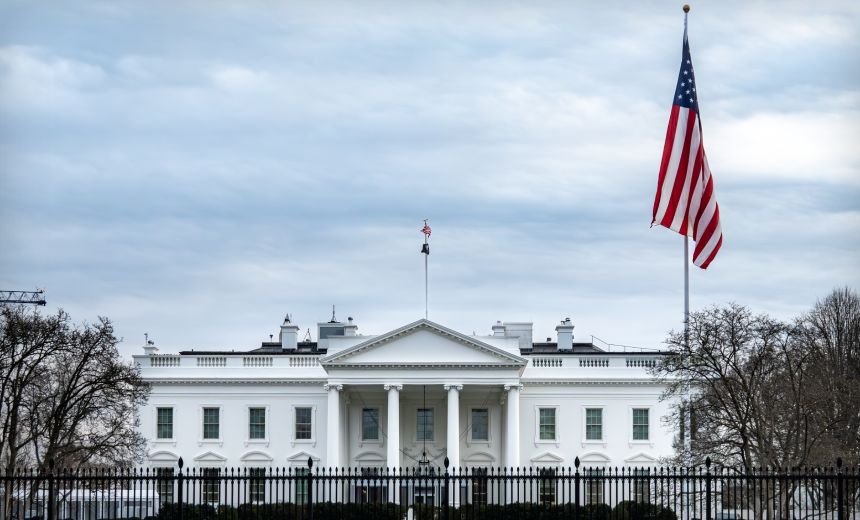
In an era marked by rapid technological advancements, U.S. President Donald Trump has recently announced the creation of an “AI Force.” This decision arrives against a backdrop of increasing concerns voiced by experts in the technology sector regarding the potential risks associated with artificial intelligence. With questions lingering about the specific functions, powers, and leadership of this new task force, many industry analysts are expressing skepticism about its feasibility and clarity.
In his announcement, Trump indicated that this initiative would resemble the establishment of the Space Force. He expressed intentions to appoint an AI czar responsible for overseeing the new force, although as of now, no formal outline detailing the force’s mission, budget, or governing agency has been made public. In fact, there has been a noticeable absence of follow-up communication from the White House, which leaves many curious about the actual scope of this new initiative.
The potential for conflicts of interest surrounding the czar role adds another layer of complexity. The previous czar, who was involved with both AI and cryptocurrency, benefited from ethics waivers that allowed him to retain investments while working in the White House. Adam Kovacevich, the head of the Chamber of Progress, a center-left tech advocacy organization, criticized Trump’s approach, suggesting that the initiative appears to be improvised. He emphasized the stark contrast between the previous well-coordinated AI strategy overseen by David Sacks and the current lack of coherence since Sacks departed from the position.
Moreover, Trump’s broadly defined responsibilities for the new AI Force raise significant questions. He stated that the government aims to “cherish” and “aid” the AI industry, while also expressing a desire to uncover “bad” conduct through existing criminal and civil justice systems. Notably, Trump did not specify whether the AI Force will have the authority to investigate, prosecute, or regulate any misconduct, leaving analysts to wonder about the real power dynamics behind the initiative.
Given the lack of comprehensive regulations governing AI at the congressional level, it appears that enforcement will rely on existing statutes that address the underlying behaviors or on state laws recently enacted. Michelle Lopes Maldonado, an associate director specializing in AI policy at the Information Technology and Innovation Foundation, pointed out that Trump’s prior executive order directs the attorney general to put a priority on enforcing existing laws against AI-enabled cybercrime. This executive order also emphasized that the government may gain early access to advanced AI models without imposing mandatory licensing or pre-clearance requirements.
Maldonado cautions that without a clear consensus on problematic behaviors within the AI realm, the classification of actions as “rogue” could lead to subjective interpretations, complicating the establishment of a standardized response to AI-related issues. Looking back at the history of the Space Force, it took legislative action by Congress to officially facilitate its establishment, suggesting that a similar process would be necessary for the AI Force, particularly if it were to be integrated within the Pentagon.
If the AI Force does indeed find a home within the Department of Defense, it may either operate within or alongside the Chief Digital and Artificial Intelligence Office, which already manages the department’s adoption of artificial intelligence technologies. Additionally, civilian AI policy falls under the purview of the White House Office of Science and Technology Policy, while the Commerce Department’s Center for AI Standards and Innovation is responsible for testing frontier models.
Maldonado suggests that the new force could provide an opportunity for the government to enhance American AI capabilities rather than merely focusing on regulation. She envisions a future where expanded testing and benchmarking of AI systems, stronger cybersecurity measures, and quicker AI adoption across federal agencies are prioritized. “The United States does not have to choose between advancing AI and making it safer,” she argues. “We should be doing both at the same time.”
A Czar With Questions Attached
As the debate surrounds the formation of the AI Force intensifies, competition for the czar position is already in motion among current and former tech leaders and government officials. Recent reports indicate that concerns regarding private investments might lead Trump to favor candidates with governmental experience. Among those speculated to be in contention are Scott Kupor, the Director of the Office of Personnel Management, and Sriram Krishnan, a seasoned tech figure who had previously served as a senior White House AI policy advisor.
Other noteworthy names mentioned include Chamath Palihapitiya, CEO of 8090, and two prominent national security officials: Sean Cairncross, the National Cyber Director, and Emil Michael, the Pentagon’s under secretary for research and engineering. The latter has been actively involved in discussions surrounding military-AI technology use, which could be valuable experience in navigating the ethical and operational challenges of the new role.
Although Sacks, the previous czar, maintained his position under specific government frameworks that permitted ethical waivers, questions regarding potential limitations on his service duration were raised by Senator Elizabeth Warren and Representative Melanie Stansbury in late 2025. Maldonado asserts the necessity for transparency and adherence to established rules and regulations regarding conflicts of interest as the search for a new czar continues.
As the discourse around the AI Force evolves, the anticipation surrounding the appointment of a new leader continues to grow. The upcoming decisions and strategies will undoubtedly shape the future of artificial intelligence policy and governance in the United States, creating both challenges and opportunities in an era characterized by rapid technological evolution.