
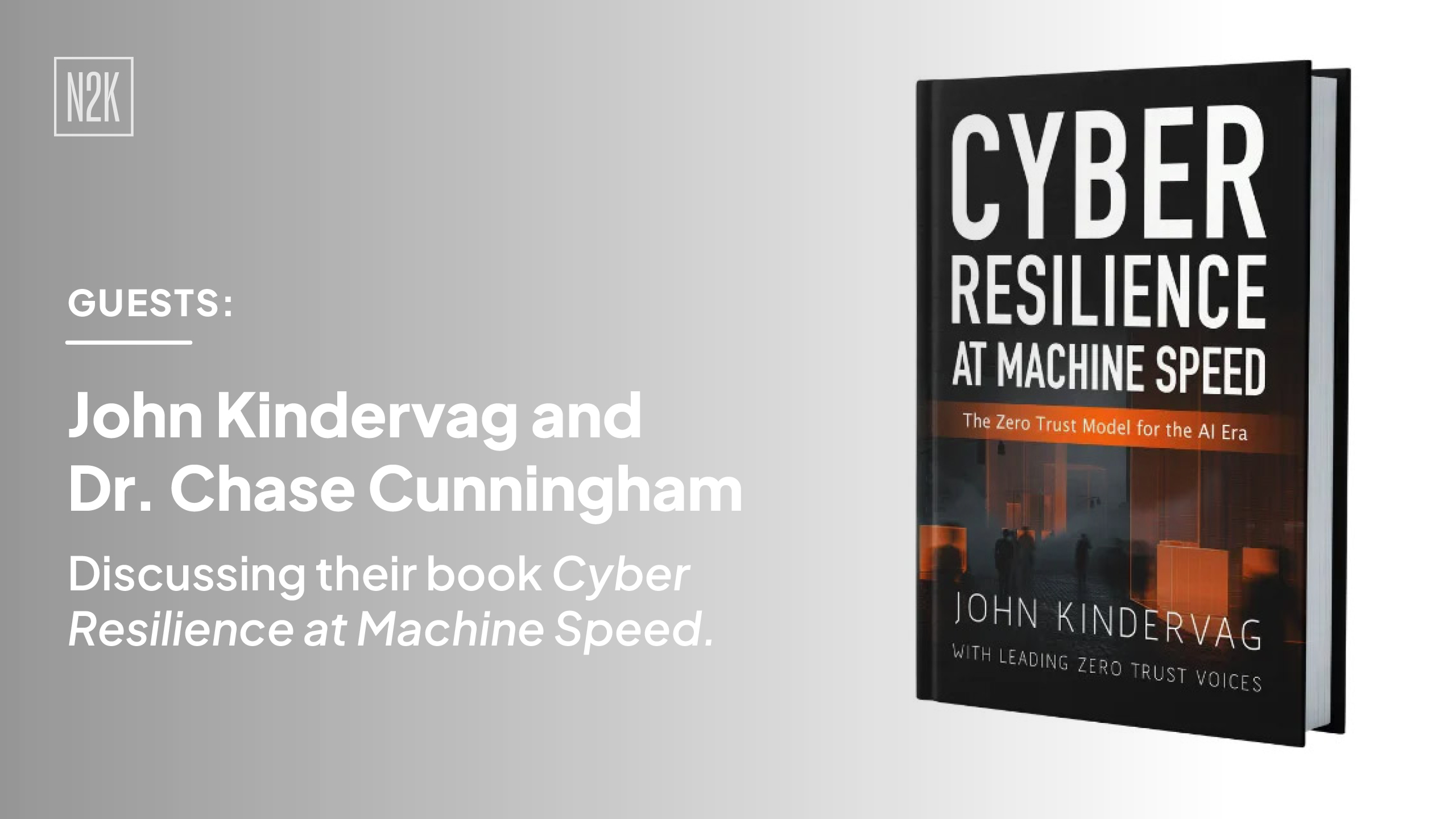


In a recent special edition of a podcast, Dave Bittner hosted an engaging discussion featuring two prominent figures in cybersecurity, John Kindervag and Dr. Chase Cunningham. The episode delved into critical topics surrounding the principles of zero trust, the notion of cyber resilience, and the transformative impact of artificial intelligence (AI) on cybersecurity strategies.
John Kindervag, a leading authority on zero trust architecture and the author of the influential book “Cyber Resilience at Machine Speed: The Zero Trust Model for the AI Era,” brings an expert perspective to the conversation. His insights are particularly valuable as organizations strive to adapt to an increasingly complex and hostile cyber landscape. Dr. Chase Cunningham, a significant contributor to the aforementioned book, complements Kindervag’s expertise, adding depth to the discussion with his own experiences and observations in the field.
The guests kicked off the dialogue by dissecting the core tenets of zero trust, an approach that fundamentally challenges traditional security paradigms. Rather than assuming that users or devices within an organization’s network can be trusted, zero trust encourages a mindset of continuous verification. This shift in perspective is essential, they argued, especially as cyber threats become more sophisticated and adaptive.
Bittner, Kindervag, and Cunningham expounded on the misconception that zero trust is merely a technological fix or a set of tools. Instead, they emphasized that implementing a zero trust model requires a cultural change within organizations. This necessitates a commitment to re-evaluating operational procedures and embracing a mindset focused on security. According to them, adopting zero trust can significantly bolster an organization’s defenses against breaches and cyberattacks.
As the discussion progressed, the topic of cyber resilience surfaced, with Kindervag and Cunningham elucidating its importance in today’s fast-paced modern environment. Cyber resilience involves an organization’s ability to not only prevent cyber incidents but also to respond effectively when breaches occur. They highlighted that this proactive stance is essential for maintaining business continuity and protecting sensitive data. By embracing a cyber-resilient strategy, organizations can improve their chances of recovering swiftly from attacks while minimizing damage.
The episode also touched upon the revolutionary role that artificial intelligence is playing in reshaping cybersecurity strategies. Both Kindervag and Cunningham provided insights into how AI technologies can augment traditional security measures, making them more efficient and effective. They explained that machine learning algorithms can analyze vast amounts of data more quickly than human analysts, allowing for real-time threat detection and response. This capability is particularly critical in a world where cyber threats evolve at machine speed, constantly seeking to exploit vulnerabilities.
However, the conversation did not shy away from acknowledging the challenges posed by AI in cybersecurity. Kindervag and Cunningham pointed out that while AI presents considerable advantages, it also introduces new vulnerabilities and potential misuse. As AI systems become more integrated into cybersecurity frameworks, organizations must remain vigilant about the ethical implications and security risks associated with these technologies.
Addressing the future of security, the hosts and their guests offered their thoughts on emerging trends and technologies that will shape the cybersecurity landscape. With the rapid advancement of AI and machine learning, organizations will need to prioritize adaptability in their security strategies. The integration of these technologies is expected to be pivotal in addressing both current and future threats effectively.
In conclusion, this special edition podcast provided a wealth of insights into the pressing issues surrounding cybersecurity today. With John Kindervag and Dr. Chase Cunningham leading the conversation, listeners gained a clearer understanding of zero trust, cyber resilience, and the transformative power of AI. Their expertise offers a compelling vision of the future, one where organizations are better equipped to handle the complexities of cybersecurity in an ever-evolving digital world.