
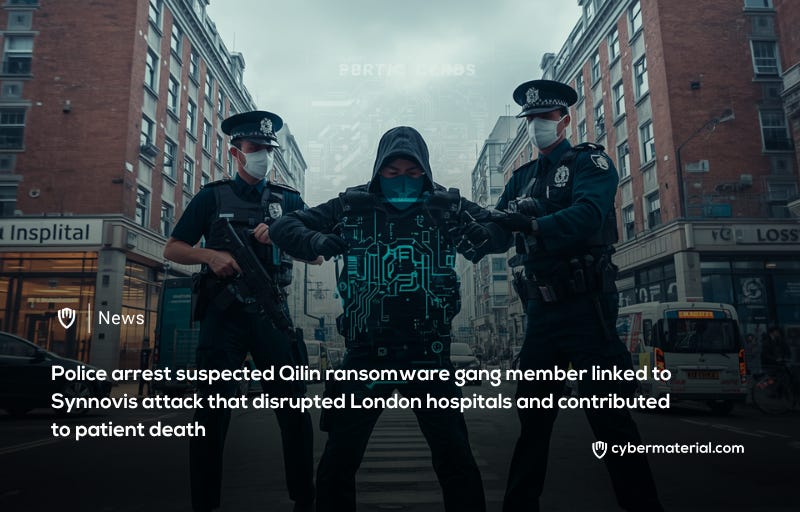


German Authorities Arrest 28-Year-Old Russian National Linked to Qilin Ransomware Attacks
In a significant development in the ongoing fight against cybercrime, German law enforcement officials have apprehended a 28-year-old Russian national believed to be intricately involved in the operations of the notorious Qilin ransomware group. This individual is alleged to have played a vital role in multiple cyberattacks orchestrated by this criminal collective, with a particular emphasis on incidents targeting healthcare infrastructure.
The arrest of the suspect follows extensive investigations that linked him directly to the Synnovis attack, a devastating ransomware incident that had dire repercussions on London’s healthcare system. Synnovis, a prominent blood-testing firm that provides critical services to numerous hospitals in the region, became the victim of a ransomware attack that caused widespread chaos. The attack extended its ramifications beyond the initial target, leading to operational disruptions in partner medical facilities. As a direct consequence, hospitals were compelled to postpone essential medical procedures and faced significant challenges in processing critical laboratory tests.
The Qilin ransomware operates on a sophisticated ransomware-as-a-service (RaaS) model. In this structure, core developers of the malware provide the necessary infrastructure, while affiliates conduct attacks for a share of the ransom payments. This business model has proven highly effective, allowing the group to target a plethora of organizations across various sectors. Notably, healthcare institutions have emerged as particularly appealing targets due to both the urgent nature of their operations and the sensitive nature of patient data. The urgency in healthcare operations means that even minor disruptions can lead to serious consequences, making these institutions a high-value target for cybercriminals.
Tragically, the incident involving Synnovis resulted in severe real-world consequences, with investigations revealing that at least one patient died due to the disruptions caused by the attack on hospital services. These healthcare ransomware attacks have increasingly created life-threatening situations by obstructing access to essential patient records, delaying necessary treatments, and forcing the cancellation of surgeries along with other crucial medical procedures.
The implications for the healthcare sector are significant, prompting calls for organizations to reassess their ransomware preparedness plans rigorously. It becomes paramount for healthcare providers to ensure that robust backup systems are not only in place but are also regularly tested to guarantee their efficacy when needed most. Network segmentation stands out as a critical strategy; it can effectively limit the spread of ransomware should an initial compromise occur.
Moreover, the issue of employee training cannot be overstated. Cybersecurity experts stress the importance of training staff on recognizing phishing attempts, as email continues to be a primary vector for ransomware infections. Raising awareness among employees about potential threats in their digital workspace is essential to bolster overall security.
Healthcare providers are also encouraged to develop comprehensive incident response plans that take into account scenarios where critical systems may become unavailable for extended periods. Such preparations are crucial for minimizing the chaos and disruption that can ensue from a ransomware attack, particularly in environments where time-sensitive medical care is required.
As the legal proceedings against the arrested individual move forward, the focus on enhancing cybersecurity measures in the healthcare sector has never been more critical. This incident serves as a stark reminder of the vulnerabilities that exist within such essential services. It underscores the need for a concerted effort among healthcare organizations to fortify their defenses against cyber threats to protect both patient data and, ultimately, patient lives.
The Qilin ransomware case illustrates a growing trend in cyberattacks targeting vital infrastructures, prompting ongoing dialogue about the responsibility of organizations to safeguard against such threats. As cybercriminals continue to evolve their strategies, vigilance and preparedness have become indispensable in the fight against such malicious activities.