
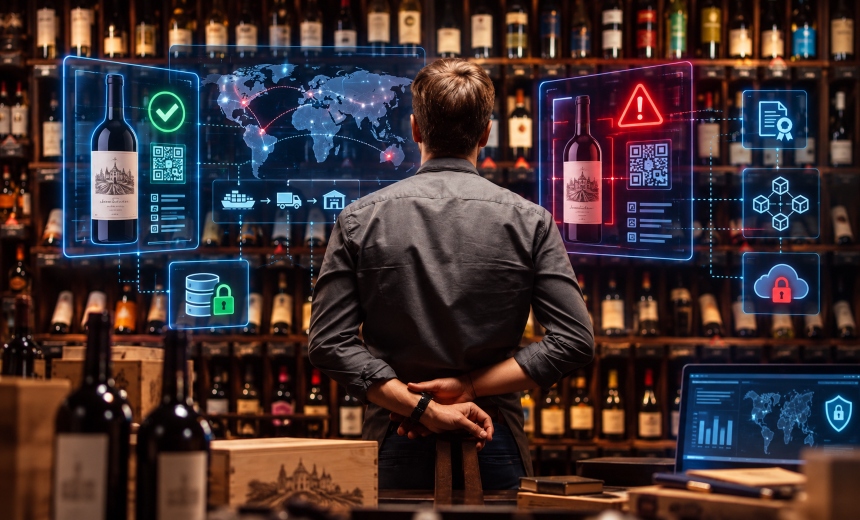


Compromised Provenance Platforms Could Allow Counterfeiters to Alter a Wine’s Identity
In the ever-evolving landscape of wine authenticity, the challenge of fraud has taken on a new dimension. Traditional methods of deception, such as replacing bottle contents and reproducing labels, have been overshadowed by the rise of digital infrastructures that underpin claims of authenticity. As wine provenance migrates to the digital realm, a pressing cybersecurity concern emerges: what happens if the data meant to confirm a wine’s credibility cannot be trusted?
For years, wine fraud has primarily focused on the tangible elements: counterfeit bottles, imitation labels, and fake certificates of authenticity. Yet the conversation is shifting toward a more nuanced understanding of authentication, where digital records play a pivotal role. This evolution necessitates a comprehensive examination of security protocols, as the very notion of authenticity is increasingly reliant on data integrity.
The Scope of Wine Fraud
Contrary to widely circulated estimates suggesting that one in five bottles of wine is counterfeit, assessing the true extent of wine fraud remains challenging. Research conducted by Recorded Future in 2022 highlighted this issue, revealing that many incidents go undetected or unreported. The infamous figure of 20% was deemed more of a widely accepted hypothesis than an established measurement of the global prevalence of wine fraud. During the study period from January 2020 to June 2022, the investigation identified over 93 million bottles associated with publicly reported cases of counterfeit wine, with less than 5,000 confirmed as luxury wines.
This observation suggests that wine fraud transcends the elite market. In October 2024, Europol, in collaboration with French, Italian, and Swiss authorities, dismantled a counterfeiting ring that targeted Protected Designation of Origin wines. The operation revealed an expansive network that distributed fake French wine through legitimate channels, with some bottles priced at an astounding €15,000 (approximately $16,700). This incident underscored the notion that trust in wine production is deeply intertwined with the records that accompany each bottle.
The Digital Transformation of Provenance
As the wine industry strives to establish better traceability and credibility, a critical question arises: how secure is the digital infrastructure that supports provenance claims? For instance, the Export Label Image Search System (ELISS), implemented by Wine Australia, operates alongside the Wine Australia Licensing and Approval System to enhance authenticity verification. Australian exporters must upload label images before receiving export approval, allowing importers and consumers to search for legitimate labels. This approach represents an intersection of trust through digital evidence and physical labels.
However, the very act of digital transformation raises its own set of challenges. If an attacker compromises an authentication platform, they can manipulate genuine records and potentially create false identities for products. This shift from physical to digital authentication calls for an examination not only of security measures surrounding the wine but also of the digital ecosystem that maintains these records.
Cybersecurity Threats in Wine Authentication
The potential vulnerabilities within wine authenticity systems aren’t merely hypothetical. As traditional methods of authentication focus primarily on examining the physical characteristics of bottles—such as labels, glass composition, and fill levels—digitization offers counterfeits a different avenue of attack. A cybercriminal could feasibly hack into an intermediary account on a provenance platform, altering records without ever needing to replicate anti-counterfeiting measures.
The U.K. Food Standards Agency has acknowledged these risks, warning that while digital traceability technologies improve transparency and safety in food production, they also expose systems to cyberattacks that could have cascading consequences across many products.
The Guardians of Trust
In addressing these multifaceted challenges, stakeholders in the wine industry must first lay the groundwork for governance. Wine producers, exporters, and authentication service providers need to clarify which data points determine a product’s authenticity. Each element—ranging from production information held by vineyards to shipment records managed by logistic companies—requires stringent oversight to ensure legitimacy throughout the supply chain.
Moreover, organizations must catalyze trust by integrating various verification mechanisms that link digital records to physical evidence. This could involve using independent laboratory authentication, maintaining offline production documentation, or employing cryptographic methods to affirm transactions. These multiple layers act as a fortification against the risk of a single point of failure within the authentication chain, which could otherwise allow counterfeiters to manipulate identities.
Navigating the Future
As the digital realm continues to integrate into the world of wine, it is imperative for industry leaders to shift their focus from mere technological solutions toward a more holistic understanding of what constitutes trust in wine authenticity. Fraud and cybersecurity teams must work collaboratively to mitigate risks, while boards overseeing organizations must ask the essential question: which digital records are vital for maintaining the integrity of our products, and what are the implications if those records become compromised?
In an era when counterfeiters may find it easier to manipulate trust rather than the actual product, such inquiries are not merely academic but essential to the very future of the wine industry. The gradual digitalization of provenance might reflect broader changes in supply chain management, but it also signifies a critical juncture where technology meets age-old methods of deception. As these transformations unfold, the commitment to safeguarding authenticity must become paramount, ensuring that both the wine and its story remain untarnished.