
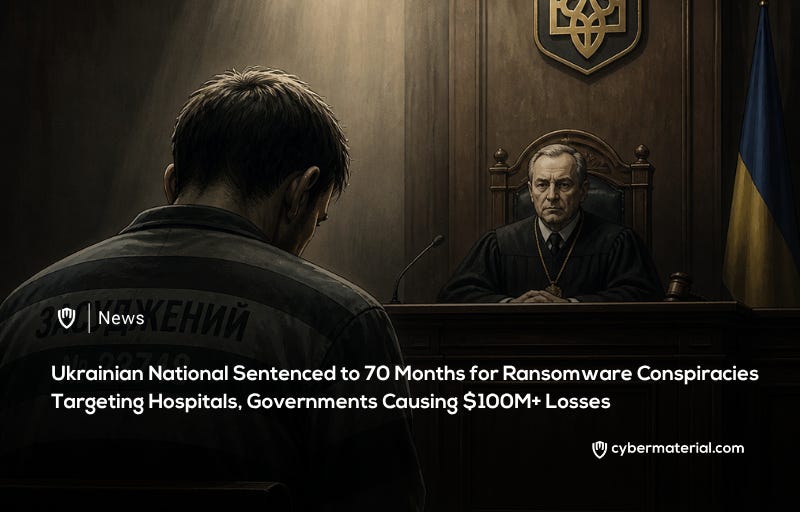


A Ukrainian national has recently been sentenced to nearly six years in federal prison for his involvement in a global ransomware campaign that inflicted around $100 million in damages across various sectors. Artem Stryzhak, aged 36, received a 70-month prison sentence after pleading guilty to conspiracy to commit computer fraud, according to a statement released by the U.S. Department of Justice.
The ransomware operation that Stryzhak participated in targeted a wide array of victims, including hospitals, government agencies, legal firms, and commercial enterprises across multiple countries. This case highlights the extensive reach and complexity of modern cybercrime, characterized by international coordination and investigation that spanned several years. Prosecutors provided compelling evidence to showcase Stryzhak’s direct role in a conspiracy that involved deploying ransomware to encrypt the systems of victims, subsequently demanding payment for decryption keys.
Despite the Justice Department’s press release lacking specific details regarding the particular ransomware variant used or the technical aspects of the attack methods, this case exemplifies one of several legal actions taken against ransomware operators whose activities have led to considerable financial and operational disruption for critical infrastructure and essential services. The staggering $100 million damage estimate encompasses both ransom payments and costs associated with recovery, system restoration, and the fallout from business interruption caused by these attacks.
The sentencing of Stryzhak serves as a strong indication of law enforcement’s unwavering commitment to pursuing ransomware criminals, despite the jurisdictional complexities that often accompany such cases. Healthcare facilities and government entities have notably been vulnerable to ransomware attacks, with some circumstances necessitating hospitals to divert emergency patients or postpone essential medical procedures. The financial ramifications of these incidents extend beyond immediate ransom demands, incorporating costs related to forensic investigations, legal fees, compliance with regulatory requirements, and the damage to reputation that organizations suffer following such breaches.
In light of this significant legal action, security teams and organizations across sectors are reminded of the acute need to bolster their defenses against ransomware threats. The evolving nature of cybercrime necessitates that businesses implement robust and proactive strategies to mitigate risks. Organizations must ensure they possess reliable, tested offline backups that cannot be compromised by attackers, alongside heightened network segmentation to restrict lateral movement within their systems. These steps are essential in limiting the potential damage caused by ransomware attacks.
Moreover, the maintenance of current incident response plans and conducting regular security awareness training for staff are vital components of a comprehensive defense strategy. By instilling a culture of security awareness among employees, organizations can fortify their frontline against potential cyber threats. Additional measures, such as the use of multi-factor authentication, timely patching of known vulnerabilities, and effective endpoint detection capabilities, remain indispensable in the ongoing battle against ransomware.
As the implications of the ransomware campaign perpetrated by Stryzhak reverberate across various sectors and countries, law enforcement agencies continue to stress the importance of vigilance and proactive measures in cybersecurity. The case serves as a significant reminder of the potential consequences of ransomware attacks and the importance of collective efforts to combat the growing threat posed by cybercriminals.
In conclusion, Stryzhak’s nearly six-year prison sentence not only marks a pivotal moment in the battle against ransomware but also underscores the urgent need for organizations to revisit and enhance their cybersecurity protocols. The growing sophistication of cyber threats demands that businesses remain vigilant and prepared against such attacks, ensuring that they can withstand potential breaches and mitigate risks that could otherwise result in significant financial losses and operational disruptions. The commitment to pursuing cybercriminals sets a precedent, marking the importance of robust law enforcement actions in curbing the trends of modern cybercrime.