
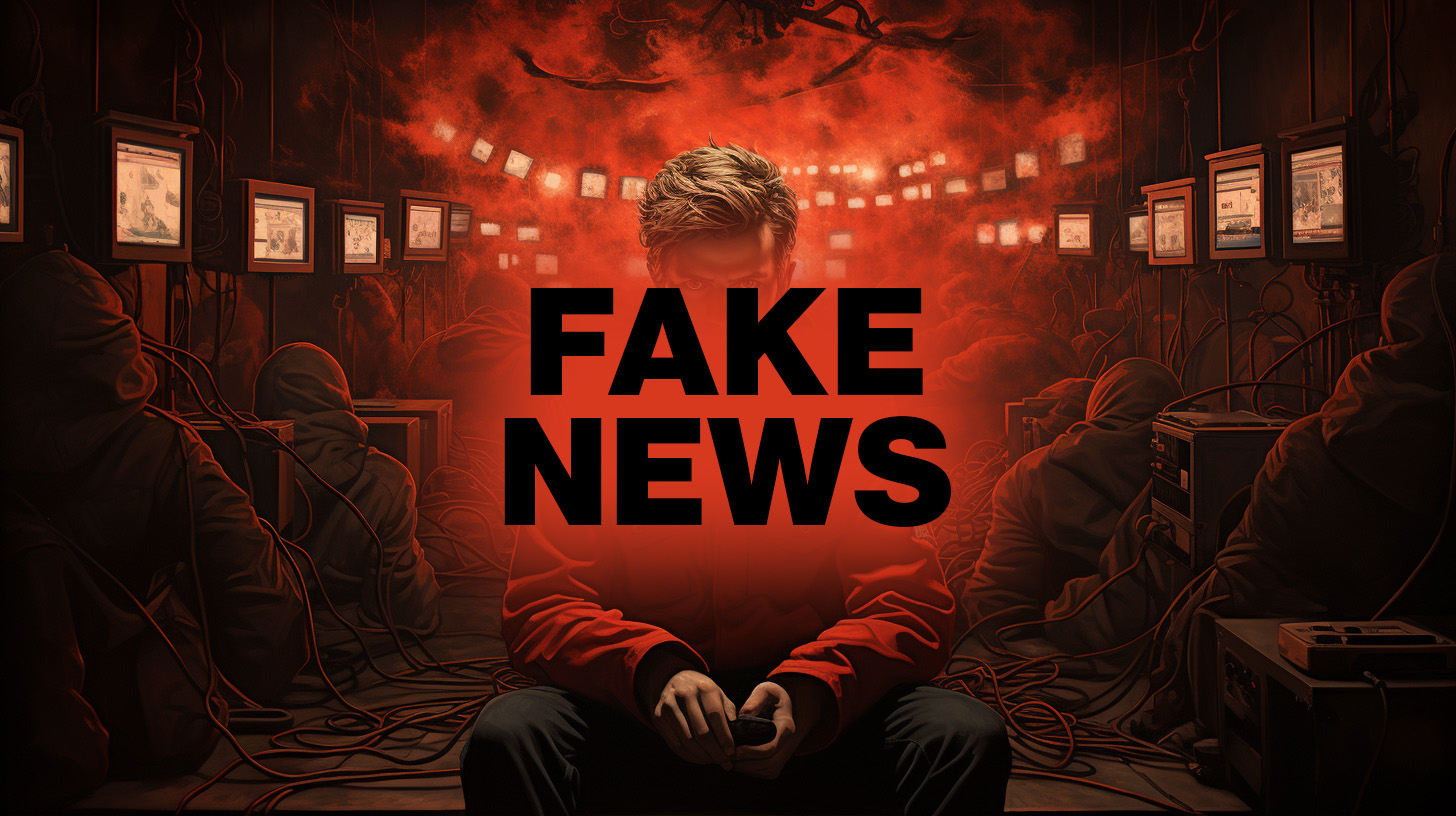


The prevalence of disinformation in today’s digital landscape has become a significant concern for online users. Many have fallen victim to fake news stories and manipulated content, leading to widespread confusion and a lack of trust in media and institutions. But why do people believe in false information, and who is most susceptible to misinformation?
Psychologist Gordon Robert Pennycook and David G. Rand have outlined several reasons why people believe fake news. They found that individuals are more prone to believing familiar news, especially if it comes from a credible source. Additionally, the emotional response provoked by fake news, whether it’s shock, fear, anger, or moral outrage, increases the likelihood of belief. Political identity and biased reasoning were also identified as contributing factors to the inability to discern truth from falsehood in online news.
Furthermore, the rapid development of artificial intelligence (AI) has led to the creation of sophisticated fake images, videos, and text, making it increasingly difficult for users to differentiate between authentic and falsified content.
Contrary to popular belief, psychologists at the University of Cambridge discovered that recreational internet users, especially younger individuals who rely on social media for news, were more susceptible to falling for fake news. This challenges the prevailing notion that older, less digitally-savvy individuals are most prone to misinformation.
To combat disinformation, individuals can take specific actions to protect themselves and minimize its spread. According to Darrell M. West, VP of the governance studies program at the Brookings Institution, following a diversity of people and perspectives can help protect individuals from false news and disinformation. Relying on a small number of like-minded news sources limits the range of available material and increases the likelihood of falling victim to hoaxes or false rumors. Being skeptical and critically evaluating information sources is also crucial in combating disinformation.
Moreover, individuals can improve their ability to recognize and fight disinformation by actively seeking diverse viewpoints and understanding how to judge news sites. In a digital age where misleading and sensationalized headlines are prevalent, learning how to protect oneself from inaccurate information has become a high priority.
While there is no universal solution to combat disinformation, individuals have the power to protect themselves by critically evaluating news sources, seeking diverse perspectives, and cultivating a healthy skepticism towards sensationalized information. By taking these steps, individuals can play a crucial role in mitigating the spread of fake news and misinformation in the digital sphere.