
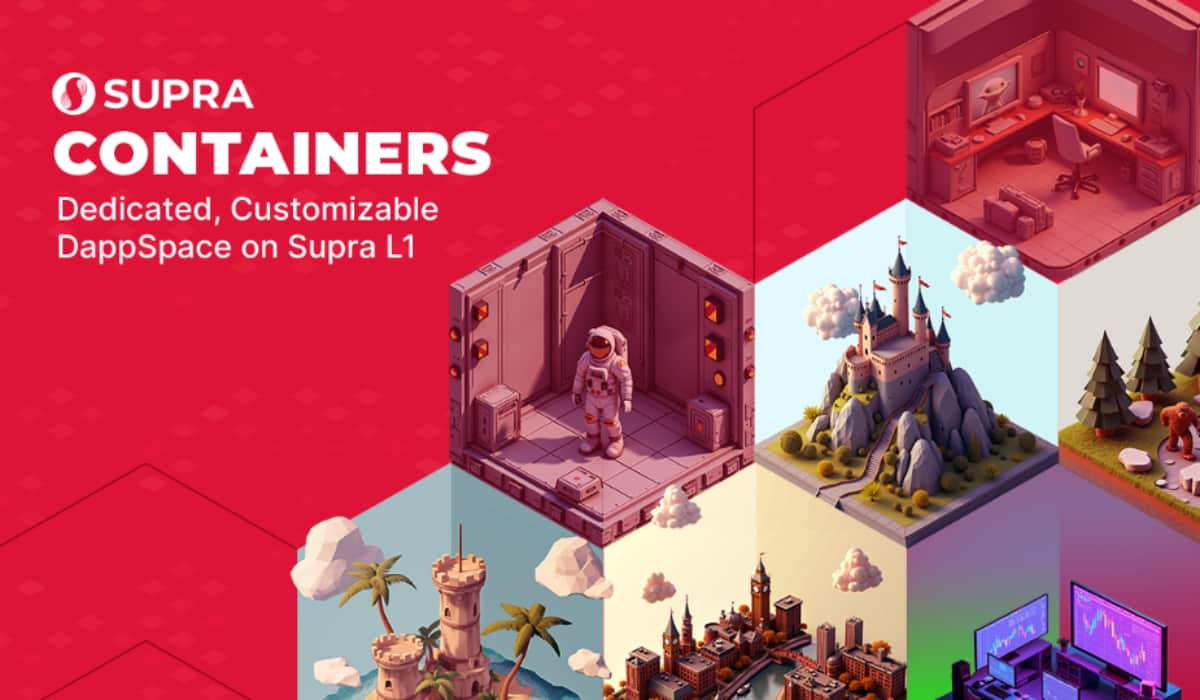


In Zug, Switzerland, Supra, the 500k TPS Layer-1 blockchain known for MultiVM compatibility for MoveVM and EVM dApps, has introduced an innovative solution called Supra Containers. This new development has the potential to revolutionize the world of decentralized applications (dApps) and on-chain development by potentially eliminating the need for Layer-2s (L2), Layer-3s (L3), and AppChains.
The introduction of Supra Containers addresses the challenges faced by builders when utilizing L2s and L3s to overcome congestion and scalability bottlenecks on Layer-1 blockchains. These challenges include fragmented liquidity, broken composability, and the need to establish network security measures. With Supra Containers, developers now have the ability to create dedicated execution space for their dApps, referred to as DappSpace, that fully leverages the high-performance capabilities of Supra’s Layer-1 blockchain.
One of the key advantages of Supra Containers is the seamless composability and shared liquidity they offer. Similar to L2s, Supra Containers provide developers with dedicated compute space, customizable governance options, and the freedom to establish their own token economies. However, unlike traditional L2 solutions, Supra Containers do not require builders to invest time and resources in setting up network security, validators, or complex bridging systems. The security of each Container is guaranteed by Supra’s L1 node network, allowing developers to focus on innovation rather than infrastructure.
Furthermore, Supra Containers are fully composable and can integrate effortlessly with other Containers within Supra’s ecosystem. This preserves the atomic nature of smart contract transactions and facilitates seamless interaction between dApps. Additionally, Supra Containers have the advantage of sharing liquidity across the entire Supra L1 network, ensuring operational efficiency and access to a unified pool of assets.
Another distinguishing feature of Supra Containers is the inclusion of built-in blockchain services such as Oracle price feeds, on-chain verifiable randomness, cross-chain communication, and automation. These critical services are natively integrated into Containers, eliminating the need for costly and complex external integrations typically associated with L2 app chains.
Supra’s MultiVM compatibility further enhances the appeal of Supra Containers, allowing developers from various ecosystems such as MoveVM, EVM, and upcoming SolanaVM to deploy their dApps on Containers without the need for complicated migrations. This flexibility enables developers to harness Supra’s high throughput and sub-second consensus latency, ushering in a new era of scalable, efficient, and interoperable dApps.
The potential of Supra Containers extends beyond individual dApps, as developers have the opportunity to create entire ecosystems within their customized Containers. For example, a gaming studio could establish a Container ecosystem featuring decentralized games with unique token incentives, leveraging Supra’s security and liquidity benefits. This flexibility allows developers to exercise full control over governance and token economies within their ecosystems.
In conclusion, Supra Containers represent a paradigm shift in dApp development by offering a faster, cheaper, and more efficient way to build powerful applications and custom economies on the blockchain. By providing dedicated execution space, customizable governance, and tokens without the drawbacks of traditional AppChains, Supra is redefining the landscape of blockchain application development.
Supra’s innovative approach to blockchain technology, combined with the introduction of Supra Containers, positions the company as a leading player in the evolution of decentralized applications and on-chain development. Developers now have the tools and capabilities to create scalable, composable, and interoperable Containers and Super dApps without relying on external services or validators.