
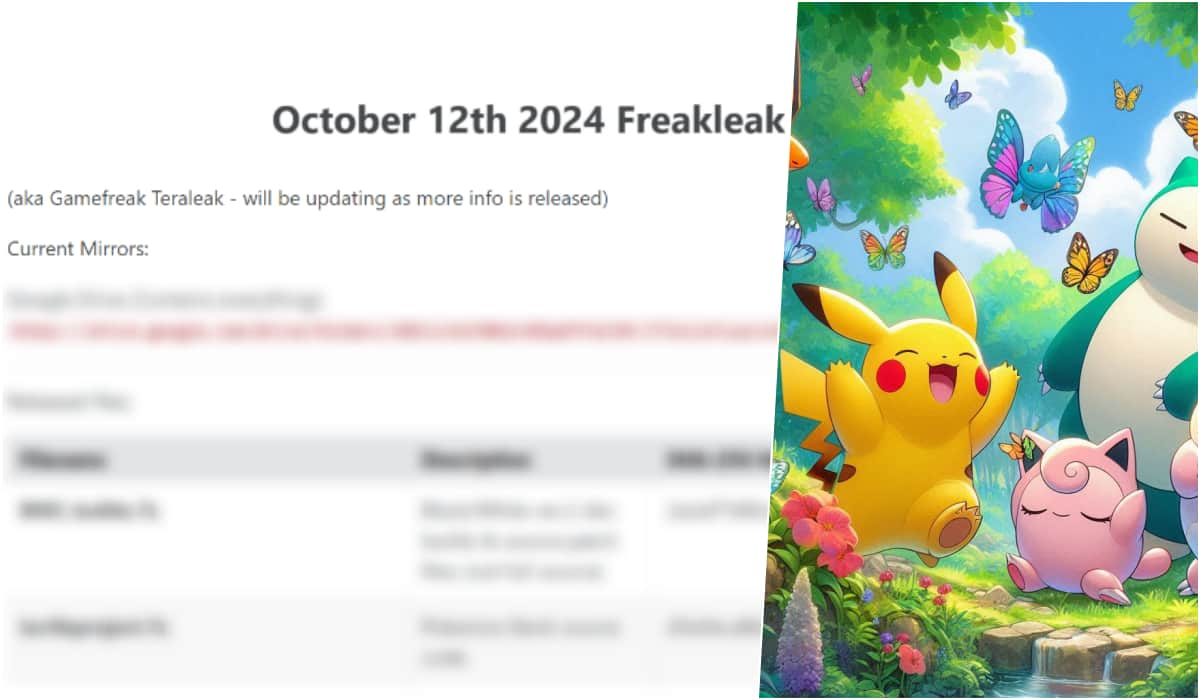


Game Freak, the renowned developer responsible for creating the iconic Pokémon franchise, is currently reeling from a major data breach that has sent shockwaves throughout the gaming industry. The breach, now known as “Teraleak,” has exposed nearly 1 terabyte of highly sensitive internal data, including source code, cancelled games, concept art, and unreleased projects.
The news of the breach first surfaced when various files started circulating on social media platforms and online forums, sparking widespread discussion and speculation among fans and industry professionals alike. Platforms like r/PokeLeaks quickly became inundated with never-before-seen content, ranging from early development documents to recent project details that shed light on Game Freak’s creative process over the past two and a half decades.
In response to the breach, Game Freak issued a public statement confirming that the personal information of 2,606 employees and contractors had been compromised in the hack. The company noted that the breach occurred in August 2024, but the leaked data only began to surface online in October of the same year. Despite the emphasis on personal data in Game Freak’s official communication, the leaked files paint a much broader picture, showcasing a treasure trove of Pokémon-related content.
Among the wealth of leaked material are design documents for the Pokémon anime, unused Pokémon designs dating back to the era of “Black and White,” and plans for future releases like “Pokémon Legends: Z-A” and the highly anticipated 10th generation of Pokémon games under the codename “Gaia.” Additionally, the leak includes tantalizing details about scrapped projects, such as a potential remake of Game Freak’s first game, “Quinty.”
One moderator from r/PokeLeaks pointed out that the leak comprises a mix of authentic and fabricated content, making it challenging to discern the veracity of all files. Nevertheless, key items listed by the leaker include developmental builds of “Pokémon Black 2/White 2,” source code for “Pokémon Bank,” and assets from early “Pokémon Go” test builds. The sheer volume of leaked data underscores the magnitude of the breach and the extent to which Game Freak’s internal workings have been laid bare.
As the gaming community grapples with the aftermath of the Teraleak breach, questions linger about the identity of the hackers responsible and their motivations behind targeting Game Freak. Given the scale of the leak, some speculate that it could rival the notorious 2020 Nintendo “Gigaleak” in terms of impact and implications for the industry at large. With ongoing analysis of the stolen data and more revelations expected in the coming days, the full repercussions of the breach are yet to be fully realized.
In conclusion, Game Freak faces a tumultuous road ahead as it navigates the fallout from the Teraleak breach. The company’s reputation, creative integrity, and ability to safeguard sensitive information have all come under intense scrutiny, underscoring the evolving challenges faced by developers in an increasingly digitized and interconnected world. As the investigation unfolds and the scope of the breach becomes clearer, Game Freak will undoubtedly be forced to confront further repercussions and reckon with the consequences of this unprecedented security lapse.