


In recent weeks, a sophisticated phishing scam has emerged, targeting French-speaking users under the guise of the reputable antivirus company, Avast. Unlike typical scams, this operation involves a highly sophisticated website that closely mimics the official Avast portal, creating an illusion of legitimacy designed to coax unsuspecting victims into divulging their complete credit card information.
The ‘Today Only’ Panic Tactic
One of the hallmarks of successful scams is the creation of a sense of urgency, and this phishing attempt is no exception. Visitors to the counterfeit site are met with a strikingly professional orange alert, claiming they have been charged €499.99 for an unsolicited subscription. The date presented on this fraudulent receipt is particularly devious; the site employs a simple script to reference the visitor’s computer clock, ensuring that no matter when the site is accessed, it always appears as if the charge occurred "today."
To amplify the pressure on potential victims, the scam indicates a narrow window for action, claiming that users have only 72 hours to cancel the charge. In a further psychological twist, it inconsistently asserts that transactions older than 48 hours cannot be reversed, creating a paradox intended to incite panic. This tactic effectively encourages hurried decisions, prompting victims to hurriedly fill out forms without adequate reflection on their actions.
High-Tech Deception
An investigation by the cybersecurity research firm Malwarebytes has unveiled the extensive layering of deception utilized by the scammers. The fraudulent website doesn’t merely replicate the visual design of Avast’s platform but is also engineered to function like a legitimate banking portal. When users are instructed to input their credit card number, expiration date, and CVV number under the pretense of processing a refund, the site employs the Luhn algorithm. This is a standard mathematical formula used by banks to verify the validity of credit card numbers. By incorporating this algorithm, the scammers can effectively filter out invalid or mistyped numbers, ensuring they only target genuine financial information.
Perhaps the most audacious aspect of this scheme is the integration of a live chat feature on the site. Utilizing a legitimate service known as Tawk.to, specifically the identification code ID: 689773de2f0f7c192611b3bf, the fraudsters are able to monitor user behavior in real time. If individuals appear hesitant or indecisive, a support agent might initiate contact to offer encouragement, further pushing victims toward completion of the fraudulent process.
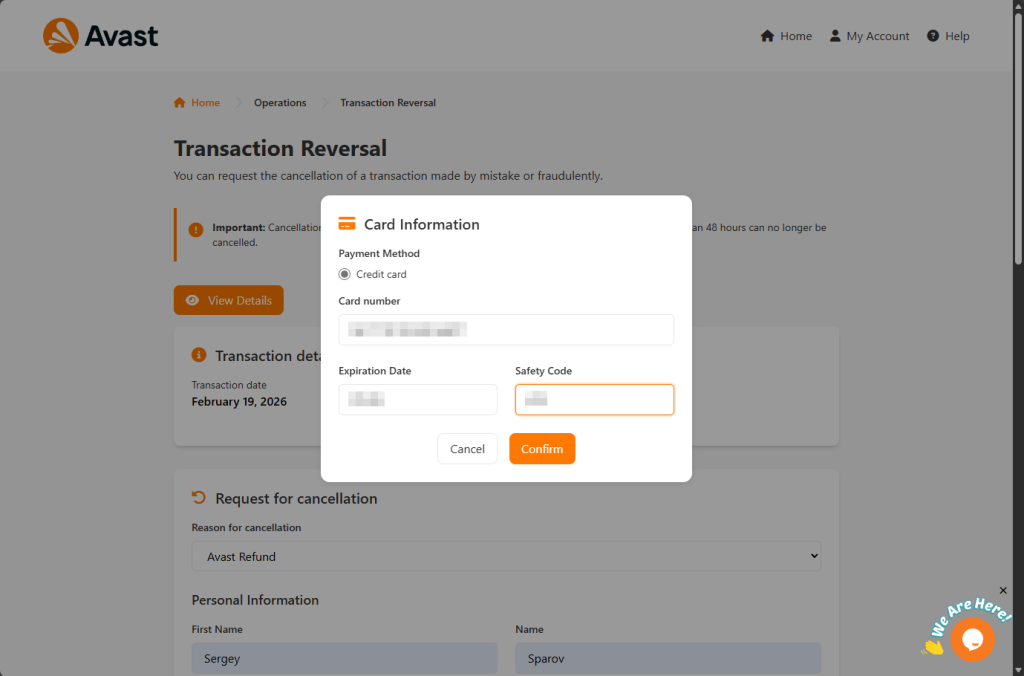
Image: Fake Avast site asking for the victim’s financial information (Source: Malwarebytes)
How to Protect Yourself
This phishing scam casts a wide net, targeting not only loyal users of Avast but also those who might not even own the software. It appeals to individuals seeking a quick "refund" or bonus, capitalizing on common desires for financial gain. Notably, the scam does not ask for account logins or software license keys, indicating that the perpetrators are solely interested in acquiring users’ banking details.
To safeguard against such scams, individuals are advised to exercise caution when confronted with unexpected charges or notifications. It is critical to refrain from clicking on links provided in such alerts. Instead, users should manually enter the official web address of the company directly into their web browser. In cases where individuals have already entered their financial information on suspicious sites, it is imperative to contact their bank immediately to report the incident, cancel their card, and dispute any unauthorized transactions.
The sinister nature of this phishing scam underscores the necessity for ongoing vigilance in the digital landscape. With cybercriminals continuously developing more sophisticated techniques, educating oneself and taking proactive steps can serve as vital defenses against falling victim to these deceptive schemes. Whether one is a veteran customer of a service or simply browsing, being alert and informed is crucial in navigating the complexities of today’s online environment.