


U.S. Government Takes Action Against Iranian Hacking Operations
In a significant development in the realm of cybersecurity, U.S. federal agents have seized four web domains associated with Iranian hacking activities. This action follows the recent disclosures by a cyber threat actor known as Handala, who claimed to have infiltrated the IT systems of prominent medical device manufacturer Stryker. The breach was reported on March 11, and it has since resulted in ongoing disruptions in the company’s order and shipping capabilities.
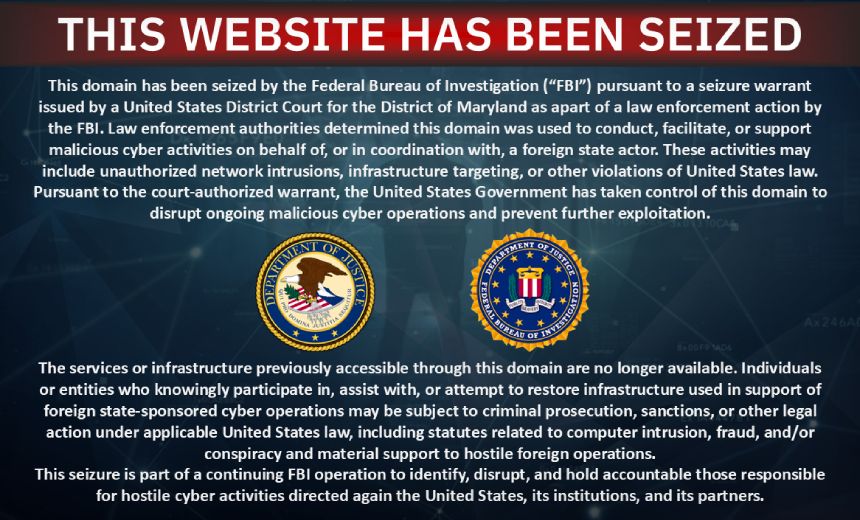
Handala, believed to be a front for Iranian intelligence operations, shared evidence of the hack on a domain named handala-hack.to, where it made alarming claims about deleting 12 petabytes of data from Stryker’s systems. However, visitors to this domain now encounter a seizure notice issued by the FBI and the Department of Justice, indicating federal intervention into these cyber activities.
In addition to the primary domain associated with Handala, federal authorities successfully seized three other domains linked to Iranian efforts that have included hack-and-leak operations and threats. These domains include justicehomeland.org, karmabelow890.org, and handala-redwanted.to. The U.S. government’s ability to seize these sites was facilitated by the fact that their registrars, Public Interest Registry and Namecheap, are based in the United States.
John A. Eisenberg, Assistant Attorney General for National Security, stated that these seized domains played a role in various malicious activities, including doxing and harassing dissidents and journalists. Such sites had also been used to incite violence against Jewish communities and disseminate propaganda aligned with Tehran’s anti-American narratives.
The recent surge in Handala’s activities has coincided with escalating tensions between the United States, Israel, and Iran. Since February 28, when a protracted bombing campaign against Iran commenced, Handala has been particularly active. In a series of provocative posts, the group claimed to have leaked what it called 100,000 emails from a former Israeli intelligence agent now affiliated with a think tank. They further alleged to have published personal identities of senior Israeli military officers and significant confidential data that it claimed belonged to members of the Sanzer Hasidic Jewish community.
In a more alarming development, Handala has reportedly sent death threats to Iranian dissidents and journalists. In a March 1 email, the group stated that it had shared the names and home addresses of two dissidents with the Jalisco New Generation Cartel, a well-known Mexican transnational criminal organization. Such threats underline the broader psychological operations employed by Iranian-linked cyber actors.
Interestingly, while the Stryker hack did not directly impact individual medical devices, the ramifications were felt within the healthcare sector. The FBI, in a recent affidavit, detailed how some hospitals in Maryland responded by pivoting from Stryker’s communications systems to alternative methods, such as verbal communications and radio exchanges. This shift meant that emergency medical services experienced disruptions, illustrating the potential human costs associated with such cyber intrusions.
Of significant concern is one of the disrupted domains, justicehomeland.org, which had previously played a role in a cyber attack against Albania’s online service portal in 2022. In that incident, sensitive governmental documents and residency permits tied to members of the Iranian opposition group Mojahedin-e-Khalq were published, further emphasizing the destructive potential of Iranian cyber operations in destabilizing other nations.
Despite the seizures, it appears that content from the affected domains remains accessible through archiving services, raising questions about the effectiveness of such actions. In a twist of events, a new Handala website emerged shortly after the seizures, indicating that the group may continue its operations. This new domain, reportedly registered through the government of the Kingdom of Tonga, carries a statement asserting that “the voice of Handala will never be silenced.”
FBI Director Kash Patel emphasized that the United States remains committed to combating Handala and similar cyber threats. The ongoing struggle highlights the complex landscape of cybersecurity, where state-sponsored actors increasingly engage in aggressive tactics that blur the lines between cyber warfare and psychological operations. As the legal and tactical responses evolve, the international community must brace for a prolonged confrontation in cyberspace, where the stakes continue to rise.