


Paris Backs Protectionism and Cybersecurity Requirements to Keep Out Chinese Firms
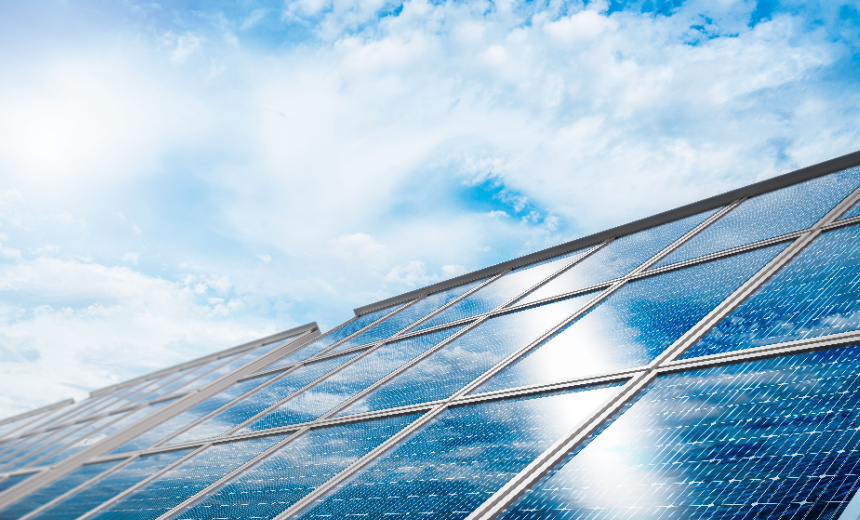
In a significant move reflecting its growing protectionist stance, France has decided to limit the importation of Chinese photovoltaic components, thereby emphasizing its commitment to national cybersecurity and the domestic solar industry. This decision accompanies a government-backed initiative aimed at enhancing the country’s solar energy capabilities.
In recent announcements, President Emmanuel Macron’s administration laid out a timeline for this ambitious solar procurement effort, which emerged just a few months following the release of a comprehensive 10-year energy-transition roadmap known as PP3. This strategic framework aims to add 1.2 gigawatts of new solar capacity. Companies interested in participating will be invited to bid for small and ground-mounted solar projects this upcoming July, with industrial installations being opened for tenders in the fall. As is customary in French policy, the initiative predominantly favors domestic firms over foreign competitors.
Junior Energy Minister Maud Bregeon captured the essence of this initiative, stating, “Confronted with the climate emergency and the ramifications of the Iranian conflict, which has underscored our vulnerabilities, PPE3 sets a definitive course: we must generate more accessible, decarbonized energy while also reinforcing our sovereignty.”
The overarching ambition behind these smaller solar installations is to encourage individual citizens to transition to electric energy wherever feasible. This shift is not only intended to offer stability against the increasing volatility of energy prices but also highlights the government’s desire to reassert control over energy production, which currently relies heavily on imports. Government reports reveal that over 80% of essential photovoltaic components in France are sourced from China.
To bolster this initiative, the French government will implement a “resilience criterion” in the forthcoming solicitation for bids. This criterion will demand diverse sources of supply from participants, thereby diminishing dependence on a single nation. In the medium term, the initiative will also incorporate rigorous standards tailored to durability and cybersecurity involved in energy generation.
This move is particularly aligned with the objectives of the European Union’s Net-Zero Industry Act, enacted in 2024, which mandates that member states manufacture 40% of the equipment requisited for energy-transition initiatives by the year 2030. Notably, this legislation operates as a regulation rather than a directive, limiting flexibility in national interpretations, and firmly obligating EU countries to integrate cybersecurity into pre-qualification standards for renewable-energy deployment tenders.
Curiously, China’s formidable rise within the photovoltaic sector can be traced back to its enforcement of robust cybersecurity regulations and a push for self-reliance that effectively excluded international competitors. Now, many nations are grappling with the cybersecurity ramifications stemming from China’s dominance in this field. Concerns primarily revolve around solar panel inverters—essential components that convert harvested solar energy into usable electricity for the power grid. If manipulated or disabled remotely, these inverters could potentially jeopardize grid stability, presenting a significant threat to global cybersecurity.
As cited by Tobias Gehrke, a senior policy fellow at the European Council on Foreign Relations, the gravity of this risk cannot be understated. Reflecting on a recent major blackout experienced by Spain and Portugal, which stemmed from cascading failures across the grid, he noted, “Although no cyber-related issues were identified in that incident, it serves as a clear reminder of the potential for widespread disruption.”
In 2024, Lithuania took the decisive step of effectively banning Chinese-manufactured inverters from its solar and wind projects, spurred by concerns surrounding unauthorized remote access to these devices. Reports from Reuters indicated that U.S. energy experts discovered undocumented communication elements embedded within some Chinese inverters, enabling unsolicited communication back to China, circumventing utility-company firewalls intended for protection.
In response, Beijing has dismissed these allegations, labeling them as misrepresentations aimed at undermining China’s achievements in infrastructure advancements. However, European lawmakers have moved to propose measures against Chinese photovoltaic component manufacturers, including major players such as Huawei and Sungrow, whose involvement in critical infrastructure is increasingly viewed with skepticism.
In a communication issued in December, the European Commission acknowledged the threats posed to economic security, classifying solar inverters as critical infrastructure vulnerabilities. The Commission highlighted the risks of these devices potentially being exploited to manipulate energy production metrics and access sensitive operational data.
Earlier this year, the Commission advanced a proposal to revise the EU’s 2019 Cybersecurity Act, placing a pronounced emphasis on protecting European critical ICT supply chains against high-risk suppliers—implicitly targeting countries like China, while including solar technologies within its scope.
Gehrke articulated skepticism regarding the intentions of major Chinese suppliers concerning European infrastructure, asserting, however, that China’s cybersecurity regulations compel them to share crucial information with their government. He suggested a straightforward resolution for France: excluding companies like Huawei and Sungrow from the upcoming solar tenders altogether.
Alternatively, the French government could permit these firms to supply hardware while restricting them from managing control systems remotely. Gehrke noted, “It’s essential to ensure the operational controls remain with a European company.” However, such measures could undermine the overarching goals of boosting European competitors against Chinese giants.
Chinese manufacturing is supported through substantial subsidies and barriers against foreign rivalry, prompting concerns that, without intervention, European manufacturers may struggle to survive, ultimately leading to increased reliance on Chinese resources. Gehrke cautioned that such a trajectory could erode critical expertise related to designing secure energy infrastructure. “We risk losing entire industry know-how if this trend continues,” he remarked.
In conclusion, Gehrke emphasized the compelling case for limiting Chinese participation in the European solar market, particularly in light of China’s own protective measures towards non-domestic equipment. He quipped, “If the Chinese authorities perceive a cybersecurity risk, perhaps there is merit to that concern.”