
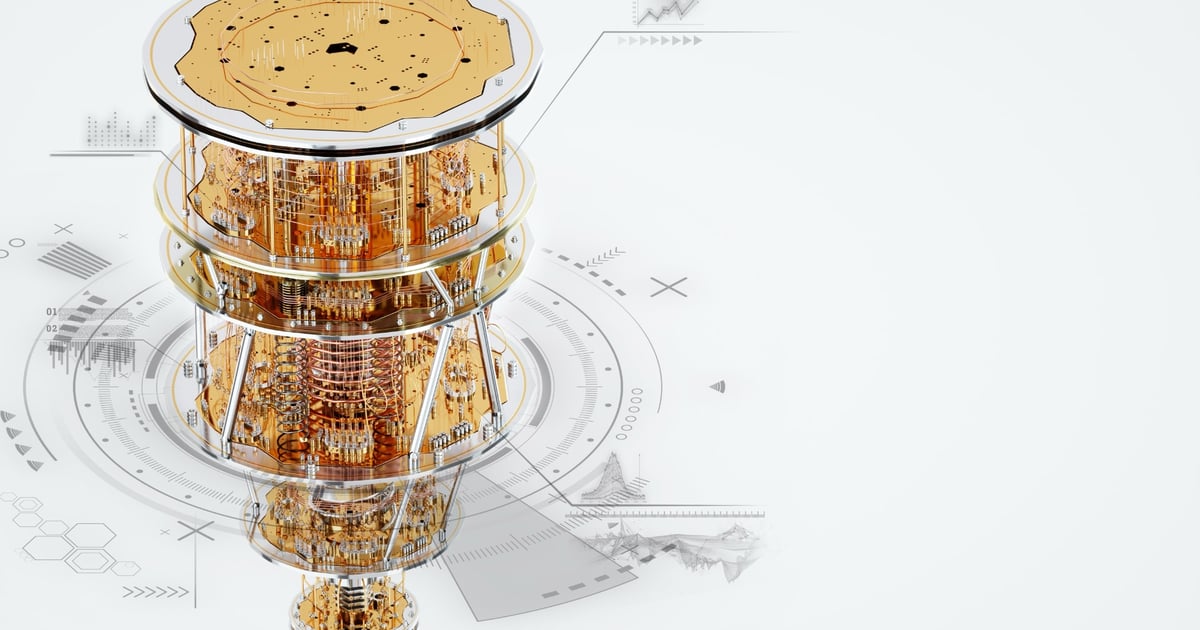
The race to develop a functional quantum computer has achieved a significant breakthrough as Google unveiled its Willow chip in late 2024. This chip, boasting reduced noise and fewer errors as the number of qubits increases, is a crucial advancement in the journey towards more advanced quantum computing. While the exact timeline for the availability of these systems remains a topic of debate, experts continue to emphasize the importance of strategic planning and transitioning to post-quantum technologies.
The transition from the current state of technology, where adding more qubits results in increased noise, to a future where the noise decreases exponentially with more qubits, a concept known as “threshold scalability,” overcomes a major obstacle in the realm of quantum computing. Building a 1,000-qubit quantum computer necessitates fundamental breakthroughs beyond the noisy intermediate-scale quantum (NISQ) computers of today, paving the way for creating reliable logical qubits capable of integration into easily scalable architectures.
Karl Holmqvist, the founder and CEO of Lastwall, an identity services provider specializing in quantum resilience, hailed Google’s announcement as a significant leap forward in the field of quantum computing. Holmqvist urged companies to take notice of the progress in usable quantum computers, citing ongoing campaigns aimed at capturing encrypted data until a system capable of breaking asymmetric encryption is available.
The emergence of quantum computers as a potential threat is becoming increasingly palpable. In addition to Google’s Willow chip revelation, Microsoft also made waves in the quantum computing space by achieving a 24-qubit milestone with Atom Computing in November. Simultaneously, Japanese researchers introduced a “general-purpose” optical quantum computer at the Riken Quantum Computer Research Center.
The implications of these advancements could be dire, as highlighted by the Hudson Institute’s warnings of systemic cyber-risks to financial systems posed by quantum computers. The institute emphasized the risks that quantum computers could bring to the US financial system and cryptocurrencies, underscoring the need for proactive cybersecurity measures.
Despite the progress in quantum computing, the timeline for when quantum computers could pose a legitimate encryption threat remains uncertain. Experts estimate that within the next 15 years, a quantum computer could potentially break RSA-2048 encryption in 24 hours. While the median timeline for the advent of usable quantum computers hovers around a decade, significant strides in hardware progression, error correction, and algorithm development are still required.
Rebecca Krauthamer, the co-founder and CEO of QuSecure, emphasized the importance of recognizing quantum computers’ potential impact on everyday problems, signaling the need for a swift transition to post-quantum technologies and crypto-agile management of cryptography. However, the lack of substantial benefits for the private sector could impede the development of quantum computing programs, as noted by the Boston Consulting Group’s analysis.
Experts continue to stress the necessity of being prepared for the imminent rise of quantum computers and the associated risks. Companies like Quantinuum have expedited their roadmap for fully fault-tolerant quantum computing, underscoring the urgency of migrating to post-quantum computing solutions to safeguard sensitive data effectively.
While Google’s recent breakthrough in error correction marks a significant milestone in quantum computing, the journey towards building large-scale, fault-tolerant quantum computers is still fraught with challenges. The Google Quantum AI team acknowledged the immense engineering hurdles that lie ahead in achieving this ambitious goal.
In conclusion, the advancements in quantum computing usher in a new era of technological innovation but also underscore the need for robust cybersecurity measures and proactive adoption of post-quantum technologies to mitigate potential risks posed by quantum computers in the near future. The path towards achieving practical quantum computers remains complex, requiring collaborative efforts and strategic planning to navigate the evolving landscape of quantum technology.