
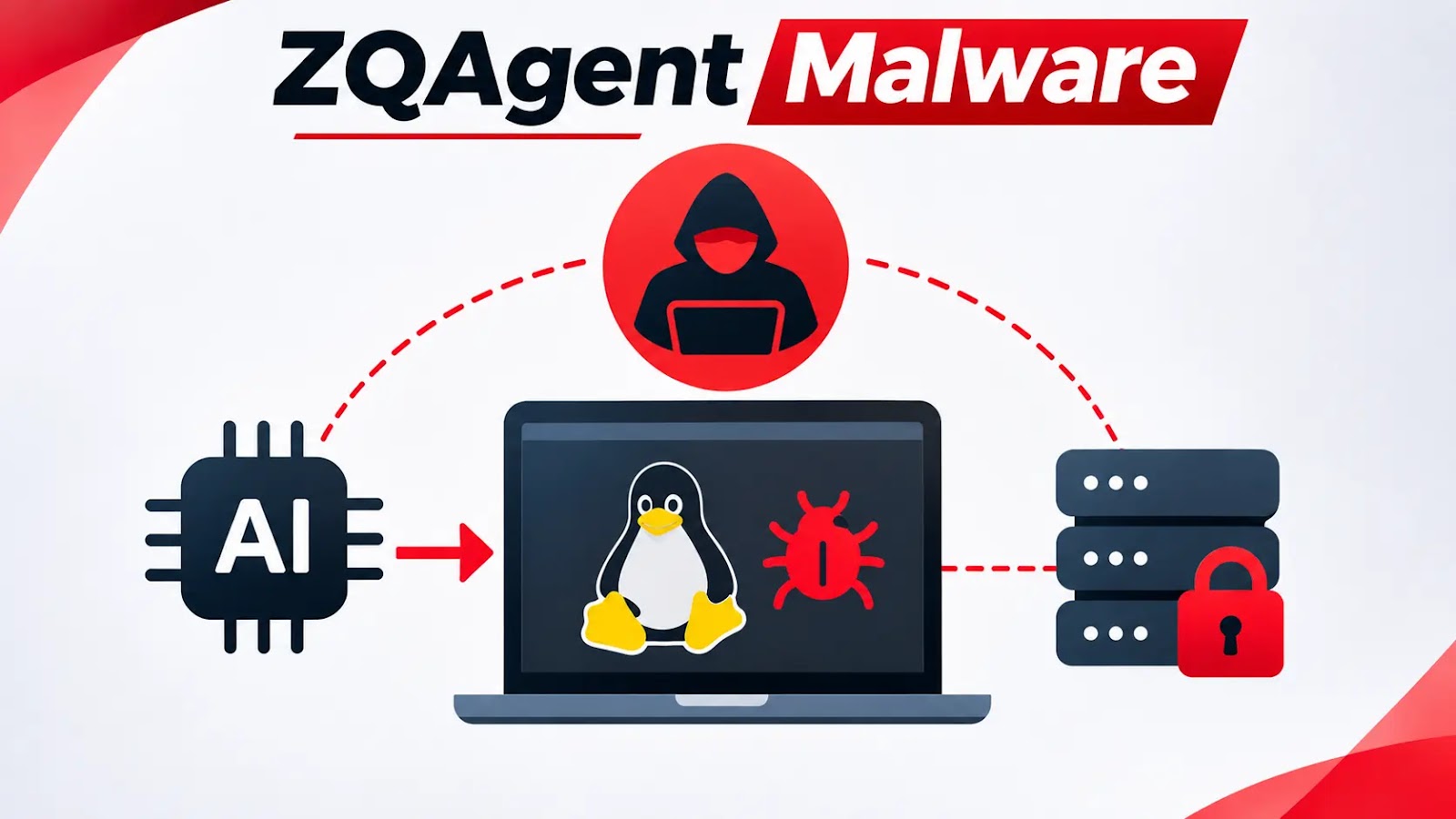


New Malware Threat: ZQAgent Introduces Persistent Linux Backdoor
In a groundbreaking revelation, cybersecurity analysts have identified a sophisticated intrusion tool driven by a Large Language Model (LLM), which has deployed a persistent Linux backdoor identified as ZQAgent. This marks a notable deviation from conventional tactics typically observed within this sphere of cyber threats. Historically, LLM-driven attacks have been characterized as rapid, disruptive operations, often likened to smash-and-grab heists. These assaults usually do not embed long-term footholds into affected systems; instead, they focus on quick credential theft that defenders can relatively easily counter by isolating the initial access point and revoking compromised credentials.
However, ZQAgent disrupts this established pattern, suggesting a deliberate design reflecting operator-specific instructions rather than merely autonomous behavior. NVISO, the cybersecurity firm that uncovered this anomaly, posits that the introduction of ZQAgent signifies a worrying trend in sophistication among threat actors.
A pivotal role in this incident is played by ARTEX, an open-source multi-agent offensive platform developed in the Go programming language. Notably, despite the removal of its original GitHub repository in October 2026, ARTEX continues to persist through various community forks, as reported by Google’s Threat Intelligence Group. This resilience showcases the platform’s utility and adaptability in the hands of cybercriminals.
In related findings, CrowdStrike has also documented the activities of an identified group known as VAPOR PANDA, utilizing ARTEX against over 200 organizations. Such widespread use indicates not only the effectiveness of ARTEX but also the alarming potential for collaborations among cybercriminal actors.
Detection and Infrastructure Associations
The investigation by NVISO revealed that ZQAgent was located under the directory path /tmp/zqa/systemd-timesyncd, with additional samples of the malware reported in Taiwan. All known instances reportedly connect back to command and control servers operating from the IP address 37.122.150 and the domain bloonspace.com. NVISO has associated this infrastructure with a threat actor cluster known as FOG0003, which Team Cymru’s network intelligence suggests has specifically targeted governmental and human-rights organizations across Asia.
This association highlights the potential geopolitical implications of the attacks, which may serve ulterior motives beyond mere financial gain, particularly when human rights are at stake.
Technical Overview of ZQAgent
The ZQAgent malware exemplifies an intricate design that allows it to execute stealthy operations while maintaining a foothold within the compromised system. Upon infection, ZQAgent embeds itself into an anonymous in-memory file, designated as /memfd:a (deleted). From here, it can initiate processes disguised as legitimate system operations, masquerading as a dbus-daemon utility, and utilizing spoofed command line entries to avoid detection.
The configuration files utilized by ZQAgent are encrypted, only decrypting when necessary for operational functionality. Its communication network layers encryption practices, including variations of ChaCha20, employing advanced cryptographic measures to evade surveillance.
ZQAgent’s operational capabilities extend to executing arbitrary commands via /bin/sh -c, managing processes entirely in-memory, and maintaining comprehensive control over network operations, including interactive shells, file management, and TCP/UDP connection oversight, all of which enable advanced network tunneling capabilities for thorough data exfiltration.
This malware also ensures its persistence through the establishment of systemd services and cron jobs, obliterating evidence of its presence by time-stamping each staged artifact. For instances where the attacker exploits root access, ZQAgent copies its code to /usr/lib/systemd, configuring a persistent unit in /etc/systemd/system. For non-root users, it infiltrates $HOME/.local/share and $HOME/.config/systemd/user, deploying the unit under the guise of a "Device event journal daemon" and utilizing automatic restart protocols.
Implications and Recommendations
The emergence of LLM-driven threats like ZQAgent has prompted cybersecurity experts to issue urgent recommendations for organizations to bolster their defenses. NVISO stresses the necessity for enhanced perimeter segmentation, thorough asset telemetry, and external attack surface management. They advocate for expedited response capabilities, including automated isolation of compromised assets to minimize damage and prevent lateral movement within networks.
Moreover, Mandiant has highlighted the importance of implementing short-lived credentials, isolating control planes, and deploying behavioral detection measures to counteract these sophisticated threats. Cyber defenders are advised to actively search for indicators of compromise, including deleted memfd processes, dbus-daemon processes without associated disk binaries, and any unexpected configurations within systemd units or cron entries.
Conclusion
As ZQAgent introduces an unprecedented level of infiltration strategy into the realm of cyber threats, the implications for personal, organizational, and national security are profound. The evolving landscape of cyber threats necessitates a proactive and adaptive response from cybersecurity professionals to face these emerging challenges effectively. With the integration of AI and LLMs into cyber assault strategies, the realm of digital security stands at a pivotal crossroads, requiring a combined effort to safeguard critical assets and information.