
Artificial Intelligence & Machine Learning,
Litigation,
Next-Generation Technologies & Secure Development
Patients Allege Health Entities Did Not Get Consent to Record Conversations
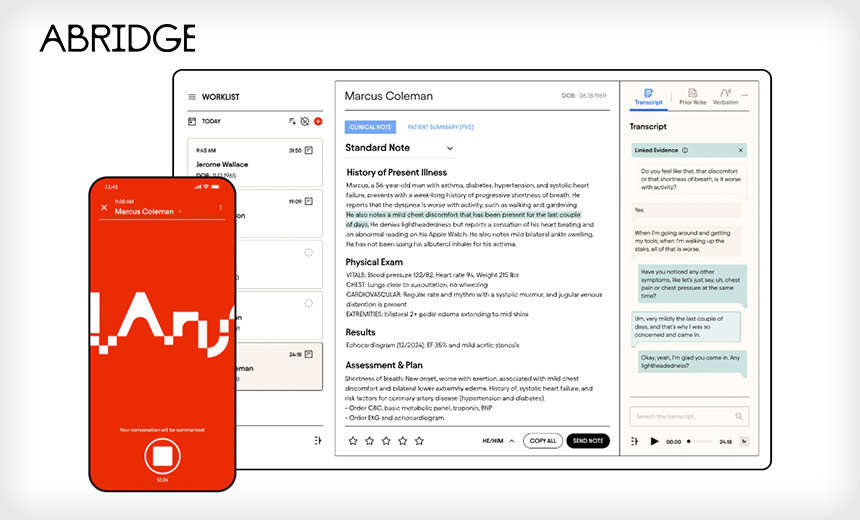
A proposed federal class action lawsuit has emerged against two prominent healthcare institutions in California—Sutter Health and MemorialCare Medical Foundation—alleging significant breaches of patient privacy regulations. The lawsuit contends that these organizations have misused an artificial intelligence-enabled technology designed to record, transcribe, and analyze the sensitive exchanges that occur between clinicians and their patients.
The controversy began to unfold following the filing of the lawsuit on April 8. Allegations contained within the legal complaint point to violations of multiple laws, including California privacy statute violations, breaches of medical information confidentiality, and unfair business practices. The plaintiffs are also invoking a federal wiretapping law in connection with the use of Abridge AI’s recording tool during medical consultations.
According to the plaintiffs, the system in question operates in a manner that allows for the interception and recording of highly sensitive medical discussions without the informed consent of the patients involved. These claims were brought forth in a federal court in San Francisco, highlighting the serious ethical implications surrounding the use of what has been termed “ambient clinical documentation.” Abridge AI, a Philadelphia-based startup, has characterized its technology as akin to a “SoundCloud plus RapGenius for medicine,” suggesting a streamlined method of capturing healthcare interactions.
Historically, medical documentation has relied on traditional methods, wherein physicians manually log relevant information either during or after patient visits. However, the Abridge system records live verbal communications directly. The recorded conversations are subsequently transformed into written text through a sophisticated AI process that aims to generate structured clinical notes. Yet, the lawsuit raises critical concerns over the data privacy implications of this method.
More troubling is the assertion that the recordings, along with their transcriptions, are sent beyond the clinical setting, being retained and processed on infrastructure associated with Abridge’s platform. This raises questions about who accesses these intimate details regarding patients’ health indicators, treatment histories, and personal disclosures—information that includes not only physical symptoms and diagnoses but also mental health considerations and family medical histories.
The plaintiffs assert that they were not adequately informed that their medical conversations would be recorded or that those recordings would be processed and stored outside the clinical environment. This lack of transparency stands at the heart of the allegations against the two healthcare organizations.
In response to the lawsuit, a spokesperson for Sutter Health acknowledged awareness of the claims and stated that the organization takes patient privacy seriously. The representative emphasized the importance of adequately evaluating and implementing technology in compliance with relevant laws. Meanwhile, neither MemorialCare nor Abridge AI provided immediate comments regarding the legal action.
Critical Considerations
Abridge has rapidly grown since its inception in 2019, now being utilized in over 250 health systems. This rise has been fueled by a recognized challenge within healthcare: the overwhelming burden on physicians to convert patient interactions into structured documentation efficiently. The issue is underscored by data from a 2023 study indicating that a staggering 60% of American physicians experience at least one symptom of burnout, with documentation demands being a significant contributor to this trend.
Many leading U.S. healthcare systems, including Inova Health, Memorial Sloan Kettering, and the Mayo Clinic, have adopted Abridge’s solutions, often praising the gains in efficiency that the system supposedly facilitates. One positive testimonial noted that the platform liberated staff time, significantly reducing response times to patient calls. However, while these benefits are notable, healthcare organizations are urged to thoroughly evaluate a multitude of regulatory, security, and privacy implications before embracing such innovative technology.
Data governance emerges as a critical issue, according to attorney Lee Kim, founder of Keytera. She underscores the necessity for entities to be fully informed regarding the data they capture, its necessity, processing mechanisms, accessibility, and retention durations. Additionally, if patients are recorded without their explicit consent, this could lead to violations of both HIPAA and California privacy regulations, making compliance paramount. Furthermore, if a third-party software provider retains any recordings or transcripts, a HIPAA business associate agreement may be mandated, adding another layer of responsibility for healthcare organizations.