
Deloitte Releases New Guidance on AI-Powered Cyber Defense: A Strategic Approach to Governance and Security
In an era where cyber threats evolve at an unprecedented pace, Deloitte has issued a vital new framework aimed at aiding security leaders in navigating the complexities of AI-driven cyber defense systems. Central to this guidance is the imperative for robust governance and control over autonomous agents—intelligent systems that operate on their own without continuous human oversight. The report underscores the necessity for organizations to treat each AI agent as a unique digital entity, complete with clearly articulated permissions, ownership designations, and well-defined operational boundaries.
Organizations are encouraged to conduct rigorous testing of these AI agents for various vulnerabilities prior to deployment. Key areas of focus include prompt injection vulnerabilities, which can manipulate the agent’s responses; tool misuse, where agents may utilize instruments unintended for specific tasks; and unauthorized access to sensitive data. Continuous monitoring is cited as critical to maintaining operational integrity, coupled with the ability to halt any unauthorized execution that may arise during agent operations.
A salient challenge highlighted in Deloitte’s report is the need for security teams to effectively balance the instantaneous threat detection capabilities afforded by machines with the nuanced decision-making required from human analysts. In response to this challenge, Deloitte puts forth the recommendation for organizations to establish explicit parameters regarding which actions agents can autonomously initiate and which necessitate human approval. For example, routine actions that carry no substantial risk can be executed within pre-approved limitations, while high-stakes decisions, carrying significant consequences for the business, should require explicit human consent.
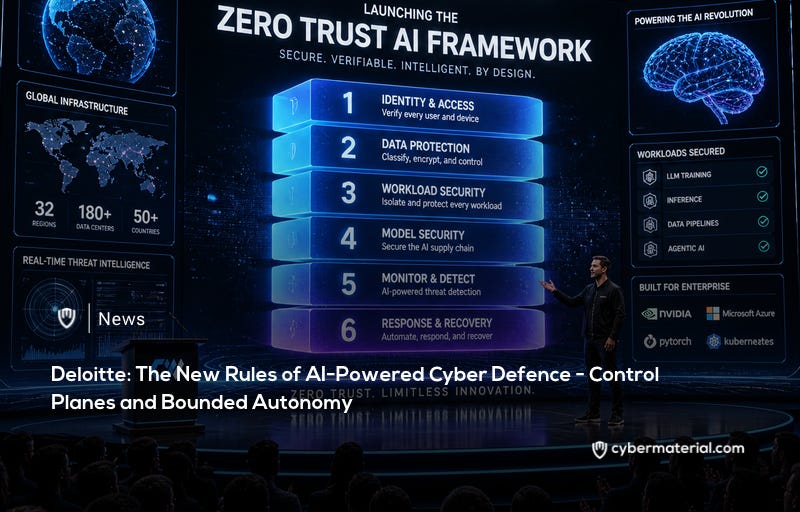
A pivotal element of Deloitte’s guidance involves the establishment of what is termed an "AI control plane." This control plane is envisioned as an interconnected suite of capabilities that governs the scope of what AI agents can access and perform during their operations. It comprehensively integrates critical aspects of security management including identity control, policy enforcement, authorization protocols, continuous monitoring, and containment strategies across diverse models, tools, and operational environments. This systematic approach not only provides visibility through dashboards and inventory management but also gives security teams the efficiency to obstruct unauthorized actions, calibrate permissions, and enact immediate halts when necessary.
Deloitte’s report further emphasizes that rapid detection of security threats serves little purpose if the identification of these threats does not translate into timely remediation actions. Consequently, it advocates for operational models that include clearly defined ownership roles, established escalation channels, and effective response mechanisms. Oversight protocols are essential, ensuring that teams possess the capability to interrupt ongoing operations, retract permissions, and recover from any unintended changes initiated by autonomous agents.
Bounded autonomy forms a core principle in the recommended operational frameworks. Deloitte articulates that decision-making authority and intervention capabilities should be ingrained within the workflows assigned to AI agents. In practical terms, security leaders are urged to identify named owners for each agent and formulate rigorously tested incident response playbooks. They should also impose approval thresholds for high-risk actions and devise recovery procedures in case of operational errors. This layered approach ensures that the AI systems not only provide necessary security benefits but that they do so without inadvertently heightening the organization’s vulnerability to cyber threats.
The report serves as a vital resource for organizations navigating the intricate landscape of AI-powered cybersecurity. By implementing the recommended standards and controls, security teams can cultivate a robust defensive posture that leverages the strengths of automation while safeguarding against potential risks. In this way, organizations can ensure that their investments in AI technologies enhance overall security rather than compromise it.
For more detailed insights and guidelines, the full report can be accessed at Deloitte’s official website.