
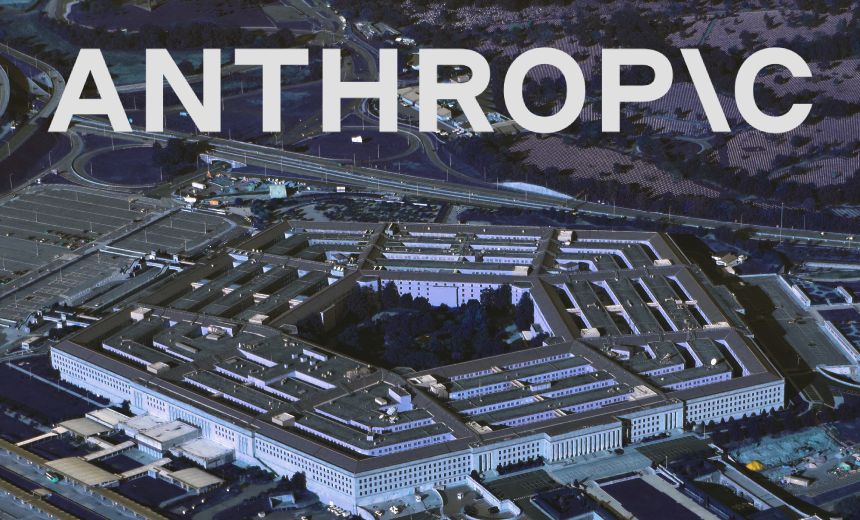


Anthropic vs. Pentagon: A Legal Battle Over AI Blacklisting
In a significant legal confrontation, Anthropic, an artificial intelligence firm, and the U.S. Department of Defense (DOD) are poised to face off in a San Francisco federal court this Thursday. The court, presided over by Judge Rita F. Lin, has already expressed skepticism regarding the Pentagon’s initiative to blacklist Anthropic’s models. In prior remarks, Judge Lin described the agency’s actions as potentially retaliatory and reminiscent of Orwellian tactics.
At the core of this conflict lies a request from both parties for a summary judgment, urging the court to resolve the lawsuit in their favor. Anthropic aims to dismantle the Pentagon’s blacklisting, which they argue threatens billions in revenue, dubbing the ban as "corporate murder," a sentiment echoed by a former Trump administration official on social media. The Defense Secretary, Pete Hegseth, previously ordered department officials to classify Anthropic as a "supply-chain risk," rendering it ineligible for defense funding—a designation deemed expansive enough to encompass any contractor or partner working with the military.
In a legal motion, Anthropic asserts that the DOD acted against them due to their public critiques concerning government contracting policies. Judge Lin’s March order had already temporarily halted the implementation of the Pentagon’s supply-chain risk designation. Lin identified the blacklisting as a possible violation of the First Amendment, noting a clear suggestion of retaliation against Anthropic for voicing disagreement with governmental policies.
She firmly pointed out that no existing statutes support the characterization of an American firm as a "potential adversary" merely for expressing dissenting views. Additionally, Anthropic’s relationship with the previous Trump administration has been characterized by mixed interactions. Recently, the company unveiled its two most advanced models, Fable 5 and Mythos 5. However, this innovation was followed by governmental intervention, as the DOD required Anthropic to limit model access to foreign nationals due to national security apprehensions—restrictions that were later lifted conditionally.
Tensions escalated in early 2026 when Anthropic requested specific constraints during negotiations regarding the integration of its AI model, Claude, into the DOD’s GenAI.mil platform. Although the company had secured a lucrative $200 million contract for military applications of Claude, it sought guarantees that the technology would not be deployed for mass surveillance or autonomous weaponry.
The situation intensified after a critical meeting between Hegseth and Anthropic’s CEO, Dario Amodei, who faced an ultimatum from the Defense Secretary—agree to blanket use of Claude or confront a potential supply-chain risk designation. This ultimatum triggered public discourse, with Amodei asserting in a blog post that some applications of the technology might be unsafe.
In the ensuing legal battle, Anthropic’s complaint states that the Pentagon’s actions violate both the First and Fifth Amendments of the U.S. Constitution, along with federal regulations regarding agency transparency. Judge Lin has acknowledged that Anthropic appears poised for success with its claims, citing that their operations do not fit the definition of a supply-chain risk. Furthermore, defense lawyers admitted during proceedings that Hegseth lacked the authority to impose a ban on all military contractors from utilizing Claude.
In response, the Pentagon has challenged the idea that their actions represent a First Amendment breach, citing national security concerns to justify the blacklisting. They further referenced a situation involving the Centers for Disease Control and Prevention (CDC), which sought to utilize Claude for infectious disease research but encountered limitations attributed to the AI’s commercial nature.
The Pentagon maintained that issues like "model poisoning," based on Anthropic’s future moral stances, were exactly the type of threat the supply-chain risk designation was designed to mitigate.
Regardless of Judge Lin’s decision to uphold the temporary relief granted to Anthropic, this case is likely not the final hurdle for the company. The Pentagon has already filed an appeal with the U.S. Court of Appeals for the Ninth Circuit, where litigation is currently on hold. Additionally, Anthropic has initiated separate legal action in the U.S. Court of Appeals for the District of Columbia concerning different supply-chain risk regulations under the Federal Acquisition Supply Chain Security Act.
As the court date approaches, the outcomes of these proceedings could set significant precedents concerning the interplay between governmental authority and corporate freedom in the burgeoning world of artificial intelligence, determining not just the fate of Anthropic, but potentially influencing the broader landscape of AI regulation and its implications for national security.