


Agentic AI,
Artificial Intelligence & Machine Learning,
Next-Generation Technologies & Secure Development
Felicis-Led Series A Backs Telemetry Correlation Across Cloud, Identity, Endpoints
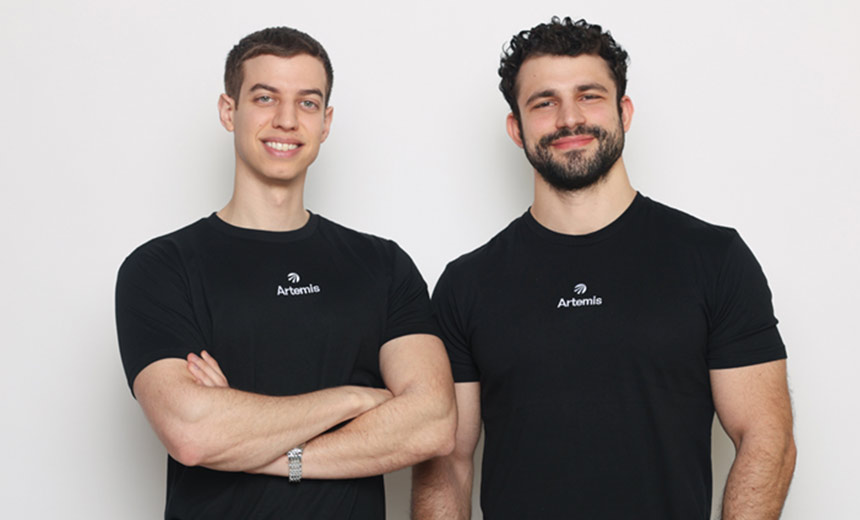
Artemis, a promising startup and a potential replacement for traditional Security Information and Event Management (SIEM) solutions, emerged from stealth mode recently with a significant funding boost of $70 million. Founded by a former leader of Amazon GuardDuty, the company aims to enhance threat identification by improving telemetry data correlation across diverse digital environments. The latest financial backing, led by Felicis, positions Artemis to revolutionize how threats are detected and managed in the increasingly fragmented landscape of cybersecurity.
The insights from co-founder and CEO Shachar Hirshberg reflect the company’s ambitious goals. The funding will facilitate Artemis’s efforts to unite data across cloud services, identity management systems, networks, endpoints, and various applications. This holistic approach aims to enhance the understanding of attacks as they unfold, addressing the challenges posed by traditional security architectures that often deliver disjointed views of attacker behavior.
According to Hirshberg, Artemis has already deployed its foundational product within some of the largest and most complex IT environments worldwide, generating interest and inquiries from potential customers. The startup, established in 2025, has quickly expanded its workforce to 30 personnel. Before the recent Series A round, which raised a total of $55 million, Artemis had completed a $15 million seed round backed by First Round Capital and Brightmind.
Tuning Detections Based on Customer’s Specific Environment
One key aspect that sets Artemis apart is its dynamic detection logic, tailored to meet the unique characteristics of each organization’s environment. Rather than applying static detection rules uniformly—an approach that can lead to inefficiencies—Artemis focuses on refining and generating detections that reflect the specific operational contexts of its clients. Hirshberg emphasized that even a single enterprise may host varied business units that require distinct detection strategies due to differences in infrastructure and operational practices.
The intuitive nature of Artemis’s platform streamlines security operations by incorporating natural language interfaces. This development is designed to alleviate the burden of specialized queries and complex data exploration often faced by security analysts. By allowing users to conduct investigations using plain language, the platform effectively lowers the technical barriers and speeds up workflows, enabling quicker responses to security incidents. “It feels like they have a system that just does what they want, and they point in the right direction, and things just happen,” Hirshberg described, noting that this reduces the time analysts typically spend crafting queries.
Moreover, Artemis’s technology dramatically accelerates investigative processes that previously took weeks. Activities such as correlating alerts, constructing timelines, and carrying out thorough investigations can now be accomplished within minutes, thanks to the automation capabilities embedded in the platform. This efficiency enables organizations to transition from a labor-intensive approach to one that fosters agile incident response and threat mitigation.
Defining How Much Autonomy Artemis’s System Has
A central feature of Artemis’s offerings is its agentic protection framework, which leverages AI agents to autonomously manage the complete lifecycle of threat detection and response. This includes recognizing anomalies, investigating incidents, and executing remediation measures. While the vision for automation is compelling, Hirshberg clarified that the system is developed to function within a structure that incorporates human oversight, ensuring that cybersecurity professionals remain integral to the process.
“We automatically generate and tune detections continuously based on the operations of your specific company, meaning you really get detections that understand how you work and how your assets interact,” Hirshberg explained, emphasizing the heightened efficacy that this tailored approach provides. He added that such adaptability allows the system to perform optimally even in the case of organizations with distinctly different operational paradigms.
Despite the ongoing transition towards automation, Hirshberg maintained that human intervention is crucial. Companies are empowered to determine the level of autonomy they wish their systems to have, with workflows ranging from advisory to fully automated actions. Customers often start with more guidance-based models, phasing in higher levels of automation as their trust in the system solidifies, especially in contexts involving lower-risk actions.
Artemis is keenly positioned to tap into the expanding cybersecurity market, recognizing a substantial opportunity to address pressing security needs. With the escalating frequency and sophistication of cyber threats, the potential for organizations to leverage state-of-the-art detection and response capabilities has never been more critical. As Hirshberg aptly stated, “We are targeting the largest market of cybersecurity, so there is a tremendous opportunity to capture that very high need right now.”