


Critical Infrastructure Security,
Cyberwarfare / Nation-State Attacks,
Fraud Management & Cybercrime.
Report Finds Beijing Building Tools to Sabotage Cables Without Open Conflict
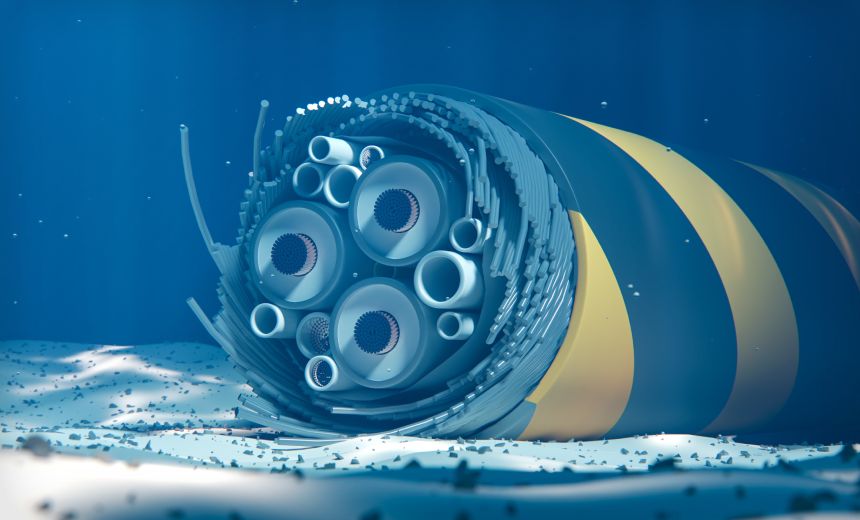
A recent report by researchers at the China Strategic Risks Institute has raised alarm regarding the potential vulnerabilities of undersea cables crucial to internet connectivity between the United States and key Asian nations such as Taiwan, Japan, and the Philippines. The report underscores the possibility that Beijing is developing mechanisms to compromise these trans-Pacific cables without triggering full-blown military conflict.
The U.S.-China Economic and Security Review Commission, which commissioned this study, published the findings in September, following a series of incidents around Taiwan. Notably, a work barge from China was alleged to have damaged a cable connected to the Matsu Islands as early as March, highlighting ongoing concerns about cable security in this sensitive geopolitical region.
The vulnerability index outlined in the report assigns higher risk scores to cables that terminate in Taiwan or navigate through waters claimed by Beijing. It notes that the risk is exacerbated in shallow, congested shipping lanes, where an anchor dragged by a vessel could easily be misconstrued as an accident. This deliberate manipulation of circumstances could serve as a tactic to disrupt communications indirectly.
Among the most concerning findings, four of the ten cables rated highest for vulnerability are still in the construction phase. Notable projects include Google’s TPU and Meta’s ORCA, both of which are void of Chinese ownership. This absence of Chinese investment leaves these cables exposed and potentially viable targets should tensions escalate, according to the authors of the report.
The implications of losing even a single cable are severe. For instance, if any three of the four direct cables linking the U.S. with Taiwan were to fail, the peak traffic demand would surge beyond the remaining cables’ capacity for data transmission. The situation is similarly precarious for the Philippines, which relies on two of its three direct connections to Guam, a vital link back to the U.S. mainland. In the event of a disruption, the Philippines would have little to no redundancy or margin for error.
Geopolitical tensions surrounding Taiwan could create a scenario in which all four direct cables linking the U.S. and Taiwan are severed, leaving the broader trans-Pacific data network with a minimal spare capacity of approximately 2% during peak demand. Moreover, losing two critical cables—the JUNO cable between Japan and the U.S. and the Pacific Light Cable Network—could lead to a spike in peak demand up to 70% beyond the capacity that network operators are currently utilizing.
The report estimates that if trans-Pacific routes were overwhelmed, traffic connecting Taiwan to the U.S. might need to reroute through the Indian Ocean and across the Atlantic, significantly increasing latency. This additional lag could result in delays of over 900 milliseconds per round trip, posing significant issues for time-sensitive transactions such as online payments, which could time out as a result. Operators could mitigate this by activating unused fiber pairs, but the challenge remains substantial.
In a further exploration of dual-use technologies, the report reveals that China is developing advanced tools capable of reaching deep-water cables previously thought to be safe from interference. A notable example is a 4,000-meter cutting device linked to a state-run shipbuilder, which could facilitate more sustained operations against undersea cables. Furthermore, a crewed seabed station is planned for deployment around 2030, potentially enhancing China’s capabilities in this regard.
Mike Kuiken, the vice-chair of the commission, emphasized in a statement associated with the report that the issue of cable security transcends mere capacity concerns; it represents a significant warfighting problem that requires immediate attention and action from U.S. lawmakers.
The report makes a series of recommendations aimed at bolstering cable security, including the establishment of acoustic sensors as a licensing requirement for new cables in high-risk regions. It also advocates for the Department of Homeland Security or a comparable agency to oversee subsea cable security, proposing the provision of funds to acquire at least five new repair vessels for operations in the region by the year 2040. Currently, only 62 cable repair ships are in service globally, and repair efforts in the Asia-Pacific region can take an average of 30 days.
Additionally, the report calls on the Cybersecurity and Infrastructure Security Agency (CISA) to coordinate with various sectors, including finance and healthcare, to develop outage playbooks outlining which data flows should be prioritized during disruptions. It raises concerns about CISA’s capacity to handle significant subsea cable disruptions, especially following workforce reductions that have seen the agency lose approximately one third of its personnel.
The Pentagon recently announced a deployment of around 50 reconnaissance Marines equipped with small drones and coastal surveillance equipment to assist Finnish forces in a mission known as Baltic Sentry. This NATO initiative, which commenced in January 2025, was spurred by incidents of ships damaging multiple cables in the Baltic Sea when dragging anchors.
Moreover, tensions extend beyond the Pacific, as Yadollah Javani, a deputy commander within Iran’s Islamic Revolutionary Guard Corps, issued warnings on state television about the safety of internet cables traversing under the Strait of Hormuz, threatening potential repercussions if Iran’s infrastructure is compromised.
Under current U.S. federal law regarding cable damage, intentional disruption of an undersea cable can result in a maximum penalty of two years in prison. This statute, in effect since 1888, has drawn criticism from the report’s authors, who are advocating for stiffened penalties for both negligent and deliberate acts of damage.
In a move towards enhancing security, a bipartisan bill known as the Strategic Subsea Cables Act has passed the Senate Foreign Relations Committee, which seeks to impose sanctions on foreign individuals who are found culpable of intentionally damaging undersea cables. This legislation is an essential step towards safeguarding crucial networks from escalating geopolitical threats.