
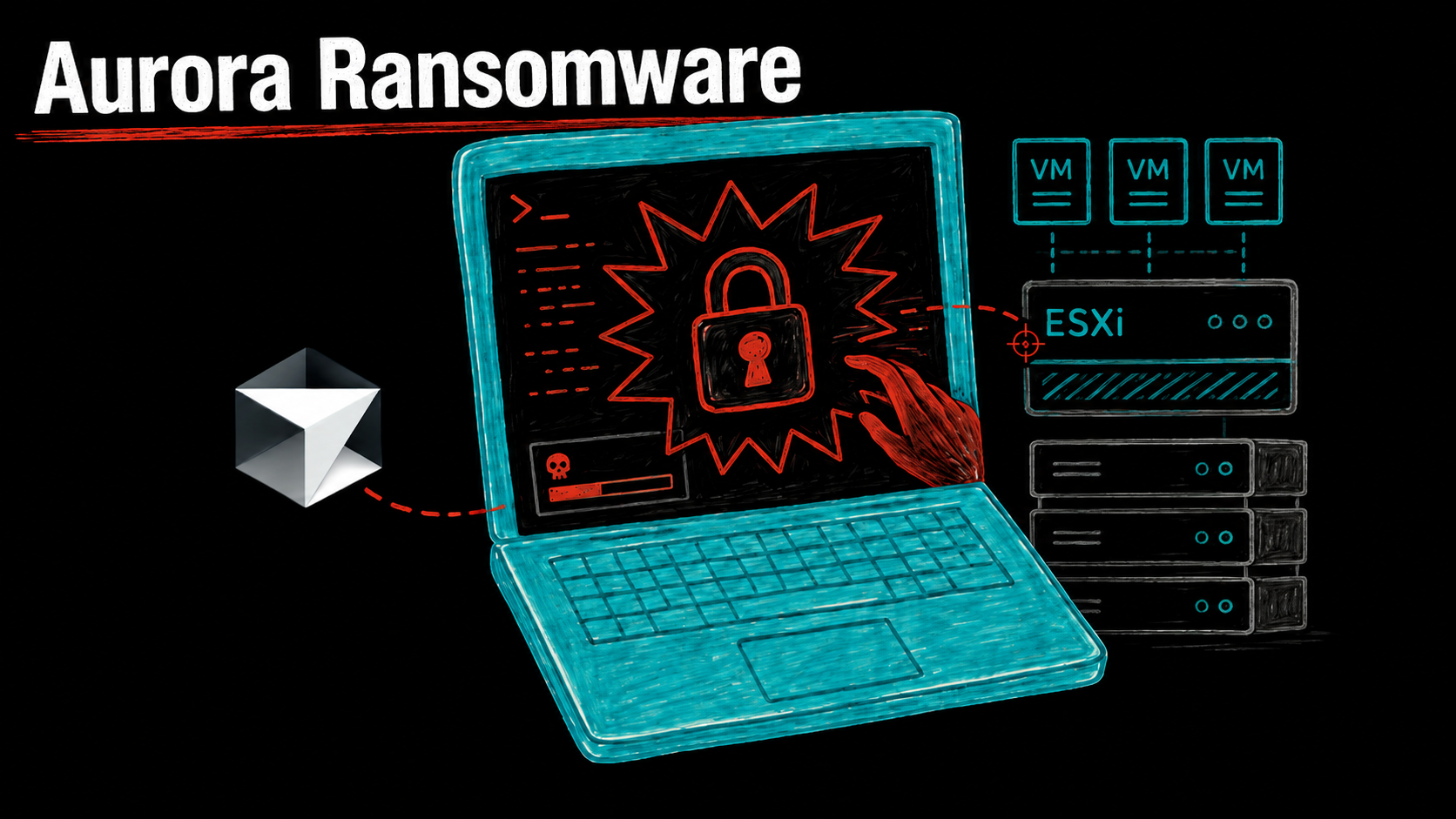
Aurora Ransomware Leverages AI-Driven Tools to Target Victim Organizations
Recent investigations have revealed alarming activities undertaken by Aurora ransomware operators utilizing advanced technology in their attack strategies. The ransomware group has been observed employing a tool named Cursor Agent, which is powered by Claude Sonnet, to enhance hands-on intrusion efforts across at least ten different organizations. This sophisticated approach is bolstered by the deployment of a specially designed Linux encryptor aimed specifically at disrupting VMware ESXi environments, marking a significant evolution in the operational tactics of ransomware affiliates.
The findings underscore the integration of agentic artificial intelligence into existing post-compromise workflows, demonstrating a shift from traditional reliance on standalone attack tools. Aurora operators have adapted AI capabilities to streamline and enhance their exploitation processes rather than merely using them in isolation. What this suggests is a concerning trend: the intertwining of AI technology with advanced malicious practices in cybersecurity breaches.
The investigations into the operators’ environment shed light on their operational tooling, attack methodologies, and specifics regarding a ransomware sample called encrypt.out. The sample possesses a SHA-256 hash of a4af136d159a8eb96b54924fa80355ca52874913301300f55af7d67ae97edcfe, revealing critical information about how these attacks are orchestrated. Notably, between April 8 and May 21, 2026, the Aurora operators relied heavily on Cursor Agent with the claude-4.5-sonnet-thinking configuration, adapting the tool to various environments.
The methodology employed by the attackers included supplying the agent with valid user credentials or exploiting existing access routes, such as through SOCKS proxies. This capability allowed them to instruct the AI for diverse tasks, including reconnaissance, privilege assessments, internal scanning, and further exploitative measures.
Evidence suggests that the operator utilized AI as an iterative technical assistant, demonstrating the adaptability of the technology even in complex operational environments. The interplay of human oversight and AI assistance is crucial; operators would adjust commands multiple times before achieving successful task execution, signifying that decision-making and execution remain firmly in human hands.
Tasks conducted during these operations included the deployment of VPN clients and ProxyChains, scanning internal networks using Nmap and gathering Active Directory information through BloodHound. Furthermore, the operators attempted NTLM relay attacks employing various techniques, including PetitPotam and Coerce Plus, alongside more sophisticated methods targeting Active Directory Certificate Services via tools like Certipy.
Throughout these operations, it became evident that the operators maintained strict operational constraints. Instruction to avoid DCSync, account lockouts, or disruption to the domain emphasized a clear intention to minimize detection risks and prevent any significant changes before encryption took place. This meticulous approach highlights the strategic planning typically associated with such cybercriminal activities.
In a noteworthy development, the Aurora encryptor payload was hosted on Cloudflare R2 and transferred manually to targeted internal environments. The malicious software utilizes the ChaCha20 encryption method and secures each session key with an embedded RSA-4096 public key, making it particularly formidable. The command-line options offered by the malware support various functionalities, allowing for partial encryption, file-size limits, and targeted folder encryption, along with a specialized -esxi mode for enhanced disruption.
Additional discoveries made by Gambit Security’s Threat Intelligence team revealed that the abuse of Cursor Agent lends a competitive edge to the Aurora ransomware campaign. The ransomware’s operational footprint has been detected across multiple organizations since April 2026, including a public data-leak site operated by the group.
When executed with the ESXi option, the malware encrypt.out commands the system to enumerate active guest virtual machines, effectively taking them offline. Through techniques such as esxcli vm process kill, the attackers forcibly terminate active guests, allowing them to encrypt vital virtual disk files, including VMDK, VMX, and log files. Remarkably, the malware is programmed not to encrypt system volumes, ensuring that the hypervisor remains operational, which allows administrators access to the host and the extortion demands after virtual machines have been compromised.
The Aurora group has further leveraged custom tools like esxi_finder.py, which assist in discovering ESXi and vCenter infrastructures, adding another layer of complexity to their attack tactics. Detailed research has linked various exposure points to victim organizations, highlighting weaknesses in Active Directory structure and infrastructure.
In light of these revelations, organizations must treat ESXi platforms, Active Directory Certificate Services, backup infrastructures, and remote administration paths with heightened vigilance. Effective security strategies are now more critical than ever, insisting on the isolation of management networks and implementing robust monitoring practices around operations like esxcli.
Effective mitigation strategies should include the enforcement of SMB signing, thorough auditing of Active Directory configurations, and restricting SSH and ESXi access to prevent unauthorized intrusions. As the Aurora ransomware group’s techniques evolve, the necessity of employing innovative defense mechanisms to safeguard organizational infrastructure becomes paramount. The entry of AI into such malicious undertakings posits a substantial threat landscape, necessitating a proactive and adaptive approach to cybersecurity.