
Agentic AI,
Artificial Intelligence & Machine Learning,
Governance & Risk Management
Mythos and Fable Export Controls Deprive EU of ‘Cutting-Edge Innovation,’ Security
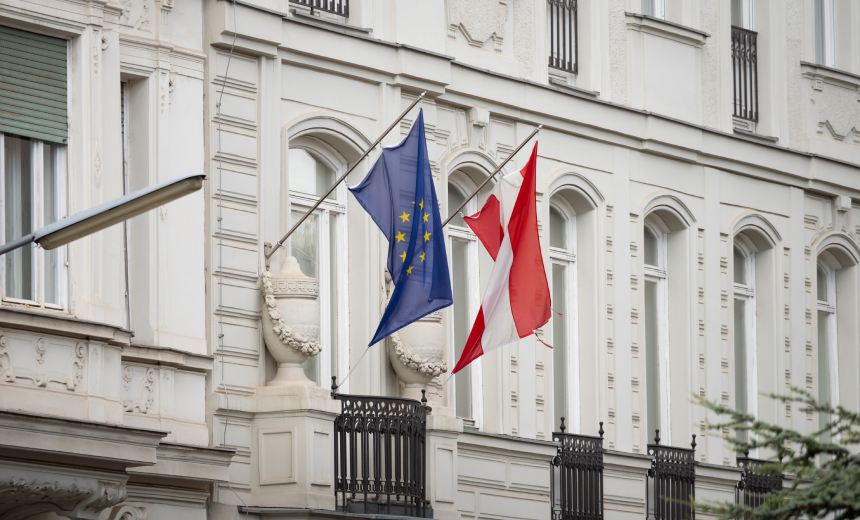
Following the export controls imposed by the Trump administration on Anthropic’s advanced artificial intelligence models, Mythos and Fable, the Austrian government is intensifying its efforts to attract Anthropic to relocate to Europe. This strategic push is largely a reaction to the recent restrictions, which the U.S. government argued were necessary due to national security concerns.
The Austrian State Secretary for Digitalization, Alexander Pröll, expressed in a recent letter the urgency for Europe to present a united front in appealing to Anthropic, suggesting that the European Union (EU) can offer a conducive environment for the company’s operations, featuring not just legal certainty but also capital investment and market access aligned with Anthropic’s core values. By reaching out to Henna Virkkunen, Vice President of the European Commission for tech sovereignty, Pröll emphasized the importance of acting swiftly to create an appealing framework for Anthropic’s establishment in the EU.
On June 12, the U.S. effectively barred Anthropic’s most sophisticated AI models, including Fable 5 and Mythos 5, from being accessed by foreign nationals. This action led to the company placing its advanced models on indefinite hold globally due to the impossibility of selectively restricting access, impacting AI advancements in Europe. Pröll remarked that this development was more than a mere administrative action; it was a demonstration of geopolitical power, illustrating Europe’s vulnerability given the reliance on technology developed outside its jurisdiction.
In emphasizing the need for urgent action, Pröll articulated that Europe has a narrow window to court Anthropic away from Silicon Valley, stating, “If we want to act, we must act now.” He posed the broader question of whether Europe aims to shape its technological landscape actively or merely serve as a passive participant in decisions directed from afar.
The spokesperson for Pröll, Vincenz Kriegs-Au, confirmed that the government is looking for a complete relocation of Anthropic, rather than just the establishment of a European office. Currently, Anthropic maintains its European headquarters in Dublin with additional offices in Paris, Munich, and Milan, but the Austrian government believes that a fundamental move would better facilitate the company’s integration into the European tech ecosystem. “Think big,” Kriegs-Au advised, underscoring the ambition behind their proposal.
The European Commission acknowledged receipt of Pröll’s letter, yet suggested that the ultimate decision lies with Anthropic regarding its relocation. Anthropic, however, has yet to respond to requests for comment on the matter.
As discussions surrounding tech sovereignty in Europe have escalated in the aftermath of the Trump administration’s controversial policies, including threats to annex Greenland, these export controls have been interpreted as emblematic of broader shifts in power dynamics. Concerns have grown regarding the potential for the U.S. government to impose restrictive measures on crucial technology services relied upon by European nations.
Anthropic’s Claude Mythos model, which debuted just three months prior, showcases exceptional capabilities in identifying and even exploiting software vulnerabilities—an area of expertise that parallels offerings from competitors like OpenAI’s newer GPT-5.5-Cyber model. However, access to Mythos had initially been restricted to a select array of organizations through Anthropic’s initiative named Project Glasswing. European organizations, including the European Commission, had to wait nearly two months for access to this crucial technology, only for it to be abruptly halted when U.S. export controls were implemented.
Following Anthropic’s release of a publicly available version of Mythos under the name Fable, reports emerged that complaints regarding security vulnerabilities led to the rapid institution of tighter controls by the U.S. government. In a significant development, the Trump administration has recently rolled back some of these restrictions as Anthropic pledged to collaborate with the government to address security concerns related to both Mythos and Fable.
Despite this partial rollback, the opportunity for European organizations to access Mythos appears limited, with indications suggesting that the European Commission may not gain access to the latest AI advancements, including OpenAI’s GPT-5.6 model.
The European Commission’s spokesperson, Thomas Regnier, reaffirmed Europe’s commitment to collaboration regarding security challenges posed by AI, positing that EU institutions should have a say in determining practical avenues for mitigating risks. Regnier stated that Europe considers itself a reliable partner in tech and not a source of security threats and maintained that strong channels of communication between the Commission and leading AI companies remain vital.
The drive for technological sovereignty in Europe reflects an ongoing effort not only to reduce dependencies on U.S. and Chinese technologies but also to bolster local tech industries. This ambition is echoed in legislative proposals aimed at limiting the engagement of high-risk public-sector projects with external cloud providers. Countries like France have demonstrated commitment by allocating extensive funding towards nurturing homegrown tech and digital innovation.
In the current landscape, while the EU has notable advancements in AI, particularly from companies like France’s Mistral, there is a consensus that attracting Anthropic could significantly enhance the European technological landscape. Pröll articulated that facilitating Anthropic’s establishment in Europe is not meant to undermine existing firms but instead aims to cultivate a thriving ecosystem by drawing talent and encouraging capital investment.
Despite critiques from U.S. officials alleging that Europe maintains an overly stringent regulatory environment regarding AI, Pröll contended that Anthropic would align well with European values prioritizing “safety over speed.” He expressed confidence that a commitment to fostering a supportive regulatory environment would empower such companies to thrive. “This company would not be constrained in Europe. It would be set free,” he declared, encapsulating the vision for a European tech landscape that champions innovation while ensuring security and ethical considerations remain a priority.