
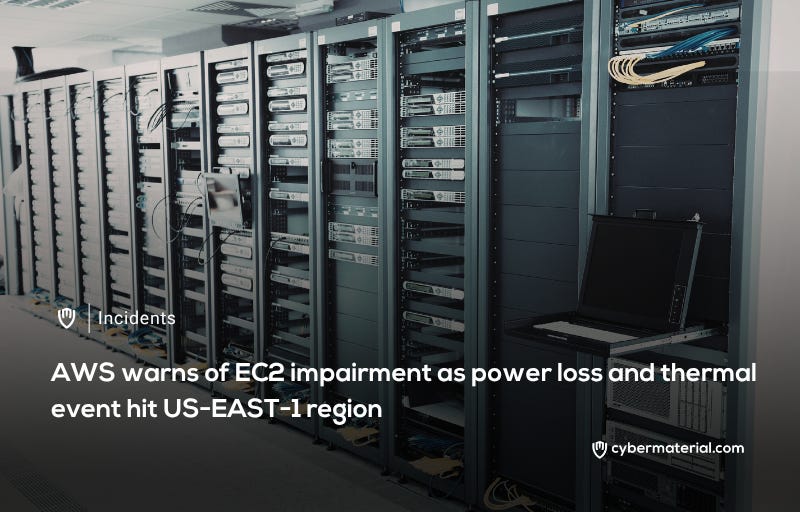


On May 7, Amazon Web Services (AWS) experienced a significant power outage in its US-EAST-1 region, severely impacting numerous customers who rely on the cloud computing platform. The outage, which had its origins around 5:25 PM PDT, was triggered by a thermal event that led to failures in the cooling systems responsible for maintaining the optimal operating temperatures for data center hardware. Specifically, this incident affected the use1-az4 availability zone, rendering many customer resources inaccessible.
As the situation unfolded, AWS promptly identified issues within the affected availability zone and confirmed that a loss of power to hardware components was linked to the thermal event. By 8:06 PM PDT, AWS acknowledged that the process of restoring stable temperatures in the data center was progressing more slowly than anticipated, despite ongoing efforts to incrementally enhance the cooling systems. During this time, customers faced elevated error rates and noted increased latencies across various workflows, complicating their operations further as they awaited a resolution.
In a bid to mitigate the impact of the outage, AWS implemented measures to reroute traffic away from the compromised availability zone. By 10:11 PM PDT (05:11 UTC on May 8), the company had successfully brought additional cooling capacity online and reported recovery of some affected server racks. Nonetheless, the recovery process remained gradual, leading to persistent issues for customers. To compound matters, users noted that even the AWS status dashboard was experiencing timeouts during the height of the incident, which exacerbated the confusion and frustration faced by those affected.
The repercussions of this outage were widespread, with numerous customers reporting a complete loss of access to their servers. In light of this, AWS advised organizations to shift workloads to alternative availability zones within the US-EAST-1 region. However, the company also cautioned that provisioning times for new resources were significantly longer than usual, placing further strain on operations for those trying to shift their workload.
Historically, the US-EAST-1 region has been plagued by major outages, including significant incidents in 2021 and another in October 2025, both of which disrupted large segments of the internet. While AWS executives maintain that this region is not inherently more fragile than others, they acknowledge its larger scale in comparison to other AWS regions. This high traffic volume places added stress on their services, increasing the likelihood of failures during critical events.
Organizations that utilize AWS’s services in the US-EAST-1 region are encouraged to thoroughly review their disaster recovery plans. AWS has emphasized the importance of adopting multi-region architectures to reduce vulnerability to failures rooted in a single region. This advice speaks to a broader industry trend wherein businesses are increasingly recognizing the necessity of redundancy in cloud infrastructure to safeguard against outages.
In summary, the May 7 outage underscored the fragility that can accompany reliance on cloud services, even from industry giants like AWS. With the incident creating disruptions for an unspecified number of affected customers, it serves as a reminder for organizations to evaluate their operational strategies within the cloud domain. As technology evolves, the implications of such outages resonate across various sectors, further emphasizing the need for robust contingency planning in an increasingly digital landscape. The challenges faced during this incident exemplify the complexities of managing large-scale cloud services while striving to maintain high availability and reliability for a diverse range of users.