


Improving Detection of Multi-Stage Intrusions in AWS: A Comprehensive Approach
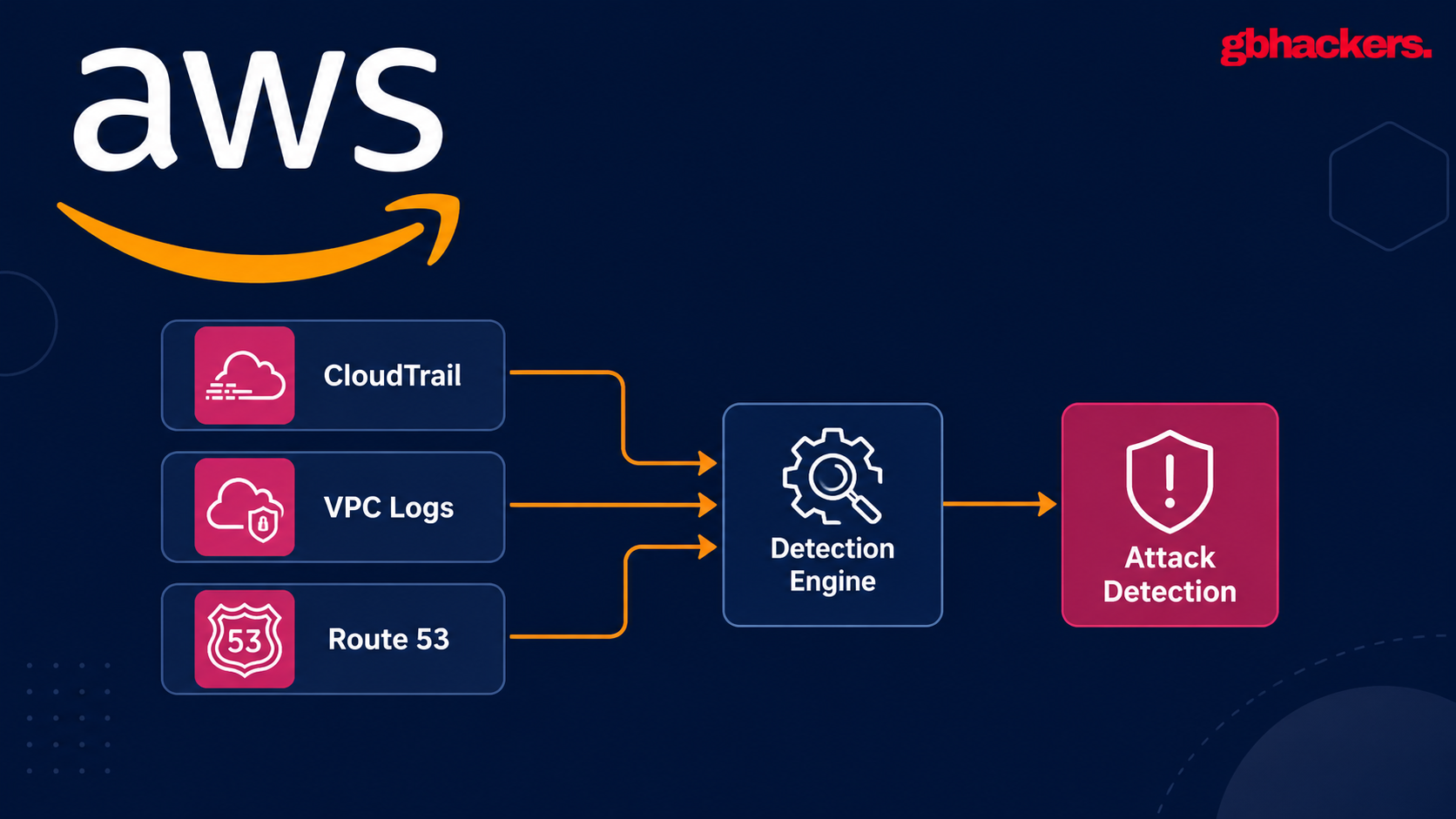
In the ever-evolving landscape of cloud security threats, Amazon Web Services (AWS) security teams are continuously developing strategies to enhance their detection capabilities regarding multi-stage intrusions. One significant method emerging involves correlating API activities captured in AWS CloudTrail with network metadata obtained from VPC Flow Logs and DNS activity from Route 53 Resolver query logs. This method aims to create a more coherent narrative around potential attacks, specifically covering credential abuse, reconnaissance, privilege escalation, lateral movement, and data exfiltration.
The pivotal premise behind this approach is that isolated alerts, while useful, can often fail to deliver a complete picture of an ongoing attack. For instance, a suspicious GetCallerIdentity request originating from an unfamiliar IP address may not seem alarmingly significant when viewed in isolation. However, the threat level escalates dramatically if the same identity begins to issue numerous List and Describe calls across various AWS services, experiences a series of AccessDenied failures, accesses sensitive data in an S3 bucket, and is subsequently linked to high-volume outbound traffic connected to a newly registered domain. By correlating these events within a defined time frame, security analysts can discern a clearer intent and progression of an attack rather than merely responding to a disorganized array of alerts.
CloudTrail plays a fundamental role in this schema by providing essential identity and control-layer data. The action logs include various crucial operations such as AssumeRole, CreateAccessKey, PutRolePolicy, and AuthorizeSecurityGroupIngress, along with GetObject requests if S3 data events are enabled. This last facet holds particular importance; relying solely on management-event logging does not capture granular-level operations that could indicate substantial data collections from sensitive S3 buckets.
Utilizing these logs effectively allows analysts to verify if a workload associated with a suspicious IAM (Identity and Access Management) principal has engaged in transferring uncharacteristically large volumes of data to public IP addresses soon after noteworthy activity. Additionally, the Route 53 Resolver query logs construct a DNS context by documenting queries and associated source addresses within VPCs. These logs can be directed to services such as CloudWatch Logs, Amazon S3, or Firehose, facilitating the identification of a workload that connects to dubious destinations before or during its outbound communication.
It is important to note that Resolver logging captures unique queries, omitting cached DNS lookups, representing a limitation that must be deeply understood when formulating correlation logic. According to AWS researchers, VPC Flow Logs significantly supplement this landscape by adding an essential network layer. They give detailed records of accepted or rejected flows, encompassing source and destination addresses, port numbers, and byte counts.
AWS actively recommends employing a "logging trifecta" for cloud investigations, though the telemetry only evolves into a high-fidelity detection layer when it ties in with local context. A legitimate analytics role, for instance, may consistently read data from a reporting bucket, but if that same role accesses a customer-records bucket, it should be flagged as an exceptional occurrence. This logic can be applied to establish rules that highlight high-volume GetObject operations against sensitive buckets, exempt approved principals, then corroborate these with VPC egress and DNS activities occurring within the same 10-minute interval.
Security teams also have the capacity to generate alerts in instances where a user performs multiple AssumeRole operations from a single source and subsequently alters IAM policies. Alerts can also be triggered when an unexpected role calls Decrypt on a workload-specific, customer-managed KMS key or when a human identity makes significant adjustments to security groups or access keys beyond approved deployment timelines.
Moreover, Amazon’s GuardDuty is already designed to detect numerous generic cross-service attack patterns. When activated in a specific AWS Region, the Extended Threat Detection capability correlates signals from foundational data sources and active protection plans, leading to comprehensive attack-sequence findings. According to AWS, these findings can encompass chains such as credential compromise followed by data exfiltration, grouping what would otherwise be disparate events into a single critical-severity finding.
Current coverage through GuardDuty includes a wide array of sources such as CloudTrail management and S3 data events, VPC Flow Logs, Route 53 Resolver DNS logs, EKS audit data, and various runtime-monitoring signals depending on the enabled services and workloads. Nonetheless, the value of custom detections remains salient. While GuardDuty identifies generalized patterns that are suspicious across diverse AWS environments, each organization possesses unique internal controls that determine whether a specific identity can access a bucket, leverage a particular key, navigate a role chain, or alter production settings after hours.
To facilitate rapid querying, teams are advised to centralize telemetry in services like CloudWatch Logs Insights, or utilize Amazon Security Lake and Athena for broader analytics and longer retention periods. AWS also recommends a set of prerequisites including a CloudTrail trail routed to CloudWatch, S3 data-event logging for monitored buckets, VPC Flow Logs for production networks, and Route 53 Resolver query logging, alongside activated GuardDuty protections.
To establish effective alert thresholds, AWS encourages organizations to measure a baseline of normal access activity over a week and set alert thresholds above the 95th percentile for the read count of protected buckets. Moreover, correlation windows should utilize event timestamps rather than query times, taking into account that CloudTrail delivery could introduce latency.
In summary, this harmonized detection model connects crucial facets like identity, resource sensitivity, network egress, and DNS behavior, effectively illuminating what might resemble a legitimate API call but could very well signify one stage in a broader, more active cloud attack. AWS’s innovative techniques and recommendations allow organizations to bolster their security posture against an ever-growing array of cybersecurity threats.