
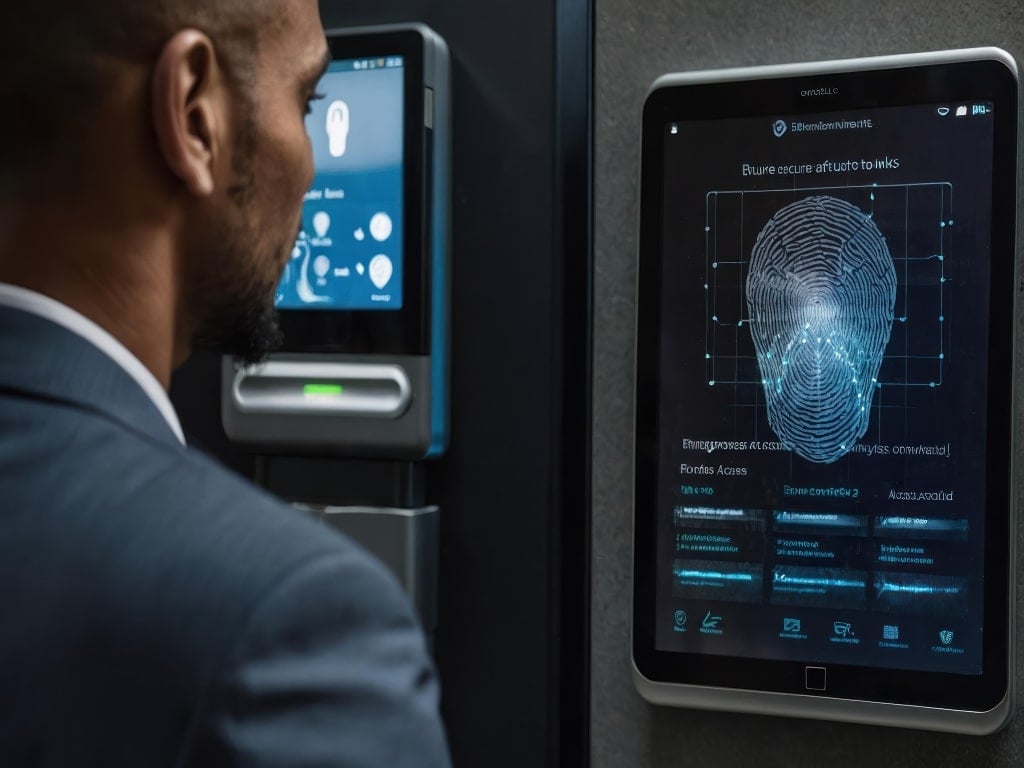


Biometrics, the use of biological and behavioral characteristics for verifying a person’s identity, is becoming increasingly important in today’s society. With digital threats consistently on the rise, traditional authentication methods are no longer sufficient to protect against cyber attacks. Homeland Security defines biometrics as “a measurable biological-anatomical and physiological-and behavioral characteristic that can be used for automated recognition.” This technology offers a more secure approach to authentication, providing better security, privacy, and convenience.
The use of biometrics involves identifying individuals based on unique biological or behavioral traits, such as fingerprints, facial features, voice patterns, and behavioral biometrics like typing speed or mouse movement. Unlike traditional authentication methods like passwords or security tokens, which can be lost or stolen, biometric data is directly tied to a person’s identity, making it more secure and reliable.
One of the main advantages of biometrics is its ability to strengthen security measures. By using unique biological traits for authentication, biometric systems provide stronger security compared to traditional passwords, which can be easily guessed or forgotten. This eliminates the inconvenience of constantly resetting passwords and reduces the risk of identity theft. Since a person’s biometric data is unique to them, it adds an additional layer of security that is difficult for hackers to bypass.
However, despite its many benefits, biometrics also comes with its own set of challenges. Privacy concerns arise due to the sensitive nature of biometric data, which must be stored securely to prevent privacy violations. Additionally, biometric systems can sometimes produce false positives or negatives, leading to identification errors. There is also a risk of bias in systems like facial recognition, which may not be accurately trained on diverse datasets, leading to potential discrimination issues.
Looking towards the future, the evolution of biometric technology shows promise in improving security, accuracy, and privacy-friendliness. Emerging technologies such as behavioral biometrics, biometric cryptography, artificial intelligence, and machine learning are shaping the future of biometrics. Behavioral biometrics allow for real-time tracking of unique patterns, aiding in fraud detection during online transactions. Biometric cryptography integrates biometric data with cryptographic keys to enhance data security and protect organizations from breaches. Leveraging AI and machine learning can help eliminate bias in biometric systems, particularly in areas like facial recognition, promoting inclusivity and accuracy.
As biometrics continues to advance, it is expected to revolutionize modern cybersecurity and authentication methods, gradually replacing traditional approaches. However, to fully realize the potential of biometrics, challenges related to privacy, data protection, and fairness must be addressed. Collaboration between organizations and policymakers is essential in designing ethical frameworks for the secure and ethical use of biometrics. Integrating biometrics with technologies like AI and blockchain can open up new possibilities for securing our increasingly digital world.
In conclusion, biometrics holds great promise in improving cybersecurity measures with its unique approach to authentication. By leveraging the power of biological and behavioral characteristics, biometric technology is paving the way for a more secure and user-friendly future in digital services. As the technology continues to evolve, addressing challenges and ensuring ethical usage will be crucial in maximizing the potential of biometrics in safeguarding our digital identities.