
Cyberwarfare / Nation-State Attacks,
Fraud Management & Cybercrime
War Game Pits Taiwan’s Telecom Sector Against China
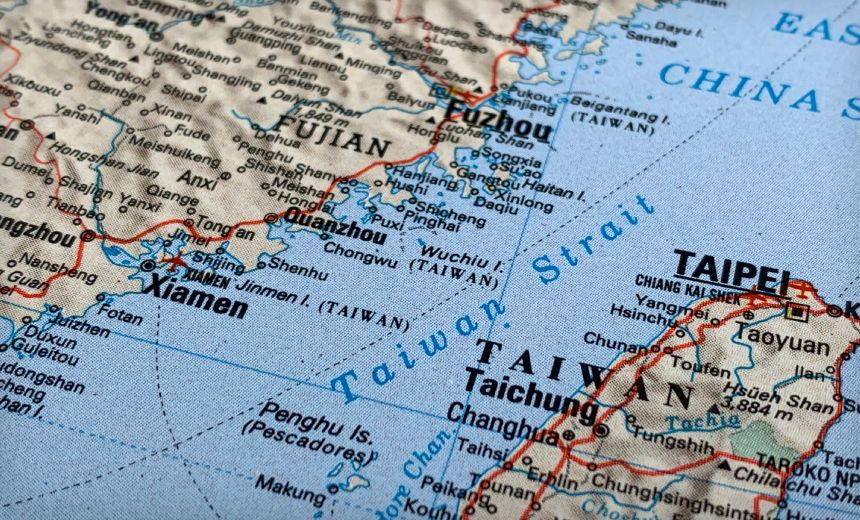
The strategic landscape surrounding Taiwan is increasingly shaped by its fragile telecommunications industry, especially as escalating threats from China loom larger. Recently, insights from a national security think tank based in Washington, D.C., have underscored the potential for a concerted Chinese effort to exert control over Taiwan through “cyber-enabled economic warfare.” This approach is deemed more likely than a traditional military invasion, illustrating a paradigm shift in warfare tactics.
The Foundation for Defense of Democracies (FDD) has highlighted that such cyber strategies would likely involve transitioning from sporadic hacking incidents and military exercises to a more sustainable campaign aimed at applying “gray zone pressure” on Taiwan. This form of coercion is designed to systematically challenge and exhaust Taiwanese communication infrastructure, pushing it beyond the limits of its backup systems and thus exacerbating vulnerabilities.
In a recent tabletop exercise designed to simulate a Chinese operation targeting Taiwan’s telecommunications, the FDD presented their findings directly to Taiwan’s president and national security team. This exercise was a stark reminder of the complexities involved as Taiwan navigates its precarious position amid growing assertiveness from Beijing.
Historically, China has claimed sovereignty over Taiwan, but under the leadership of President Xi Jinping, these assertive efforts have intensified. Xi has made it abundantly clear that his administration will “absolutely not tolerate” any push for Taiwanese independence, ramping up military readiness for a potential invasion by 2027. Recent reports indicate that U.S. officials are now speculating that Beijing may wait to gauge the outcomes of Taiwan’s 2028 national elections before proceeding with any military action.
However, as Craig Singleton, a former U.S. diplomat who leads FDD’s China program, pointedly observes, Beijing does not require an outright blockade or invasion to generate strategic pressure on Taiwan. The mere disruption of communications could inflict significant costs, not only on the island’s stability but also on crucial sectors such as energy and transportation, thereby enabling broader military or coercive operations.
During the war game simulation, Singleton assumed the role of Xi, demonstrating a strategic approach that avoided offering the United States a clear rationale for intervention. He posited that while disruptions like cable breaks or temporary cellular outages may appear manageable in isolation, the true problem arises when these issues begin to interact with each other, thus inviting scrutiny on how Taiwan adapts under pressure.
Singleton avoided staging a full-on blackout at the outset. Instead, he opted for a mix of scattered cell service disruptions, disinformation campaigns, and intermittent interference with satellite links, coupled with an increased maritime presence near critical undersea cables. This deliberate uncertainty aimed to leave Taiwan’s citizens questioning the reliability of their government and their communication lines.
In response to these simulated pressures, Taiwan’s telecommunications operators executed contingency plans, redirecting traffic and depending on backup systems and domestic roaming agreements. Meanwhile, the Ministry of Digital Affairs took coordination measures to manage the situation. However, Singleton noted that such responses revealed crucial insights to Beijing about Taiwan’s crisis management dependencies.
As the exercise progressed, Singleton heightened the simulated pressures by breaching government websites, disabling power substations that support telecom facilities, and severing multiple international subsea cables. These maneuvers were designed to push the remaining cable capacity to its limits while placing undue stress on microwave and satellite back-ups. Singleton emphasized that the day’s events highlighted endurance: how long could Taiwan rely on these alternative systems while under continuous adaptation from China?
Mark Montgomery, a retired rear admiral and current director of FDD’s cybersecurity policy center, contributed additional insights from his experience in similar exercises in various countries. He expressed concern that decision-makers often expect rapid system restoration following cyber disruptions, while the reality could involve prolonged outages lasting weeks—a scenario more pronounced in Taiwan, where rapid economic growth has outpaced the resilience of critical infrastructures.
The simulations also stressed Taiwan’s satellite links, crucial for backups during crises. Singleton remarked that such satellites offer redundancy but do not guarantee immunity, as ground equipment and software remain vulnerable targets. Moreover, these services rely heavily on a stable commercial power grid.
The underlying message of these exercises was clear: Taiwan’s government cannot simply plan for unlimited engineering solutions to counteract the looming threat indefinitely. Singleton’s strategies illustrated that disruptions could seep beyond communications into broader economic activities, making restoration significantly more challenging. The calibrated approach signaled to Taiwan that there exists a potential path back to normalcy—but only in exchange for a change in behavior.
Ultimately, Taiwan’s ability to withstand such coercive campaigns will heavily depend on how resilient its telecommunications system can become, alongside the strength of its international alliances, particularly with the United States and Japan. These relationships could prove crucial, providing essential resources like undersea cable repair teams, cyber defense units, economic assurances, and supplemental satellite capacity.
Montgomery pointed out that Taiwan’s societal resilience ranks behind both Ukraine and Israel yet is notably ahead of the United States, where preparation for cyber-enabled economic coercion is still woefully inadequate. He highlighted Taiwan’s annual Han Kuang military drills, during which authorities deliberately limit non-emergency mobile services to simulate crisis response, illustrating proactive planning that might be deemed politically too risky in other contexts, such as the U.S.
With reporting by ISMG’s David Perera in Northern Virginia.