


Cyberwarfare / Nation-State Attacks,
Fraud Management & Cybercrime
Alleged Nation-State Hacker Being Held in Houston Jail
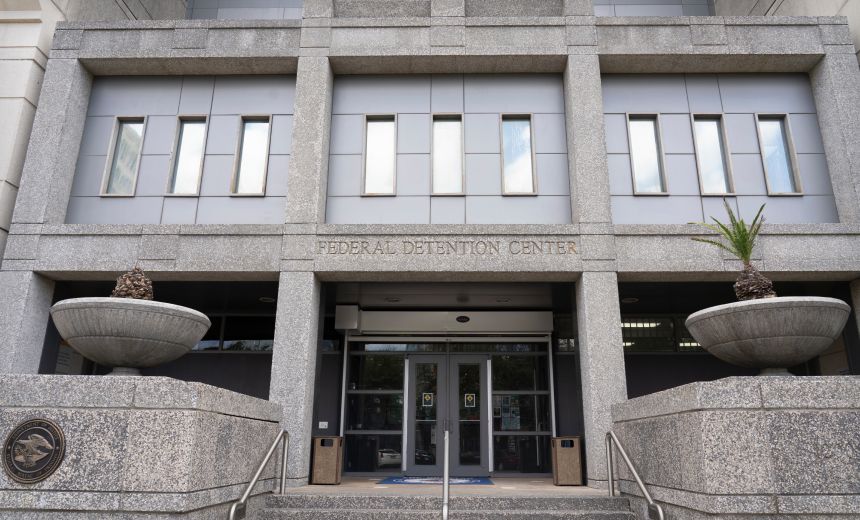
On April 30, 2026, senior U.S. law enforcement officials articulated how the recent extradition of accused nation-state hacker Xu Zewei from Italy represents a significant step in holding cybercriminals accountable. This move highlights an effort to impose tangible consequences on cyber threat actors who have long operated under the misconception that their geographical distance and state affiliations provide them immunity from U.S. legal jurisdiction.
During a media briefing, an official from the FBI remarked on the prevailing belief among state-affiliated hackers: “They operate on the assumption that distance and state protection insulate them from consequence.” However, this assumption is increasingly being challenged as the U.S. intensifies its proactive measures against cybercrime.
Xu Zewei, a 34-year-old Chinese national, was arrested in Milan, Italy, in July 2025 while traveling. Following his arrest, he was extradited to the United States, where a federal judge in Houston ordered him to be held pending a detention hearing. The U.S. authorities had capitalized on an opportunity presented by Xu’s international travel to apprehend him, marking a rare instance where a Chinese hacker affiliated with state-directed operations was brought under U.S. custody.
Unsealed court documents from the Southern District of Texas indicate that Xu played a pivotal role in a coordinated cyberespionage campaign directed by the Chinese government. The indictment alleges that from February 2020 to June 2021, Xu was instrumental in targeting U.S. universities, medical research institutions, and a Washington-based law firm. This campaign included strategic efforts to steal sensitive information relevant to the development of vaccines and treatments related to the COVID-19 pandemic.
According to prosecutors, Xu operated as a hacker-for-hire while simultaneously holding a managerial position at Shanghai Powerock Network Co. His work involved executing intrusions under the direction of the Shanghai State Security Bureau, a regional arm of the Ministry of State Security in China. The indictment details a broader operation in which state security officials engaged contractors like Xu to exploit vulnerabilities in networks, maintain consistent access, and extract critical data for intelligence purposes.
One particularly alarming detail from the indictment is the assertion that Xu and his co-conspirators targeted multiple U.S.-based universities conducting vital coronavirus research, including efforts related to vaccine development, treatments, and testing scenarios. Specific methods employed to gain initial access included exploiting known vulnerabilities, such as CVE-2019-11510 in the Pulse Secure Connect VPN. This breach allowed the hackers to steal credentials and infiltrate internal systems, including email accounts belonging to prominent virologists and immunologists.
Moreover, the indictment connects Xu’s activities to a widespread attack campaign involving vulnerabilities in Microsoft Exchange. This operation, recognized for compromising thousands of systems globally, prompted outrage from the U.S. and allied governments. Initially, Microsoft identified the perpetrating group as Hafnium, but it has since rebranded the threat actor as Silk Typhoon.
XU faces an array of serious charges that include conspiracy, wire fraud, computer intrusion, and aggravated identity theft, all of which could result in potential penalties exceeding 20 years if he is convicted. Investigative efforts have evolved from initially aiding victims and addressing ongoing threats to pursuing legal action against identified perpetrators, marking a notable shift in the U.S. approach to cybersecurity.
“When there is an opening to bring the attacker to U.S. soil, we always want to take it,” stated a senior FBI official. In this instance, the bureau dispatched its elite cyber action team to further disrupt the attacker’s access to victims’ networks while simultaneously focusing on ongoing investigations to mitigate future threats.