
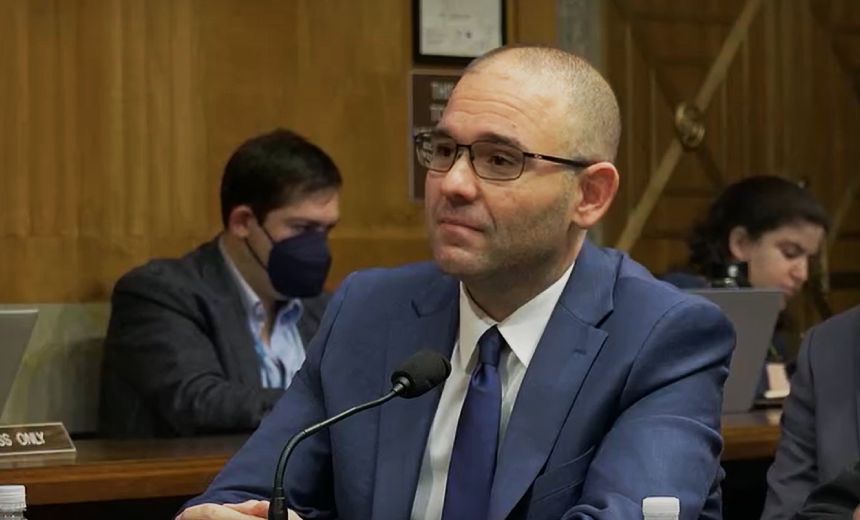
Michael LoSapio Undecided on CISA Workforce Restoration Amid Senate Testimony
On November 19, 2026, during his nomination hearing before the Senate Homeland Security and Governmental Affairs Committee, Michael LoSapio, President Trump’s pick to head the Cybersecurity and Infrastructure Security Agency (CISA), faced scrutiny from lawmakers regarding the agency’s significantly depleted workforce. LoSapio, currently the Chief Information Security Officer at Palantir, refrained from making any commitments to restoring the workforce, which has shrunk by nearly a third since January 2025, until he has a chance to assess the agency’s internal conditions.
LoSapio’s testimony coincided with a pressing backdrop: the Department of Homeland Security (DHS) is linking its plans for a hiring surge at CISA to the appointment of a permanent director, a position that has remained unfilled throughout President Trump’s second term. Since January 2025, CISA has seen nearly one in three of its employees leave, either through layoffs or voluntary departures. The agency, struggling with a budget that the White House has proposed to cut by an additional $707 million, finds itself in a precarious position as lawmakers deliberate on the upcoming fiscal year.
Senator Elissa Slotkin, a Democrat from Michigan, pressed LoSapio on the issue of workforce cuts that have emptied the agency’s ranks. He responded by stating that he would need time to investigate the consequences of these cuts, expressing skepticism regarding whether increased funding would inherently lead to stronger cybersecurity defenses. "Any request for additional funding would rely heavily on the outcomes of my review," he stated. LoSapio’s cautious approach underscores the gravity of the decisions he would face regarding CISA’s operational effectiveness.
During his testimony, LoSapio highlighted that Secretary of Homeland Security Markwayne Mullin had previously suggested that the department aims to hire around 600 new personnel at CISA, with plans to execute this push only after the Senate confirms a director. However, the initial batch of qualified hires has already faced significant delays due to bureaucratic red tape, further complicating CISA’s ability to rebuild its workforce.
Adding to the difficulties CISA faces, LoSapio was questioned about recent significant disruptions in vital services, including a notable outage of Microsoft 365 and a nationwide ground stop issued by the Federal Aviation Administration (FAA). While officials have largely attributed these issues to technical faults rather than cyberattacks, LoSapio refrained from drawing definitive conclusions about the causes. He advised organizations to maintain awareness of the internet-facing devices they operate and ensure they are kept updated to mitigate potential risks.
Despite the urgent need for leadership within CISA, LoSapio’s nomination is not without hurdles. He is facing planned holds from Senators Ron Wyden, a Democrat from Oregon, and Thom Tillis, a Republican from North Carolina. Wyden has voiced concerns regarding LoSapio’s fitness to oversee national cybersecurity and election defenses, particularly in light of his unwillingness to classify the January 6 insurrection as an attack on the Capitol. When questioned by Senator Richard Blumenthal, a Democrat from Connecticut, LoSapio stated, "I don’t believe it was an attack," further asserting that he "wasn’t involved with politics."
Wyden has made it clear that he intends to place a hold on LoSapio’s nomination, arguing, “You can’t have an insurrectionist Palantir executive in charge of our nation’s cybersecurity and election security.” This contention highlights the contentious political atmosphere surrounding LoSapio’s appointment, which may require Republican leadership to dedicate valuable legislative time to address his nomination before the session concludes.
With a looming December 11 deadline to fund the government, the urgency of confirming LoSapio escalates. If the Senate does not act, unconfirmed nominations automatically revert to the White House when Congress adjourns, leaving LoSapio a limited window to navigate the confirmation process.
Currently, Nick Andersen, who previously led CISA’s cybersecurity division, is serving as the acting director after stepping into the role in February. As the political landscape shifts, with House Democrats anticipated to control both chambers’ homeland security committees starting in January, there is mounting pressure for an examination of CISA’s workforce losses, as Democrats had requested a review from the Government Accountability Office in August.
As the future of the Cybersecurity and Infrastructure Security Agency hangs in the balance, the implications of LoSapio’s impending leadership decisions will be closely monitored, with stakeholders keenly aware of the vital need for robust federal cybersecurity capabilities.