
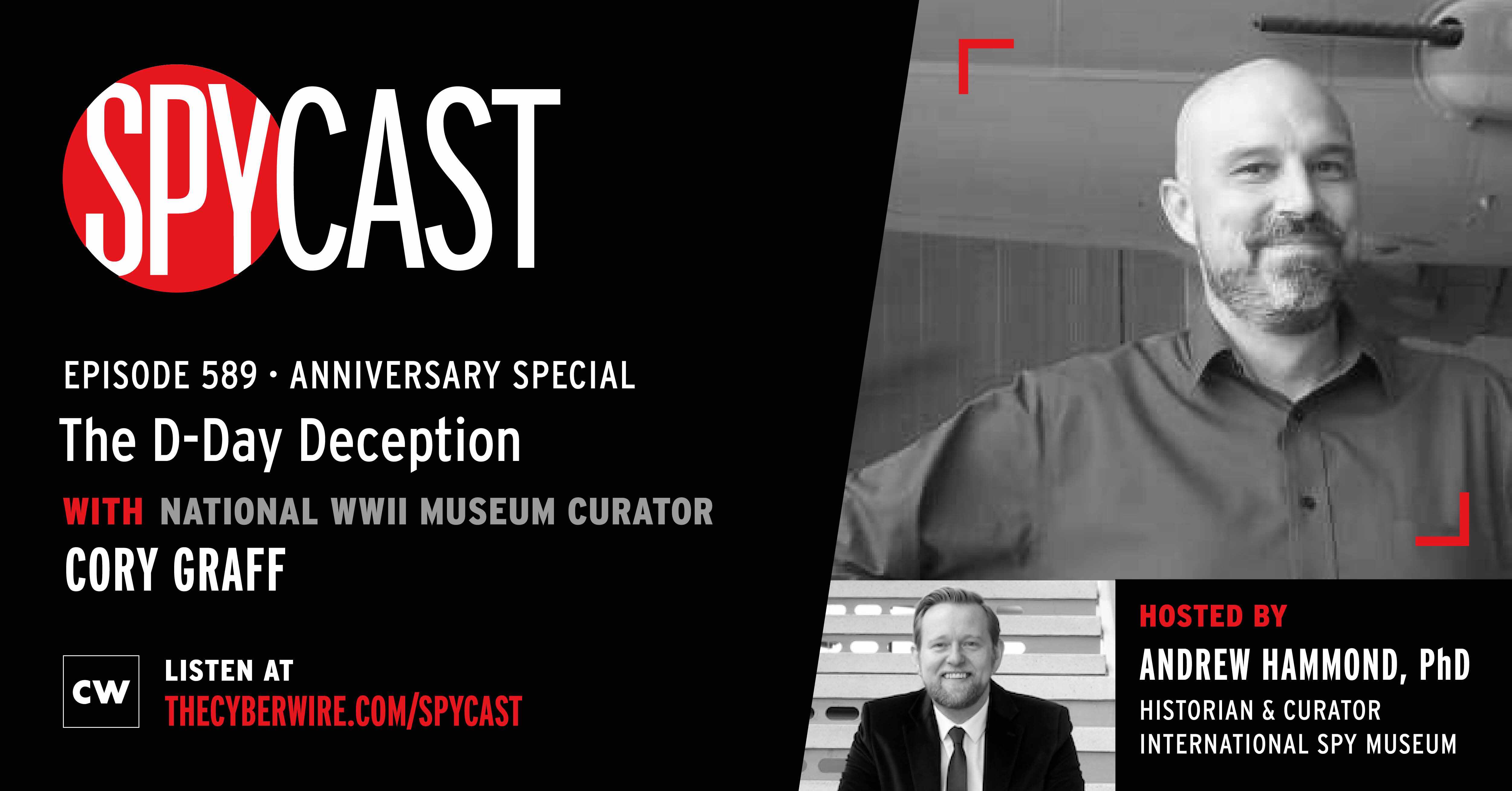


The success of the D-Day landings in Normandy, France on June 6, 1944, is often attributed to the smart usage of deception techniques by the Allied forces during WWII. To gain a deeper understanding of how this was achieved, SpyCast’s host Andrew, together with Cory Graff, a curator at The National World War II Museum in New Orleans, Louisiana, discussed the core deception operations, BODYGUARD and FORTITUDE, used by the Allies, which became instrumental in the ultimate dismantling of the Nazi regime.
As Graff pointed out, the Germans had anticipated a landing at Pas-de-Calais, so the Allies embarked on a concerted effort to make them believe that it would take place elsewhere. The Army Group Center, which had been operating in the area where the Germans believed the Allies would invade, was relocated off the coast of Dover, where its activity was taken to be that of a larger army group denoting a more significant diversion.
The Allies went to great lengths to perpetrate the deception, with fake tanks and planes, counterfeit orders from fictional units and utterances about fake troop movements, all aimed at deceiving the Nazi forces into thinking that a significant landing was likely to happen at a position far away from Normandy, enabling the crucial surprise element of the attack.
The British “double agents” were instrumental in the success of the victory. The four core secret agents, Spanish-born Juan Pujol Garcia, Lily Sergueiew, Roman Czerniawski, and Arnaud Gouillon, worked alongside French Resistance fighters and were responsible for keeping the Germans completely unaware of the Allies’ activities. They not only provided practical help but entrusted Allied representatives with essential leads and information that helped the Allies plan and make significant decisions regarding the final assault.
The Ghost Army was another remarkable technique that helped the Army trick the Nazis. It was a unit composed of over 1000 soldiers who were experts in audio and visual deception techniques, including the use of inflatable tanks and sound effects, which depicted an illusory picture of forces stationed at particular locations. Their role was critical in dispersing German forces, effectively spreading them thin, making them far less effective.
General Patton’s fictitious First U.S. Army Group, also known as FUSAG, was another significant component of the deception that kept the Germans guessing until the end. They believed this group consisted of over 150,000 well-trained soldiers, equipped with heavy combat weapons, positioned near the Pas-de-Calais location, which further reinforced their belief that the Allies would be landing there, far from the actual target location.
The combination of these deceptive elements and resources truly amounted to a brilliant feat of intelligence that saw Germany’s reign come to an end. The National World War II Museum, where Graff is a Curator, houses a collection of over 250,000 artifacts, including important objects that detail the story of the D-Day deception campaign. The collection tells the story of the deception from every possible angle, making it a must-visit museum for anyone interested in history.
In conclusion, the story of the D-Day deception campaign masterfully showcases the essential role of deception in any conflict, wherein winning or losing often depends significantly on how ingenious and effective the deceptive tactics employed are. It emphasized the ultimate unknowability of the world and the critical need to stay flexible and adaptable in the face of uncertainty. SpyCast’s episode with Graff offers an insightful perspective into this game-changing event that played a decisive role in the allied forces’ victory.