


Microsoft and Nvidia Introduce New Era for AI on PCs
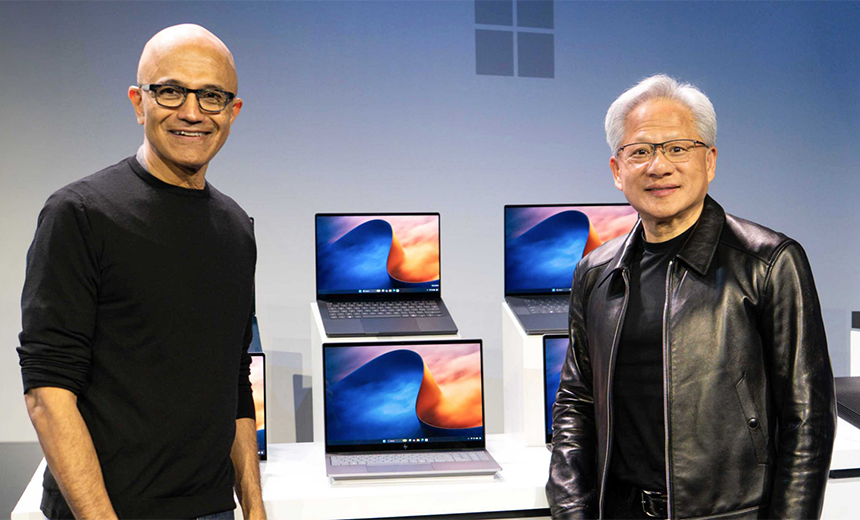
As the landscape of artificial intelligence continues to evolve, major players like Microsoft and Nvidia have pivoted towards positioning the personal computer (PC) as the new home for enterprise AI. This notable shift was highlighted at a recent Windows and Surface event held in San Francisco on October 16, where Nvidia unveiled its groundbreaking RTX Spark platform, designed for Windows laptops and compact desktops. This platform boasts impressive specifications, featuring up to 128 gigabytes of unified memory and the capability to deliver a staggering petaflop of AI computation. In tandem, Microsoft launched its Surface Laptop Ultra, while prominent manufacturers including Dell, HP, Lenovo, Asus, and MSI have also joined the trend.
At the core of Microsoft’s vision is the concept of "hybrid intelligence." This innovative approach allows AI processes to be executed locally on devices when feasible, while seamlessly transitioning to cloud services for more complex tasks. The software intelligently decides the optimal location for each operation based on various factors, including performance, security, cost, and available computational resources.
During the event, Microsoft showcased the capabilities of its GitHub Copilot, demonstrating a coding session where the device processed approximately 1.6 million tokens locally, compared to roughly 10,000 tokens via the cloud. This striking ratio of approximately 150-to-1, with local processing taking precedence, underscores a significant advancement. Microsoft claimed that the local processing aspect incurred no costs, and the automatic local-and-cloud routing feature is currently rolling out in GitHub Copilot as part of an experimental preview phase.
Timing and Cost Structures in AI
The timing of this announcement holds particular significance, occurring just months after enterprises began treating AI services as a utility, with companies adapting to use-based billing. On June 1, GitHub transitioned Copilot to a usage-based billing model, charging users for AI credits based on the input, output, and cached tokens at the API rates of different models. This shift was aimed at addressing a long-standing disparity: previously, a quick query and a multi-hour autonomous operation were billed at the same rate. Sanchit Vir Gogia, chief analyst at Greyhound Research, emphasized that the traditional single-seat pricing model is increasingly untenable. Heavy users of AI tools can incur costs that are significantly higher than those of lighter users, leading to user frustration as they faced rapidly depleting allowances over the summer.
While the price of tokens may be decreasing, the volume consumed by advanced AI agents increases significantly per task, leading to rising overall expenditures. The introduction of local processing capabilities provides a compelling reason for enterprises to reassess their spending patterns.
Local Development and Data Protection
A primary application for this new technology lies in the development phase of AI applications rather than direct production use. Development teams can prototype models and workflows locally, allowing them to iterate rapidly without incurring heavy cloud fees, particularly during the early and most experimental stages of a project. This local processing also allows teams to work with sensitive data without the risks associated with sending it to external services, provided they ensure proper configuration and governance of their systems.
Benchmarks published by The Register showed RTX Spark notebooks performing smoothly with open models typically accessed through paid APIs, suggesting that this generation of devices is sufficiently equipped for demanding tasks. Unlike the prior models, which primarily managed lighter tasks like background blurring, the new technology opens avenues for more complex operations.
Financial Implications of Hybrid AI
However, this shift toward hybrid AI does not equate to a complete elimination of costs. The notion of having "no API bill" differs significantly from the perception of "free AI." Work can now be categorized under either cloud expenses or operating costs associated with company-owned hardware. These models create different financial implications: cloud costs fluctuate with usage, whereas hardware expenses are fixed, whether the system is actively processing tasks or sitting idle. The cost of the Surface Laptop Ultra starts at $2,599.99, but high-end configurations can price as high as $5,899.99. This points to the ongoing demand for resources amid a memory supply crunch.
In many organizations, the management of these varying costs often falls under different departments, complicating the budgeting process. Costs associated with cloud and AI expenditures tend to be handled by platform or engineering teams, while hardware expenses are generally categorized under end-user computing.
Additionally, considerations regarding maintenance and security must be addressed. Properly updating local models and securing each device poses challenges that may not be reflected on a traditional AI invoice. The deployment of local models across fleets can create potential liabilities. Microsoft introduced its Execution Containers at the recent event, while Nvidia announced the rollout of its OpenShell runtime to Windows for sandboxing agents. However, assurances regarding security protocols largely rely on the vendors themselves.
Conclusion: The Future of AI on PCs
Despite these advancements, it is premature to assume that enterprise AI will shift predominantly to laptops in the immediate future. The high cost and specialized nature of these devices may limit their widespread adoption. For many organizations, AI processing is likely to remain centralized within data centers and enterprise servers rather than migrating to individual PCs.
Critical factors to watch in the coming months include whether Microsoft will elucidate how its automatic routing functions, enabling organizations to set their own policies for sensitive data; the development of financial and operational tools that measure local AI activity alongside cloud usage; and whether GitHub and Microsoft will implement distinct pricing strategies for local and cloud operations.
The introduction of hybrid AI systems marks a significant moment in the evolution of technology, with companies like Microsoft and Nvidia at the forefront. This progression, accompanied by an increasing need for careful management of resources, security, and costs, will likely shape the future of AI in enterprise settings.