


Geo-Specific,
Security Operations,
Standards, Regulations & Compliance
GSMA Intelligence Estimates Ejecting Huawei Equipment Could Cost Up to 40 Billion Euros
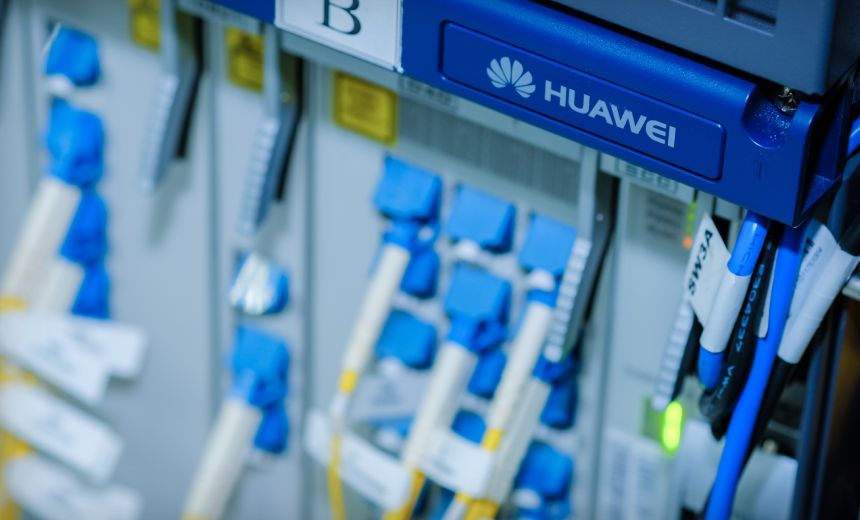
According to a recent analysis by GSMA Intelligence, European mobile network operators may face staggering direct costs of up to 40 billion euros (approximately $45.7 billion) should they decide to remove high-risk suppliers, particularly Huawei, from their telecommunications infrastructure. This alarming financial forecast was presented by the research division of the GSMA, the primary trade association for the mobile industry.
This significant expenditure arises in the context of a broader revision initiative associated with the European Union’s Cybersecurity Act. Proposed by the European Commission earlier this year, the adjustments aim to phase out high-risk equipment from Europe’s telecommunications networks, thereby fortifying communications against potential threats, especially geopolitical risks tied to Chinese suppliers.
Although the proposal itself does not explicitly name countries, it is widely recognized as a move to mitigate risks associated with Chinese firms dominating the telecommunications landscape across Europe. The European Commission has posited that the removal process, often characterized as “rip-and-replace,” will incur a financial burden ranging from 3.4 billion to 4.3 billion euros annually over a span of three years.
However, this relatively conservative estimate sharply contrasts with the much higher figures cited in the GSMA Intelligence report, which ranges from 30 billion to 40 billion euros. This research was commissioned by seven notable telecom groups, including Deutsche Telekom, Fastweb, MEO, Orange, Telefónica, United Group, and Vodafone, indicating a considerable collaborative effort within the industry to address these concerns.
GSMA Intelligence’s analysis elaborates that the costs associated with removing equipment from high-risk vendors like Huawei and ZTE include not only the initial removal expenses but also the anticipated increase in equipment prices that would result from reduced market competition. It is estimated that this scenario could raise investment costs by an additional 8.5 billion euros between the years 2027 and 2030.
The implication of mandatory removal of high-risk vendor equipment would lead to significant direct financial impacts on telecommunications operators, potentially stifling competition in the network equipment sector and hindering the advancement of Europe’s digital infrastructure, according to the report. The urgency tied to the proposed timelines for the removal of this equipment poses further risks, leading to potential disruptions in service and challenges to network resilience throughout the continent.
Nevertheless, skepticism around the veracity of GSMA’s financial projections has emerged from industry experts. John Strand, a veteran telecom analyst, has voiced concerns regarding the authenticity of the financial data in the report. He described it as a “cry for help” from operators who previously opted to enhance their 4G capabilities with equipment from high-risk suppliers, exposing them to potential financial repercussions amid growing security considerations.
Strand emphasized that despite the severe financial forecasts depicted in the GSMA report, operators have so far encountered relatively minor financial consequences when transitioning away from high-risk vendors. His firm, Strand Consult, has been monitoring these dynamics over nearly a decade, revealing that around 30 networks across Europe currently rely on 35% to 100% of their radio access equipment sourced from high-risk suppliers, predominantly controlled by major entities like Vodafone and Deutsche Telekom.
The need for substantial equipment replacement is largely concentrated in three countries: Germany, Italy, and Spain. Significant amounts of this equipment are radio access network components. Notably, European operators have made concerted efforts to exclude high-risk vendors from their core network operations, achieving over 95% compliance in this area as of early 2026.
John Strand critiques the GSMA’s claim that tackling this rip-and-replace challenge will lead to costs as high as 40 billion euros, arguing that this estimation does not reflect the reality of situations in countries that have undertaken similar undertakings. The cost implications connected to high-risk vendor equipment are predominantly the concern of 30 out of 100 operators retaining this technology. The process of removing such equipment is more likely to be a gradual one rather than an immediate overhaul.
Although Strand concedes that there is indeed a notable investment deficit in Europe’s telecommunications sector—largely due to over-regulation and suboptimal decisions by operators—he also points out that nations such as the United States, South Korea, and India have successfully built superior 5G infrastructure without involving high-risk vendors. This observation raises essential questions about the security policies underpinning equipment use in Europe, particularly in light of the pressing need for secure infrastructures in 2026.