
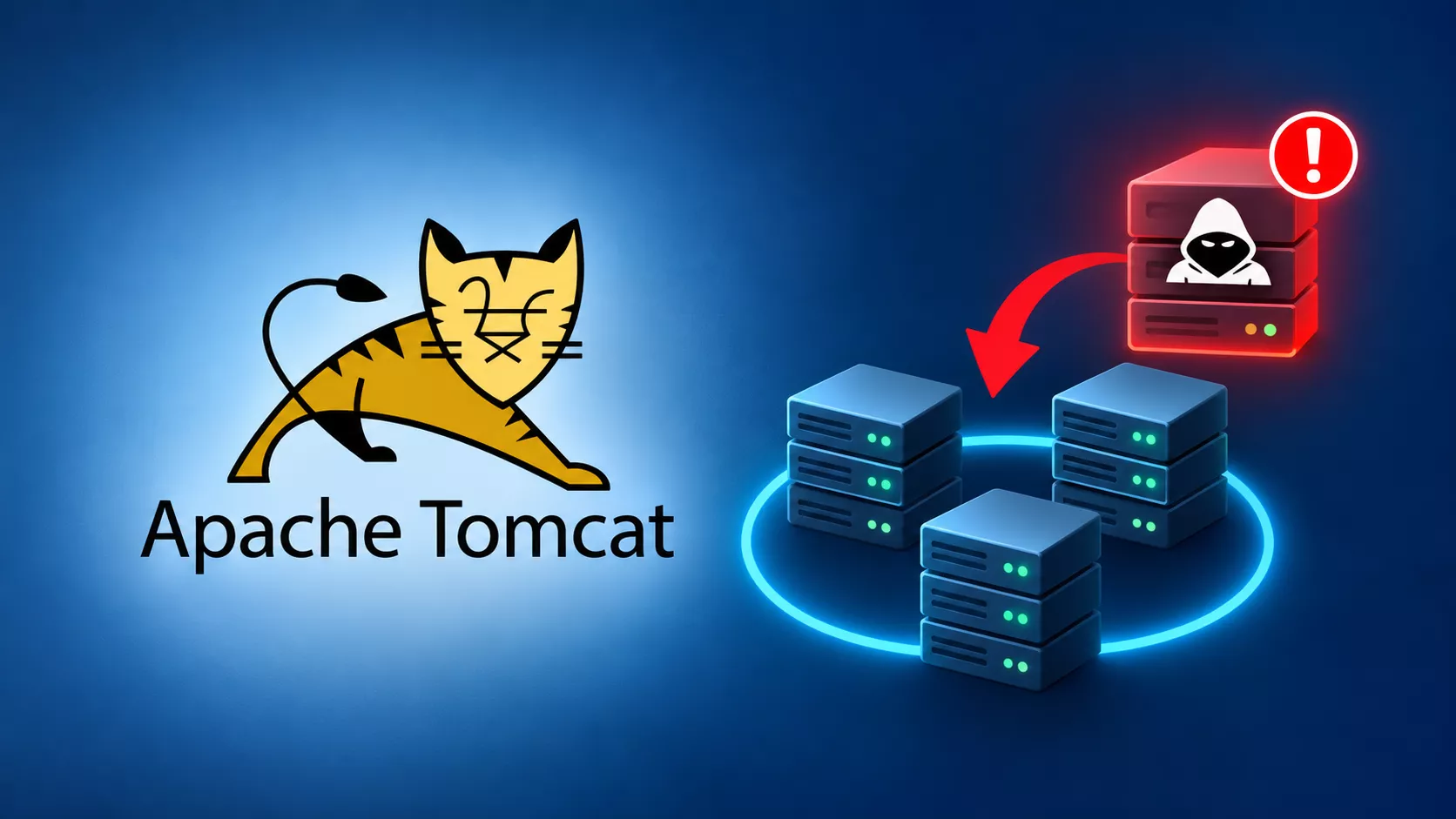
Critical Vulnerability Discovered in Apache Tomcat
The Apache Software Foundation has recently revealed a significant peer authentication bypass vulnerability in Apache Tomcat, a widely used open-source application server. This flaw enables unauthorized nodes to connect to a cluster secured with Transport Layer Security (TLS) 1.3 and pre-shared keys (PSK), raising serious security concerns for organizations relying on this technology.
The vulnerability has been assigned the identifier CVE-2026-133325 and affects specific versions of Tomcat, namely 11.0.28 through 11.0.29, 10.1.62, and 9.0.124. It’s important to note that merely using an affected version does not guarantee that a deployment is vulnerable; the exposure largely depends on the configurations of the cluster transport in use.
Nature of the Vulnerability
The defect is classified under CWE-322, indicating a key exchange flaw that occurs without proper entity authentication. In scenarios involving the affected configuration, the cluster transport can successfully establish an encrypted connection without verifying the legitimacy of the connecting endpoint. This lack of authentication presents an alarming risk, particularly as it allows for potentially malicious nodes to join the cluster without any verification.
Encryption is designed to protect data in transit, while peer authentication is meant to ascertain the trustworthiness of each endpoint participating in a communication. The mentioned vulnerability represents a failure at the critical junction where cluster members interact. Unlike previous vulnerabilities, such as the Tomcat JNDIRealm authentication bypass—which focused primarily on validating credentials for directory-backed application authentication—this flaw highlights an entirely different aspect of security integrity.
Administrative Recommendations
To mitigate risks associated with this authentication bypass, administrators are advised to evaluate the transport mechanisms between nodes separate from public-facing HTTPS listeners and any TLS termination occurring at reverse proxies or load balancers. For instance, a front-end listener enforcing TLS 1.3 does not ensure that the backend cluster channel is similarly authenticated.
Moreover, Apache has identified unauthorized cluster membership as a consequence of CVE-2026-133325. However, it is noteworthy that the disclosure does not indicate the potential for remote code execution or confirm any actual compromises of production clusters.
As an immediate workaround, Apache recommends temporarily configuring vulnerable clusters to negotiate TLS 1.2 while still retaining PSK authentication. This adjustment alters the cluster protocol without eliminating the shared credentials, providing interim protection until a more secure solution is implemented.
It is critical to understand that reverting to the deprecated EncryptInterceptor is not a viable option. Apache has strongly urged migrating away from this older method, particularly given that previous instances of EncryptInterceptor protection bypass render it insufficient as a substitute.
Steps for Verification and Tracking
After applying the recommended workaround, operators should ensure that the protocol negotiated between peers is accurately verified. This is especially important in environments where deployment templates and runtime settings differ from one cluster member to another. An inventory of running versions on all members is essential, particularly for instances stemming from outdated container images or previous deployment templates.
Maintaining TLS 1.2 with PSK authentication should remain a priority until all affected components have transitioned to a corrected build. It’s also crucial to remember that merely updating the public-facing interface does not rectify vulnerabilities within backend cluster transport mechanisms.
During the remediation process, it is advisable to restrict access to the cluster transport exclusively to authorized peers. Monitoring unanticipated memberships or connections from disallowed addresses is also recommended, though it’s important to avoid treating either occurrence as conclusive evidence of exploitation.
While network restrictions can certainly mitigate exposure to some degree, they do not rectify the underlying authentication issues. Before reverting to TLS 1.3, thorough verification of each affected node’s running version should be conducted to ensure legitimate members can communicate seamlessly following the upgrade.
Conclusion
In summary, this critical vulnerability in Apache Tomcat emphasizes the necessity for organizations to be vigilant about their security configurations. By following the provided recommendations and promptly addressing the identified vulnerabilities, administrators can bolster their defenses against potential unauthorized access attempts. The stakes are high, and proactive management is essential to ensure the integrity and security of sensitive data within clusters.