
Urgent Hotfix Issued by N-able to Address Critical RMM Vulnerability
N-able has recently taken swift action by issuing a critical hotfix aimed at remedying a serious authentication-bypass vulnerability identified within its N-central remote monitoring and management (RMM) platform. This decision comes in light of confirmed instances of active exploitation, leaving organizations vulnerable to potential breaches.
The vulnerability, officially logged as CVE-2026-18577, poses a threat to N-central servers operating on versions prior to 2026.3.1.7. It fundamentally enables unauthorized remote access for attackers, granting them the ability to hijack user accounts and obtain administrative control over the RMM console. This is particularly concerning for managed service providers (MSPs), as N-central functions as an integral centralized administration tool for overseeing customer environments.
Severity of the Flaw
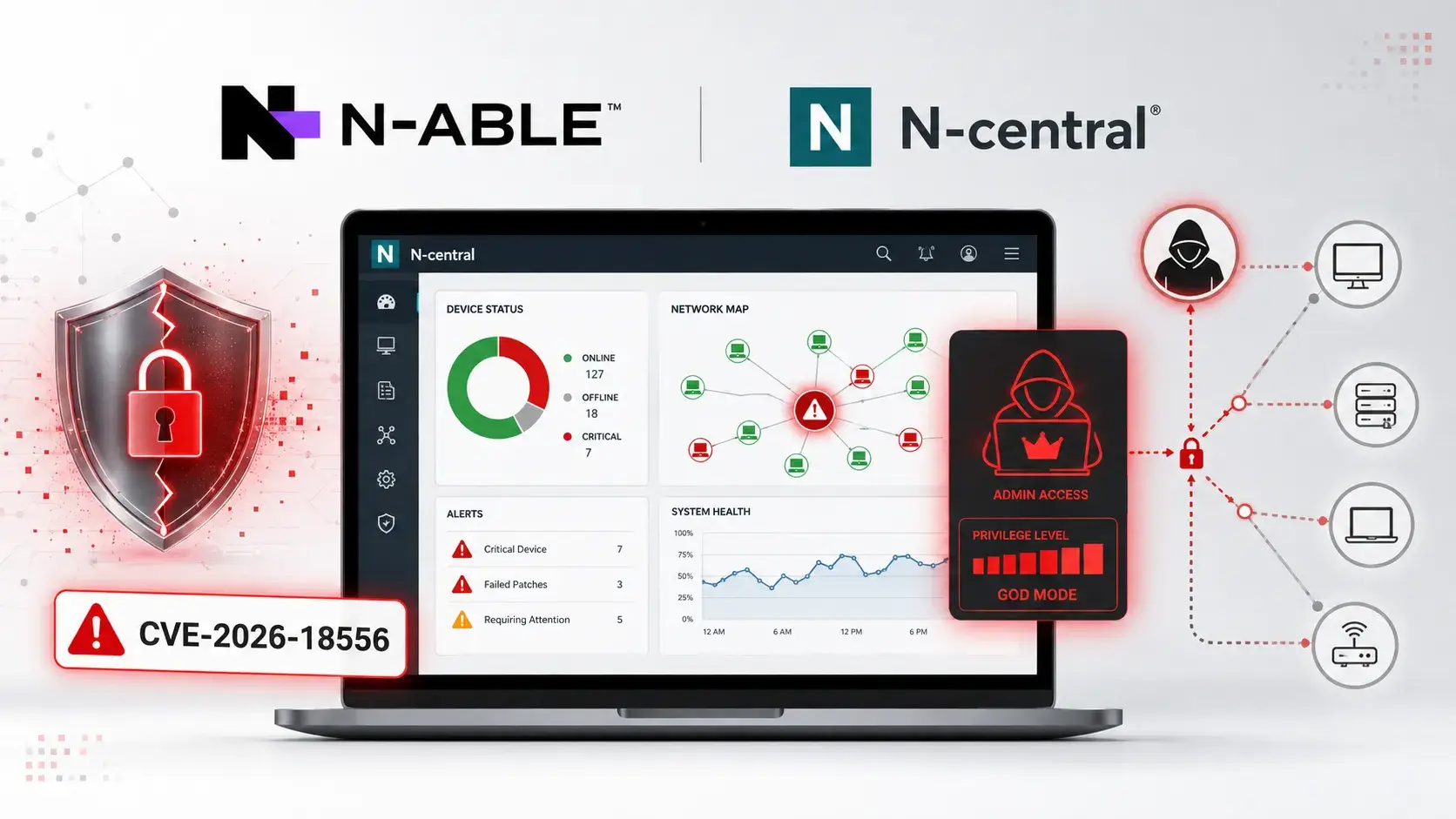
The ramifications of this flaw are profound. Should an attacker gain access to the N-central platform, they could exploit its legitimate functionalities to launch scripts, deploy various tools, modify jobs and policies, and even initiate remote-control sessions across the managed servers and workstations within their purview. Such access has been characterized as “god-mode” by cybersecurity firms like Huntress, emphasizing the potential for extensive damage. Huntress has reported evidence of exploitation affecting at least one organization within its network of clients and partners.
Initially, N-able had associated this security breach with a different vulnerability, CVE-2026-18556. However, further investigation revealed that the vulnerability stems from an incomplete patch process, enabling attackers to bypass authentication and take over user accounts.
Responses and Recommendations
In light of these developments, N-able has established that this exploitation specifically targets N-central servers that have not been updated to version 2026.3.1.7. As a direct response, the company released the 2026.3 Hotfix 1 update to rectify this vulnerability. Organizations utilizing the N-central platform are urged to carefully check their installed version rather than relying on the assumption that earlier iterations of version 2026.3 are secure.
Huntress has issued a warning regarding the far-reaching operational impacts of this vulnerability. Threat actors with console-level access can misuse the built-in Take Control feature to infiltrate critical systems, such as domain controllers and file servers. Moreover, they may take advantage of the N-central agent to disseminate remote access tools, discovery utilities, or even establish persistence through Cloudflare-based tunnels.
Given that the N-central server operates as a specialized appliance, it often lacks the endpoint detection and response software that is typical in modern cybersecurity practices. As a result, organizations need to prioritize meticulous monitoring of their network telemetry, N-central audit logs, and remote-access logs. Initial investigation efforts should focus on the ui_access_control.log alongside any relevant N-central web and remote-control logs. Analysts are advised to scrutinize access patterns for suspicious viewer IP addresses, unusual access times, and unexplained session activities linked to critical infrastructure.
For managed Windows devices, defenders can examine Take Control-related files commonly found in the C:\ProgramData\GetSupportService_N-Central\Logs\ directory, specifically the BASupSrvc_*.log.gz files. However, it is important to note that these logs may originate from legitimate support sessions, necessitating correlation with account activity, source IP, host details, and ticket information.
MSPs are strongly encouraged to upgrade affected infrastructure to N-central version 2026.3.1.7 without delay. Furthermore, to enhance security, they should restrict console access to trusted administrative networks or virtual private networks (VPNs), implement multi-factor authentication (MFA), and curtail direct internet exposure wherever feasible.
While blocking the published indicators may disrupt current malicious activities, it is crucial to recognize that such measures may only serve as temporary solutions, as attackers have the ability to rotate VPN exit nodes and other points of access. Organizations that find themselves unable to implement timely patches or significantly restrict exposure should weigh the risks associated with either taking N-central offline temporarily or maintaining an internet-accessible, vulnerable RMM control plane.
Indicators of Compromise
To aid in detection efforts, a list of known indicators of compromise has been provided, detailing several IP addresses and domains that could be associated with this vulnerability. These indicators are crucial for organizations seeking to assess and mitigate potential threats to their infrastructure.
In association with the ongoing threat landscape, N-able’s urgent response is a reminder of the importance of proactive security measures, regular updates, and the need for vigilance in monitoring network activity. The company’s decisive action in releasing a hotfix aims to enhance the security posture of its users while addressing a critical flaw that could have significant implications for the managed service sector.