
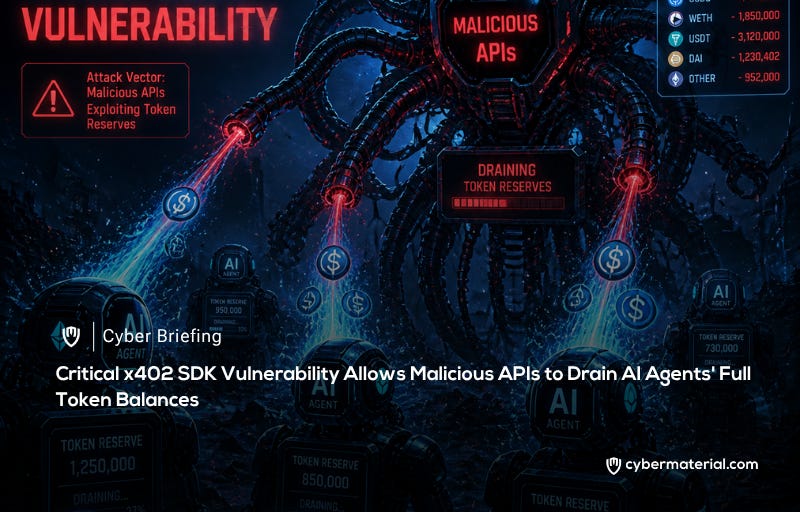


On October 22, security researchers from V12 unveiled a significant vulnerability within the x402 Software Development Kits (SDKs) that poses a critical risk to AI agents engaged in automated payment operations. This vulnerability allows malicious APIs to potentially drain the entire token balance from these AI agents, which utilize cryptocurrency tokens to settle their API call payments. The underlying issue arises from the fact that compromised or malicious API endpoints could manipulate transactions to draw the total balance from the AI agent, rather than limiting the withdrawal to the cost of the specific service being accessed.
The root of this insecurity lies within the SDK’s default client configuration. Specifically, it lacks any mechanism to impose spending limits on transactions. Consequently, when an AI agent attempts to initiate a payment, there are no safety measures in place to prevent it from inadvertently transferring its entire token balance. Alarmingly, this flaw remained in active production environments until a patch was released on August 18, introducing default spending limits meant to curb such exploitations.
The technical implications of this vulnerability are particularly alarming for AI agents set up to sign payments automatically, without requiring human oversight for each transaction. In these automated contexts, a malicious API could create a payment request designed to withdraw the maximum allowable balance. Unfortunately, the vulnerable SDK would execute and sign this transaction without any safeguards, representing a significant avenue for exploitation by cybercriminals. These threat actors could easily set up fraudulent API endpoints or compromise genuine ones, capitalizing on the vulnerability.
Organizations deploying AI agents that leverage automated payment processes face substantial risks. A single adversarial transaction could lead to the complete depletion of an operational budget allocated for these AI systems, thereby interrupting critical services and resulting in considerable financial damage. This threat is particularly pronounced for AI agents managing high-value transactions or those with significant token reserves dedicated to prolonged autonomous operations.
In light of these findings, it is imperative for organizations utilizing x402 SDKs to take immediate action by updating to the patched versions made available post-August 18. These updates incorporate critical spending limit protections tailored to mitigate the vulnerability. Development teams should also conduct a thorough review of their current AI agent configurations to ensure that appropriate transaction limits are established at the application level. Additionally, implementing transaction monitoring and alerting mechanisms can further enhance security measures. Organizations are encouraged to reconsider their policies regarding payment approvals, with a focus on requiring human verification for transactions that exceed established thresholds.
For any AI agents that were operational prior to the implementation of the August patch, an urgent audit of transaction histories is necessary to identify any suspicious payment activities that may have occurred during the period of vulnerability. This step is critical for mitigating any potential damages and ensuring the long-term security of the organization’s automated payment systems.
In conclusion, as AI continues to revolutionize payment processing and service automation, the importance of robust security protocols cannot be overstated. Organizations must remain vigilant and proactive in safeguarding their automated systems against potential threats, particularly in the rapidly evolving landscape of cyber vulnerabilities. The x402 SDK vulnerability serves as a stark reminder of the need for continuous monitoring, timely updates, and comprehensive security measures to protect against prospective exploitation. As technology advances, so too do the tactics of cybercriminals; hence, vigilance and adaptability should be at the forefront of any organization’s security strategy.