
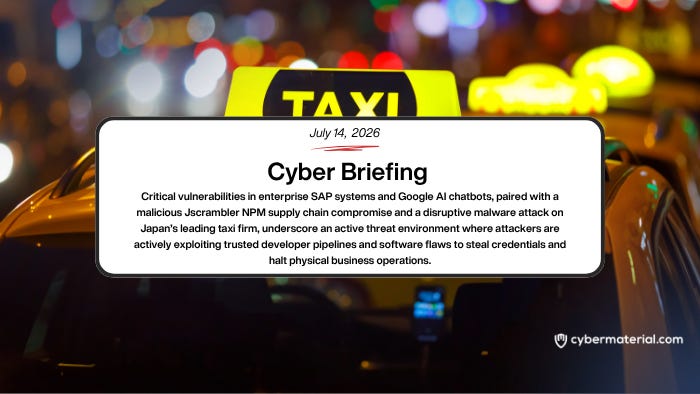


Cybersecurity Briefing Highlights Critical Exploits and Incidents
In the landscape of cybersecurity, a range of pressing threats and vulnerabilities have emerged, creating significant operational risks for organizations worldwide. The latest updates emphasize the necessity for vigilance and prompt action in the face of growing cyber dangers.
SAP Addresses Vulnerabilities with Emergency Security Patches
Prominent among the recent developments is SAP’s proactive response to various vulnerabilities within its platforms. On July 11, 2026, SAP announced the release of 19 emergency security patches aimed at rectifying severe flaws identified in its NetWeaver, Approuter, and Commerce Cloud services. These vulnerabilities posed a serious risk, enabling unauthenticated attackers to corrupt system memory, launch unauthorized HTTP requests, and exploit hardcoded credentials to potentially compromise critical data and system availability. The urgency of these patches underscores the importance of maintaining robust security measures in enterprise software, as the consequences of such vulnerabilities can be disastrous for affected organizations.
Google Patches ‘Rogue Agent’ Vulnerability
In a related vein, Google has addressed a significant vulnerability in its Dialogflow CX platform, known as the “Rogue Agent” flaw. This particular vulnerability allowed compromised developer accounts to hijack AI chatbots, including intercepting live chats and accessing sensitive user data. By exploiting a writable shared file within the execution environment, attackers could potentially manipulate chat histories and inject malicious prompts. The rectification of this flaw is critical in safeguarding user trust and ensuring the integrity of AI interactions on the platform.
Supply Chain Attack Involving Jscrambler NPM Packages
A particularly alarming incident involves a supply chain attack that impacted developers significantly. Compromised credentials were used to maliciously publish various versions of Jscrambler NPM packages, embedding credential-stealing hooks within them. The fallout from this attack was extensive, with the malicious packages being downloaded 1,479 times before being neutralized. This incident accentuates the vulnerabilities inherent in supply chain dependencies and highlights the necessity for stringent oversight in the software development ecosystem.
Japan’s Taxi Operator Suffers Malware Attack
In terms of real-world ramifications, Nihon Kotsu, Japan’s largest taxi operator, faced a debilitating malware attack that forced the company to shut down its internal systems. Detected on July 11, 2026, the attack severely disrupted both telephone dispatch services and online car hire reservations, plunging the company into manual operations. The situation remains precarious as external cybersecurity experts are currently assessing potential data leaks resulting from the breach. Consequently, this events highlight the critical importance of cybersecurity preparedness for organizations relying heavily on technology for daily operations.
U.S. Treasury Sanctions VPN Provider for Cybercrime Facilitation
On a regulatory front, the U.S. Treasury Department has moved to sanction the virtual private network service "1VPNS" for its role in facilitating ransomware and other cybercrime operations. This action follows a coordinated international law enforcement effort that successfully dismantled the service’s global infrastructure, revealing its utilization by criminals. Such measures reflect the increasing assertiveness of governments in combating cyber threats and underscore the critical need for service providers to ensure the security of their platforms.
Pentagon Halts CMMC Phase 2 Cybersecurity Compliance Rollout
In a notable move, the Pentagon has announced a 60-day suspension of CMMC Phase 2 cybersecurity compliance rules. Facing mounting bureaucratic pressures and recognizing a shortage of authorized third-party assessors needed to meet the original compliance deadline slated for November 2026, officials deemed it necessary to reassess the program. This development further highlights the complexities organizations face in adhering to cybersecurity requirements amidst an evolving threat landscape.
Conclusion
The current tapestry of cybersecurity incidents serves as a stark reminder of the ever-present threats organizations face. From critical software vulnerabilities and supply chain attacks to real-world consequences impacting essential services, the need for heightened vigilance and preventive measures is more crucial than ever. As organizations navigate these challenges, proactive cybersecurity strategies will be vital for safeguarding sensitive data and maintaining operational integrity in an increasingly digital world.
This summary of significant cybersecurity events serves to inform stakeholders and encourage a collective focus on fortifying defenses against the adaptive tactics employed by cybercriminals. The landscape remains dynamic, and ongoing awareness will be fundamental in mitigating risks and ensuring resilience against future threats.